Piaget’s Cognitive Development Stages: Overview and Insights
Nov 19, 2024

- The stages of cognitive development are the sensorimotor period, preoperations subperiod, concrete operations period, and formal operations period.
- Jean Piaget described 3 periods, i.e sensorimotor period, concrete operations period and formal operations period and 1 subperiod, i.e. pre-operations subperiod
- Each stage is a prerequisite for the following one rate, and the at which they occur may be different.
Sensorimotor Period
- The sensorimotor period is from birth to 1.5 to 2 years.
- The infants begin to learn through sensory observation, and they gain control of their motor functions through activity, exploration, and manipulation of the environment. For
example, grasping and pulling things.
- He further describes the sensorimotor period into 6 stages
(pneumonic “IPSUTI”)
- Inborn motor and sensory reflexes
- Primary circular reaction
- Secondary circular reaction
- Use of familiar means to obtain ends
- Tertiary circular reaction
- Discovery through active experimentation and insight and object permanence
Inborn Motor And Sensory Reflexes
- The child is born with a few organized reflexes, such as sucking, and palmar reflexes, which are inborn motor and sensory reflexes.
- This is from birth to 2 months of age.
- These primitive reflexes demonstrate 3 types of assimilations, such as
- Reproductive is repeating the actions
- Generalizing is repeating the actions even on new onsets
- Recognition is performing different actions on different objects.
Also read: MCQs on Psychiatric Assessment and Family History
Primary Circular Reaction
- The circular reaction generally means repeating actions.
- It is from 2-5 months.
- Here, the infant starts to repeat actions that they find satisfying.
- The primary circular reaction is centered on the child's own body.
- However, the secondary circular reaction is centered on external objects, and the tertiary circular reaction is when the child experiments with new ways to solve problems or reproduce interesting outcomes.
- The first primary circular reaction contains 1 habit that develops out of original schemata as they are applied to objects in the environment or to the body.
- They occur by chance.
- The infant experiences new consequences of the motor act and tries to repeat the act.
Secondary Circular Reaction
- The secondary circular reaction is from 5 to 9 months.
- The initial distinction between means and ends becomes apparent, but in a primitive sense.
- An infant repeats a particular action that achieves one end to achieve other, underrated ends. For example, the child pulling a string of a toy that produces a bird's sound will also pull strings of other toys so that it produces sound.
Use of Familiar Means to Obtain Ends
- Marked by the use of familiar means to obtain particular goals.
- The difference between stages 4 and 5 is relative creativity or newness of means. The child becomes more creative in stage 5.
Tertiary Circular Reaction and Discovery Through Active Experimentation
- This stage takes place from 1 year to 18 months of age.
- The child no longer produces schemata that were effective in one situation to produce results in every situation. Instead, they explore the environment and vary means to test for effectiveness. For example, a child may use a stick to get a toy or object placed at a distance. The child will try to learn new ways to get the object or to get the goals accomplished.
- Discovery is the hallmark of stage 5, and new behaviors are learned in this stage.
Also read: Cognitive Theory by Aaron Beck: Distortions & Depression
Insight and Object Permanence
- The insight and object permanence take place from 18 months to 2 years of age.
- It is a transitional stage from the sensorimotor period leading to the preoperational subperiod.
- The child becomes capable of inventing new means, not by direct actions on objects but by mental combination. For example, a child sees the father opening a briefcase by banging it. Now the child has learned it and may bang a toy to open it.
- Insight is the characteristic of stage 6.
- A significant number of concepts develop during the 6 stages, including concepts of space, time, and causality.
- The most important is the schema of object permanence.
Object Permanence
- Object permanence is the knowledge that objects in the external world have an existence independent of the child's actions on them or interaction with them. A child can maintain a mental image of an object even if it is not around.
- For example, a spoon is dropped on the floor.
- In Stages 1 and 2, the child continues to look at the place where the spoon was last seen, i.e., at your hand.
- In stage 3, the child will look for it by leaning over and looking at the floor.
- In stage 4, if the object is repeatedly hidden at point A and then point B, both in sight of the child, then the child will search for it at point A and not point B.
- In stages 5 and 6, the child can follow multiple displacements of objects through points in space, even if the object is hidden in another object.
- In the initial stage of the sensorimotor period, the child had “out of sight, out of mind” thinking or “here and now” thinking replaced by object permanence, which means the object has a reality outside themselves. The existence of an object is not known to the child, which is out of sight. It is then replaced by the child knowing the existence of the object even if it is out of sight.
Symbolization
- The symbolization develops at 18 months of age.
- Here, the child is able to create a mental image of real objects or events. For example, if you tell the child a ball. He is able to create a mental image of a ball.
- The child also shows signs of reasoning. For example, the child uses one toy to reach for another.
- Object permanence marks the transition from the sensorimotor stage to the preoperational stage.
Also read: Animal Models in Psychiatry: Types, Validity & Research Uses
Preoperations Subperiod
- The preoperation subperiod is from 2 to 7 years.
- Some authors consider it a separate developmental period.
- In this stage, thinking is intuitive without logic or reasoning. The child lacks logical operations. Hence, it is known as preoperational. For example, a child drops a glass and breaks it, but the child has no sense of cause and effect and thinks that the glass is ready to break and it is not broken by him.
- The preoperational subperiod is marked by the appearance of semiotic function. Semiotic function is the ability to represent something such as an object or event using language, mental images, symbolic gestures, etc.
- For example, in the sensorimotor period, a thing could be represented in a limited sense by a part of itself. For example, a mother's voice would represent that the mother might be present in the room.
- A drawing of a mother may also represent the mother to the child. The drawing is not a word, but it may represent the mother to the child.
- The semiotic function is heralded by 5 characteristics and behavior patterns in evidence during the 2 year of life
- Deferred imitation is when the child is imitating a person who has already left. For example, the child is wearing the hat of the father and acts like him even after the father has left for office long ago.
- Symbolic play is also called the game of pretending. The child may pretend to be like a superhero, or children at this age play home management, acting like father and mother.
- In the drawing, there is the use of graphic imagery. The child draws or scribbles on the paper, which means something.
- The mental image is internalized imitation. It is not a function of perception, i.e., it is not necessarily required to be present around.
- Verbal evocation is the recalling of events. For example, the child points at the door after the father has left for the office.
- Children in this state are egocentric. see themselves as the center of the universe and understand others points of view. For example, if you ask a child about their brother, he says yes and his name is Tom but denies it when asked if Tom has a brother.
- These children at this stage cannot modify their behavior for someone else. For example, the child is advised to keep quiet as his brother is studying, but the child does not understand his brother's point of view and keeps annoying him.
- Animistic thinking is when a child thinks the objects have feelings and intentions. For example, the child says that his toy has feelings and may get hurt.
- Phenomenalistic causality is called magical thinking.
- The events that occur together are thought to cause each other. For example, if thunder and lightning occur together, they think thunder causes lightning, or they might think bad thoughts cause accidents if both take place at the same time.
- Children at this stage cannot deal with moral dilemmas, although they feel good and bad. For example, when the child is asked who is more guilty in case a person breaks one toy on purpose or breaks 10 toys by accident. The child thinks the person who breaks 10 toys by accident is more guilty.
- They have a sense of imminent justice and believe that punishment for bad deeds is inevitable.
Concrete Operations Period
- The concrete operation period is from 7 to 11 years of age.
- The children in this stage develop the mental structure called an operation, which is an action performed mentally.
- However, they can only perform operations in the presence of actual objects. Hence called concrete.
- Egocentric thought is replaced by operational thought. The child can now see things from someone else's perspective.
- A concept which develops during this stage is the concept of conservation.
- The concept of conservation differentiates the preoperations period and the concrete period.
- The child discovers that values do not change in the course of any given kind of change or transformation.
- There may be conservation of quantity or substance, weight or volume, number, area, or length.
- For example, suppose there are two beakers, 1 and 2. The shapes of the two beakers are different, and water is present in beaker 1. If the liquid is placed in beaker number 2, a child of age 7 to 8 years can solve the conservation of quantity or liquid and may be able to say that the quantity of water is the same in both containers, although the shapes of the beaker are different. This is conservation of quantity or liquid.
- The conservation of quantity or substance is the ability to understand that although the shape of an object may change, the object remains the same. For example, if a ball of clay is taken and rolled into a rope-like shape, the child recognizes that both have the same amount of clay.
- The conservation of weight and volume develops between 9 and 10 years of age. The child discovers the weight of an object is conserved even if the shape changes. For example, if a ball of clay is taken and rolled into a rope-like shape and put on a weighing scale, the child will be able to recognize that the weight remains the same.
- A child comprehends that volume displaced by a given object is conserved even after shape is transformed by the age of 11–12 years. For example, a clay ball is put in a beaker full of water, and it displaces water upwards. Now the shape of the clay is changed into a rope and put in water. The child will be able to recognize that an equal volume of water is displaced even after the change in the shape of the clay.
- Suppose a child is shown two lines with equal numbers of dots, and one line is dispersed into a larger line. The child can recognize that there are equal numbers of dots in both lines even after dispersion. This is the conservation of cardinal numbers.
- Reversibility is the capacity to understand that one thing can turn into another and back again. For example, water can convert to ice, and ice can reverse back to water.
- Reversibility by inversion is an action +A is reversed by -A.
- For example, the liquid from beaker 1 is poured into beaker 2. A child can mentally assume that the liquid from beaker 2 can again be poured back into beaker 1.
- Subtraction and addition are related to the inversion. The child is able to understand subtraction and addition.
- A relation Awidth (B
- The most critical sign that a child is still in the preoperational stage is if the child has not achieved conservation or reversibility.
- The child during this stage begins to use logical thinking. For example, class inclusion and relations.
- Class inclusions mean understanding of classes, and the child's ability to think categorically is developed in this stage.
- Suppose a child is shown a range of pets that is the superordinate class, which includes various dogs and cats, which is a subordinate class. The child is asked which are more cats or pets. The child can tell that the pets or superordinate class are more.
- Relations are demonstrated by seriation.
- For example, the child can arrange a set of rods in order to increase size. The child can think dimensionally.
- The child also develops syllogistic reasoning, i.e., logical conclusion is from 2 premises.
- For example, if the child is told that all dogs are mammals, which is one premise, and all mammals are warm-blooded, which is another premise. From the two premises, the child will conclude that all dogs are warm-blooded.
- The child also starts following rules and begins to develop a moral sense in this stage.
Also read: 5 Effective Study Strategies for Psychiatry Residency Exams
Formal Operations Period
- The formal operations period is from 11 years of age to the end of adolescence.
- Here, the relationship between the real and the possible is considered.
- In concrete operations, the real has priority. A child can manipulate things in the mind of a real object.
- However, possible has priority in formal operations. A child can manipulate an idea or proposition based on a statement even if there is no real object.
- Formal means the ability to follow the form of an argument without reference to its particular content.
- The thinking operates in a formal, logical, systematic, and symbolic manner.
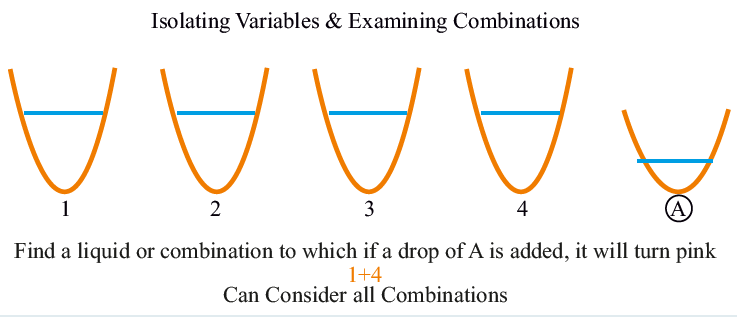
- There are 3 characteristics in the formal operations period, such as hypothetical-deductive thought, propositional thought, isolating variables, and examining combinations.
Hypothetico-deductive Thinking
- Hypothetico-deductive thinking is the ability to make a hypothesis and test it against reality.
- Suppose a child is given to balance two objects of different weights on a balance scale. Now the child can make a hypothesis and test it, and ultimately learns that the balance is maintained if he keeps the heavier weight closer and the smaller one far away from the middle part of the balance scale. This is hypothetico-deductive thinking.
Propositional Thought
- Formal operations deal in prepositions rather than in concrete events. It increases freedom from immediate content.
- A child can make inferences from various prepositions. For example, if A< B and B< C, then the child can make an inference that A< C without using any objects to denote A and B.
Isolating Variables and Examining Combinations
- During a task, a child can abstract all possible combinations of variables and can test the causal significance of each individual factor by holding other factors constant.
- Suppose 4 beakers, i.e., beakers 1, 2, 3, and 4, are provided to a child with colorless, odorless liquid and a smaller beaker with colorless, odorless liquid. The child is told to find a liquid or combination to which, if a drop of A is added, it will turn pink. The child will be able to isolate variables, examine combinations, and consider all combinations.
- There is the development of abstract thinking and understanding of deeper meaning.
- Also, the child understands concepts of permutations and combinations, probabilities, and if the language used is complex.
Also read: Glutamic Acid: Synthesis, Pathways, Receptors, Uses And Conditions
SEARCH IP Address- Mnemonic:
Important components of cognitive development stages.
- In the preoperational sub-period,
- S- semiotic function,
- E- egoistic
- A- animist.
- In the concrete operations period,
- R- reversibility or relation
- C - conservation or class inclusion.
- In the formal operations period,
- H- hypothetico deductive thinking
- I - isolating variables and examining combinations.
- P- propositional thought
- A- abstract thinking.
Psychiatric Applications
- The hospitalized children who are in the sensorimotor stage have not achieved object permanence and therefore have separation anxiety
- The best treatment for them is to allow the mothers to stay with the child, which decreases separation anxiety.
- The children at the preoperational stage who cannot deal with concepts and abstraction benefit from role-playing proposed medical procedures. For example, act out the IV procedure with a toy IV set and a doll so that they understand.
- The children at this stage do not understand the cause and effect and may think physical illness is punishment for their bad deeds.
- Moreover, they don't understand the reversibility that a broken bone or blood loss can be replaced.
- Adolescent turmoil can occur while getting into grips with newly acquired abilities to deal with the unlimited possibilities of the world.
- Adults under stress can regress cognitively and emotionally; thinking can become preoperational, egocentric, and animistic.
- These concerns should be managed during the treatment of children.
Implications of Piaget's work for Psychotherapy
- Earlier in Piaget's work, there was psychodynamic therapy, which primarily focused on innate drive or effects. And behavioral therapy, whose focus was on actions.
- Subsequently, cognitive therapy is now more focused on thoughts or beliefs.
- Some have applied his notions directly to child interventions.
- Some have developed cognitive models of treatment that are independent of Piaget but rely on the role of cognition. For example, Aaron Beck gave cognitive therapy, which is based on the premise that certain core beliefs contribute to emotional and behavioral problems.
- Moreover, some used Piaget's insight in psychotherapy by integrating it into a broader model. For example, developmentally based psychotherapy by Greenspan, wherein they have integrated these concepts into broader modules.
Also read: Understanding Catatonia: Symptoms, Diagnosis & Treatment Options
Hope you found this blog helpful for your Psychiatry Residency Basic Sciences Preparation. For more informative and interesting posts like these, keep reading PrepLadder’s blogs.

PrepLadder Medical
Get access to all the essential resources required to ace your medical exam Preparation. Stay updated with the latest news and developments in the medical exam, improve your Medical Exam preparation, and turn your dreams into a reality!
Navigate Quickly
Sensorimotor Period
Inborn Motor And Sensory Reflexes
Primary Circular Reaction
Secondary Circular Reaction
Use of Familiar Means to Obtain Ends
Tertiary Circular Reaction and Discovery Through Active Experimentation
Insight and Object Permanence
Object Permanence
Symbolization
Preoperations Subperiod
Concrete Operations Period
Formal Operations Period
Hypothetico-deductive Thinking
Propositional Thought
Isolating Variables and Examining Combinations
Psychiatric Applications
Implications of Piaget's work for Psychotherapy
Top searching words
The most popular search terms used by aspirants
- Psychiatry Residency Basic Sciences