Larynx Images: Key Learning Points for Residency
Aug 25, 2025
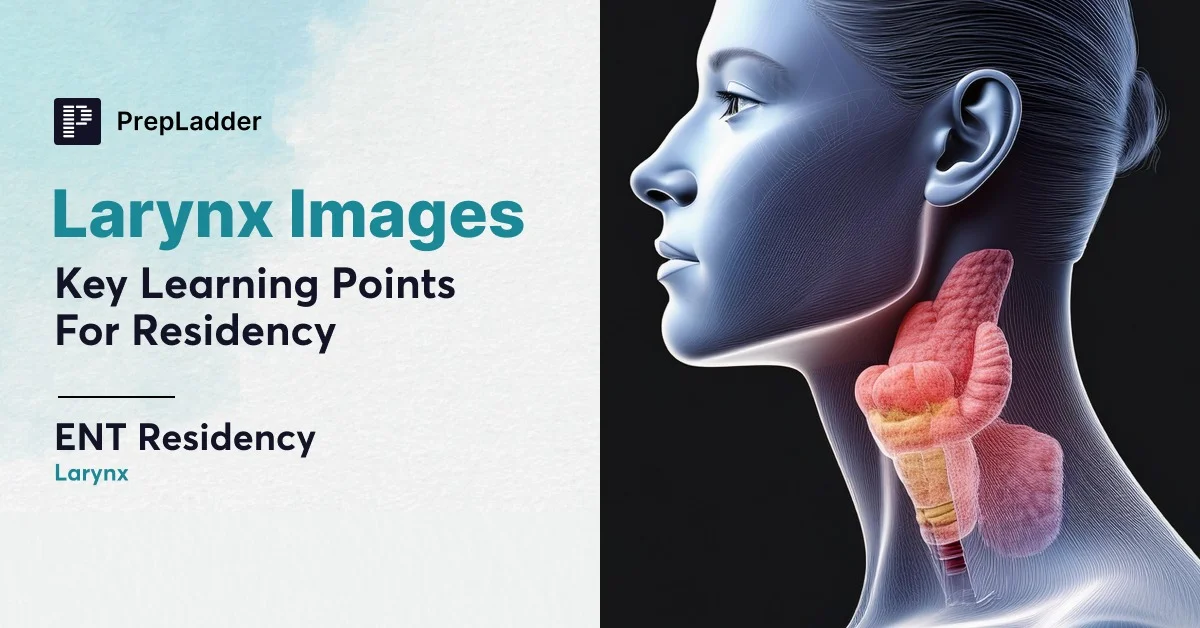
Laryngeal Surface

The smooth posterior surface is transversely concave and vertically concavo-convex and is covered by Ciliated Respiratory Mucosa; its lower projecting part is called the tubercle.
Small mucous glands posteriorly pit the cartilage. It is perforated by branches of the internal laryngeal nerve and fibrous tissue-laryngeal; the surface of the epiglottis is in continuity through these perforations with the pre-epiglottic space.
Arytenoid Cartilage
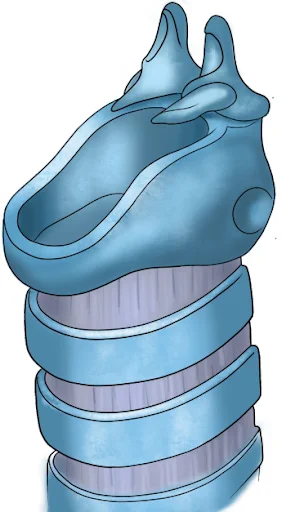
Articulate with the lateral parts of the superior border of the cricoid lamina. This cartilage is Pyramidal in shape. It has 3 surfaces: Anterolateral, Medial, Posterior surfaces. It includes two major processes: Muscular and Vocal Proces.
- Vocal process - Between thyroid cartilage and vocal process, vocal ligament of the vocal cord is attached.
- Muscular process - It gives attachment to Lateral and posterior cricoarytenoid muscle
Rima Glottidis
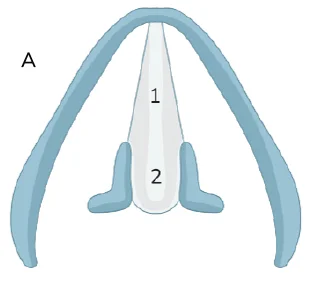
Rima glottidis is the fissure or a space extending between the vocal cords anteriorly and the arytenoid cartilages posteriorly. It is divided into two regions
- Intramembranous part
- Intercartilaginous part
Normal Speech and Voice Production
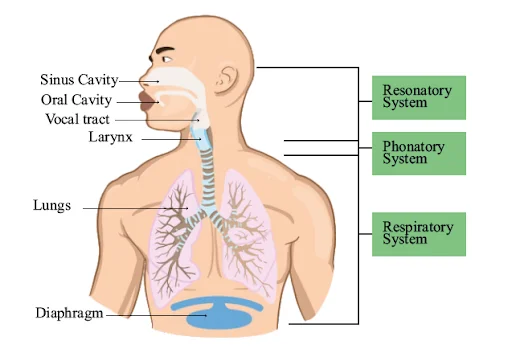
Normal voice production requires three essential elements
- A pressure gradient across the vocal folds is created by the flow of expired air from the lungs against the partly closed vocal folds.
- Vocal folds of appropriate structure, mass, and elasticity that approximate with appropriate tension to allow them to vibrate at a range of frequencies.
- A resonating chamber, the vocal tract, whose size and shape can be changed to modulate the acoustic properties of sound generated by the vocal folds.

Tracheal Bronchus
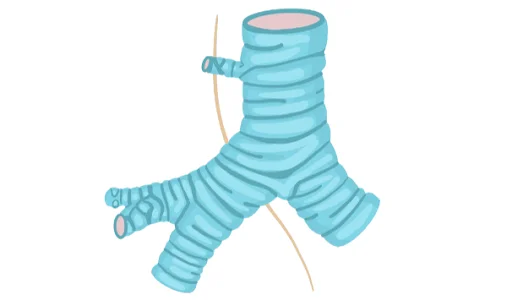
Arises from the right lateral aspect of the trachea just above the carina. Clinical importance: May cause confusion during lung resection for carcinoma, making identification of lung sections challenging.
Alveolar Duct and Alveoli
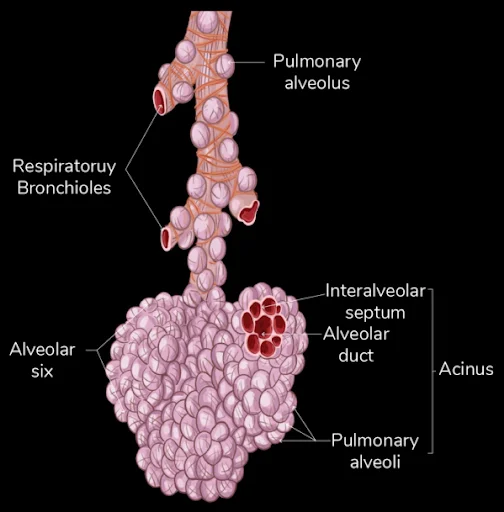
At the terminal end of the respiratory tree are tiny air sacs known as alveoli. They represent the distal termination of the alveolar ducts and are the actual sites of gas exchange. There are about 300 to 500 million alveoli in a pair of lungs.
Epiglottitis
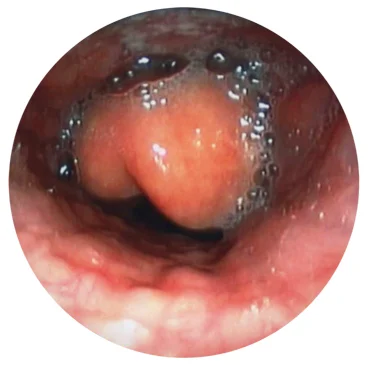
This is a paediatric emergency with inflammation of the airway structures. Direct examination of the epiglottis or larynx is ideally avoided. If the airway is secured with intubation, then examination can be safely done. The avoidance of direct examination is due to the risk of
triggering laryngospasm, which can cause airway obstruction. Diagnosis is primarily based on history, clinical examination, and x-ray. Direct or fiber optic examination is rarely done. Before any laryngeal examination, the airway is first secured through tracheostomy or intubation.
Endoscopic and Computed Tomographic Appearances of Cricotracheal Separation
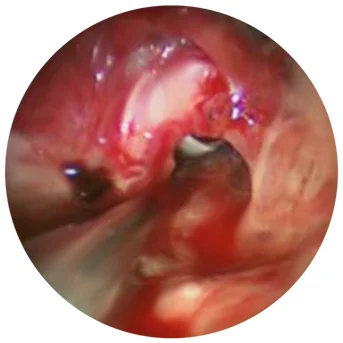
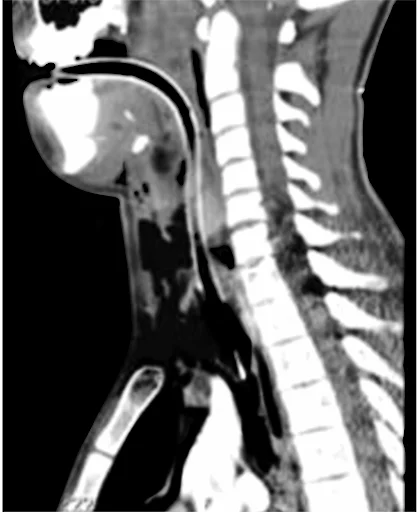
The presented images show both endoscopic and CT imaging of a patient with cricotracheal separation. In the images, there's a visible separation of the cricoid cartilage from the trachea.
A distinct and sizable airway gap or black space is evident, which indicates the separation. Normally, the cricoid cartilage should be in continuation with the trachea. The visible black air column in this patient confirms the disruption, pointing towards a cricotracheal separation.
Also Read: Surgical Anatomy Of Tracheobronchial Tree
Subcutaneous Emphysema
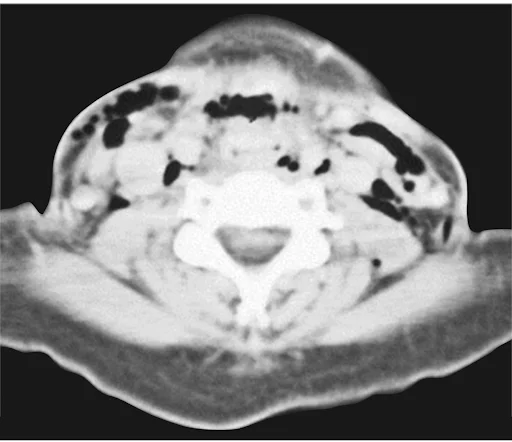
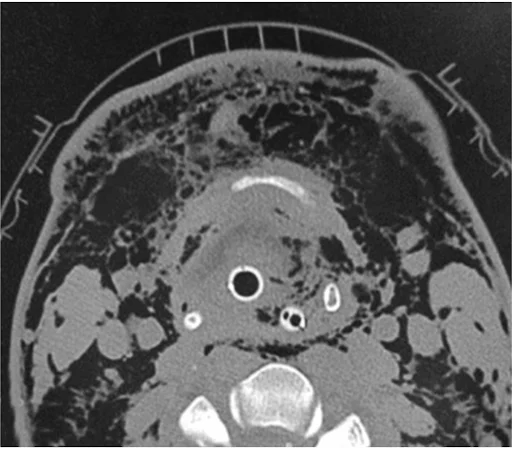
The patient exhibits extensive subcutaneous emphysema with visible air pockets in the subcutaneous plane. A significant concern is the non-identifiable airway, indicating a complete collapse of the airway. This is a critical and life-threatening condition that needs immediate intervention.
Anterior Glottic Web
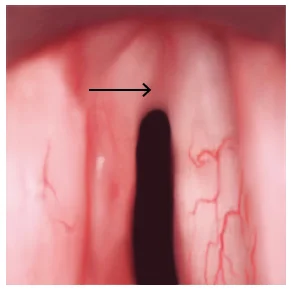
A web located at the level of the anterior commissure of the larynx. The point where the two vocal cords meet anteriorly.
Reinke's Oedema
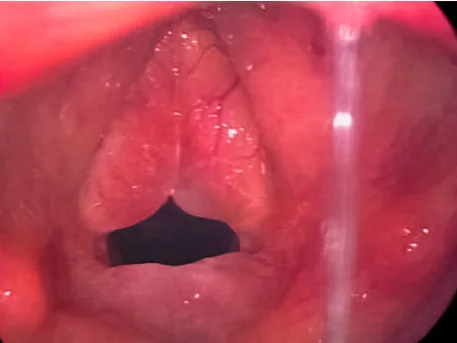
Reinke's oedema is a term used to describe the vocal folds when they become chronically and irreversibly swollen. Other terms for the condition include:
- Polypoid vocal cord, polypoid degeneration or polypoid hypertrophy, cordal polyposis, or polypoid corditis.
- Chronic oedema of vocal folds.
- Pseudomyxoma or pseudo myxomatous laryngitis
- Smoker's larynx
Vocal Sulcus
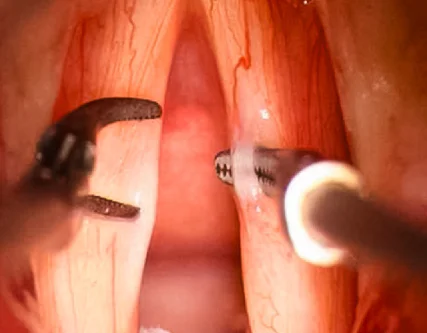
A mucosal bridge may also be found in the presence of sulci and epidermoid cysts thought to arise by the rupture through of the deep aspects of two sulci or cysts to form a tubed pedicle of mucosa.
Transglottic Tumours
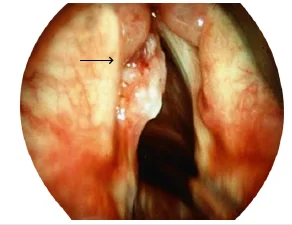
Supraglottic cancers that extend to the glottic region and cause fixity of the vocal cord but mobile arytenoids. They cross ventricles in vertical direction, are aggressive, and T3 at presentation. Epicentre of tumour is difficult to find in trans glottic cancer. They invade paraglottic space and laryngeal framework. 50% of the tumour invades the thyroid gland. There is posterior extension into the pharyngeal mucosa. Incidence of nodal metastases in trans glottic tumours: 0 = -70%, N1- 20%, N2/N3- 7%.
Also read: Staging of Supraglottic, Glottic & Subglottic Tumour
Download the PrepLadder app now and unlock a 24-hour FREE trial of premium high-yield content. Access Video Lectures, QBank for FREE to ace ENT Residency Preparation. Elevate your study experience and gear up for success. Start your journey with PrepLadder today!

PrepLadder
Access all the necessary resources you need to succeed in your competitive exam preparation. Stay informed with the latest news and updates on the upcoming exam, enhance your exam preparation, and transform your dreams into a reality!
Navigate Quickly
Laryngeal Surface
Arytenoid Cartilage
Rima Glottidis
Normal Speech and Voice Production
Normal voice production requires three essential elements