FMGE January 2026 Exam Analysis
Jan 18, 2026

The FMGE January 2026 exam, conducted on 17th January 2026, has now concluded, and once again, we’ve brought together a comprehensive, student-first analysis to help you decode this attempt. As soon as the exam wrapped up, we connected with hundreds of aspirants through feedback forms and direct interactions to capture their honest, real-time exam experiences—straight from the exam hall.
Whether you’ve appeared for this attempt and want to assess where you stand, or you’re preparing for an upcoming FMGE session, this detailed breakdown will help you understand how the January 2026 paper was structured and what it demanded from aspirants.
The Detailed Exam Analysis
To provide you with an in-depth overview, we collected feedback from aspirants who appeared for the exam. Here's a breakdown of the key aspects:
Download FMGE Last 5-Year PYQs – Subject-wise PDFs
|
|
|
|
|
|
|
|
|
|
|
|
|
|
|
|
|
|
|
|
|
|
|
|
|
|
||
How Would You Rate the Overall Difficulty of the Exam?
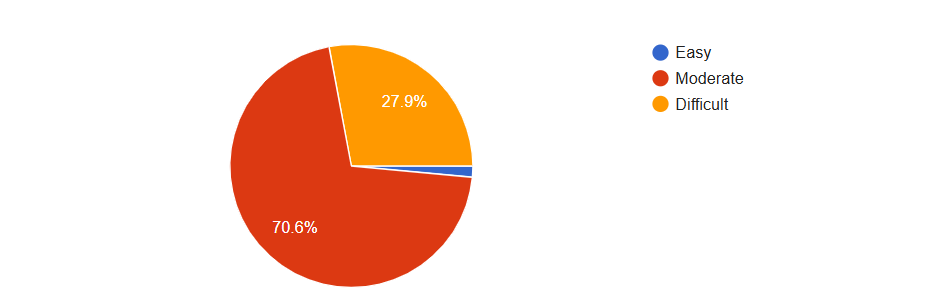
According to the feedback we received, 70.8% students found the exam to be moderately difficult.
While 27.9 % found it difficult, and the rest deemed it easy
What Was the General Pattern of the Questions?
We asked the students about the general pattern of the questions asked. Here's what they said:
- Concept-based: 33.8%
- Clinical questions: 64.7%
- One-liners: 1.5%

Were the Questions Easy, Moderate, or Difficult?
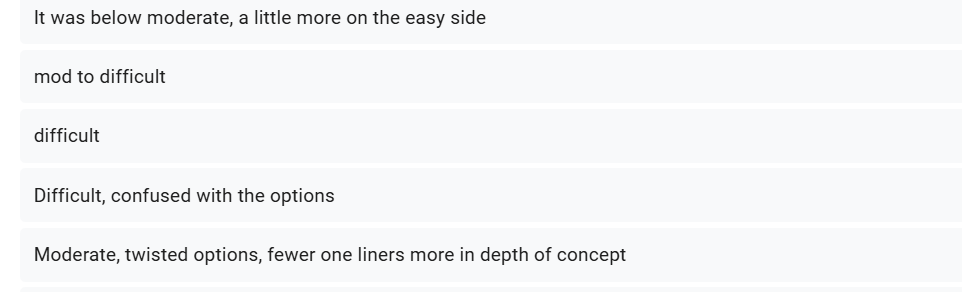
Based on student feedback, the overall difficulty level of the FMGE paper leaned largely towards moderate to difficult, with clear variation between sections. A significant number of students felt that while the first part of the paper was relatively easier or manageable, the second part turned more challenging and demanding.
Many candidates described the questions as lengthy and concept-driven, with several items requiring extra time to read, interpret, and eliminate closely framed options. Even when topics felt familiar, students noted that the depth of questioning and subtle twists in options made the paper tricky.
Several responses highlighted that the difficulty did not stem from unfamiliar topics, but from confusing options, clinical framing, and the need for deeper conceptual clarity. Overall, students felt the paper tested not just recall, but understanding, patience, and time management—making it moderately tough for some and distinctly difficult for others.
Here are some of the responses that we received:


Which Subjects Had High Weightage?
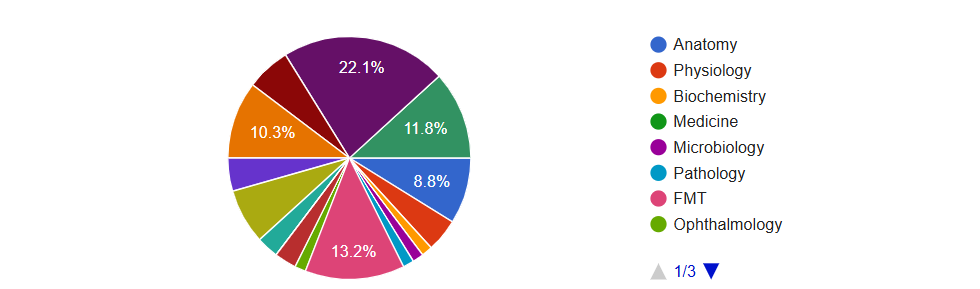
Responses gathered from the students indicate that the FMGE continues to demonstrate a strong clinical dominance, with a significant proportion of questions drawn from a few high-yield subjects. Obstetrics & Gynecology (OBG) emerged as the most heavily weighted subject, contributing the largest share of questions, reflecting the exam’s emphasis on maternal health, obstetric emergencies, and gynecological conditions. Medicine followed closely, reinforcing its role as the backbone of clinical reasoning, with extensive coverage of systemic diseases, diagnostics, and management principles.
In addition, Ophthalmology and Surgery featured prominently, underscoring the importance of practical clinical knowledge, case-based scenarios, and frequently tested conditions. Among the pre- and para-clinical disciplines, Biochemistry showed relatively higher representation compared to other basic sciences, suggesting a focus on clinically relevant metabolic pathways and laboratory correlations rather than purely theoretical concepts.
Which Subjects Had Low Weightage?
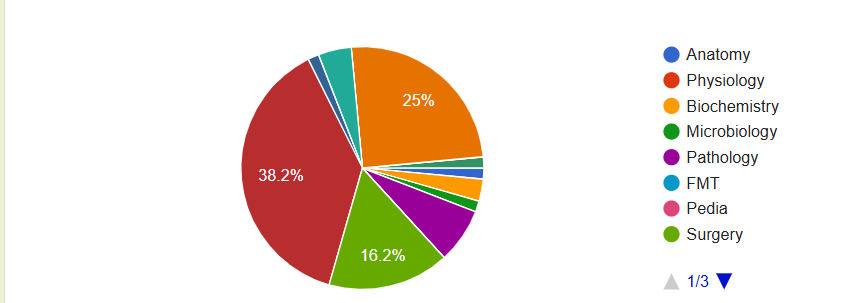
Analysis of the subject-wise distribution suggests that several foundational and para-clinical subjects received comparatively lower representation in the exam. Disciplines such as Anatomy, Physiology, and Microbiology appeared with a modest share of questions, indicating a reduced emphasis on detailed theoretical concepts and memorization-heavy areas. Similarly, Forensic Medicine (FMT) and Pathology showed limited weightage, with questions largely confined to commonly tested, high-yield topics rather than exhaustive coverage.
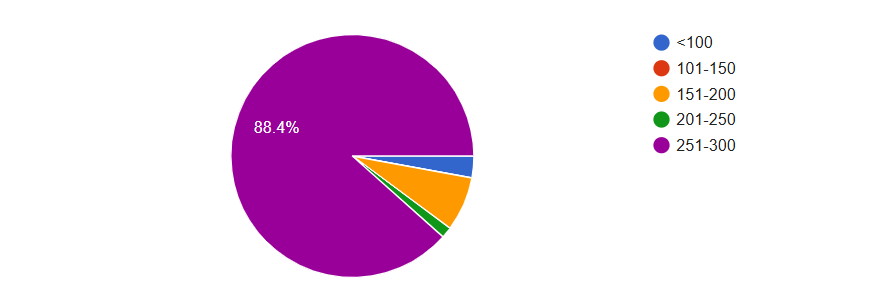
How Many Questions Did You Attempt?
- <100 questions - 2.9%
- 251-300 questions: 88.4%
- 201-250 questions - 1.4%
- 151-200 questions: 7.1%
Was the Exam Easy to Finish Within the Allocated Time?
- Yes: 69.6%
- No: 30.4%

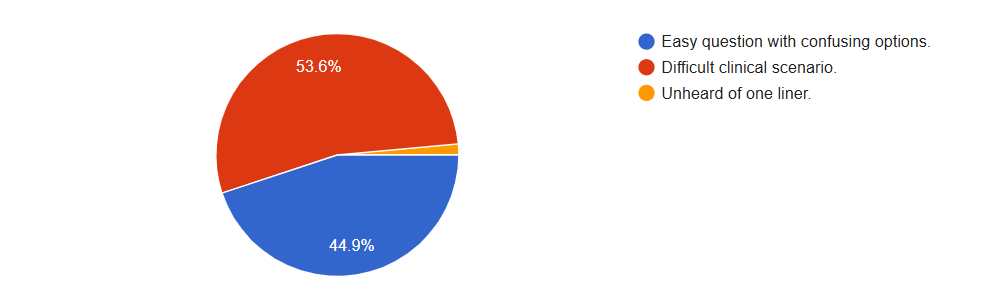
How were Difficult Questions Framed?
- Easy questions with confusing options: 44.9%
- Difficult clinical scenarios: 53.6%
- Unheard of one-liners: 1.4%
How Many Repeats Did You Encounter?
Based on student responses, most candidates encountered very few to moderate repeat questions. A large number reported no repeats or fewer than 5–7 questions, while another common range was around 10–20 repeats, largely from PYQs or conceptually similar questions rather than direct repeats. Only a small minority felt the number of repeats was high. Overall, repetition was limited and not a defining feature of the paper, with greater emphasis on concept application.

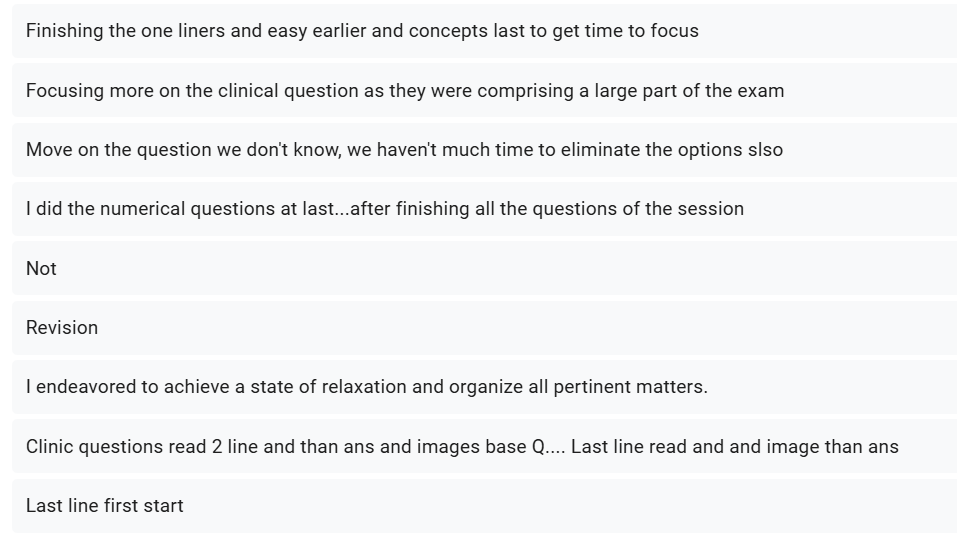
Did You Employ Any Specific Strategy During the Exam?
Most students relied on time-management and calm execution rather than a fixed rigid strategy. A common approach was to attempt sure-shot and easy questions first, saving time for longer, confusing, or clinical questions later. Many focused on ruling out options, reading the last line or options first, and applying clinical reasoning and common sense. Avoiding panic, not revisiting answers unnecessarily, and staying mindful of time were recurring themes. Overall, students emphasized staying composed, prioritising easier questions, and using elimination and clinical logic to navigate the paper effectively.
Below are some of the responses shared by the aspirants:
Did you find the FMGE Pulse Exams by PrepLadder helpful?
Yes: 88.4%
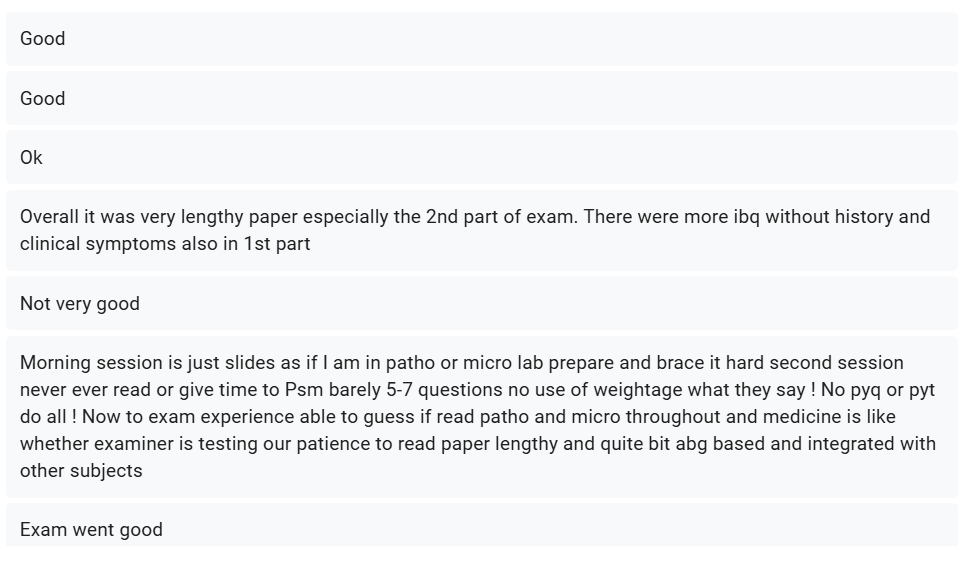
Tell Us About Your Overall Exam Experience
The FMGE exam was largely moderate to difficult, with most students finding it very lengthy and exhausting, especially Paper 2. Time management was a major challenge, leaving little to no scope for review. Paper 1 was mostly easy to moderate, while Paper 2 was longer, more confusing, and concept-heavy with close options.
There were more IBQs than expected, often without clear clinical history. Many felt Pathology and Microbiology dominated, while PSM weightage was unpredictable. PYQs alone were not enough—conceptual clarity and integrated thinking were crucial.
Overall, the paper was seen as tough but fair, testing focus, patience, and fundamentals throughout.

PrepLadder
Access all the necessary resources you need to succeed in your competitive exam preparation. Stay informed with the latest news and updates on the upcoming exam, enhance your exam preparation, and transform your dreams into a reality!
Top searching words
The most popular search terms used by aspirants
- fmge exam analysis