20 High-Yield Anesthesia Flashcards NEET PG 2026
Jul 2, 2025


Flashcard 1
History of Anaesthesia
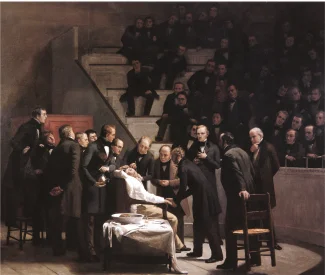
- WTG MORTON: Father of Modern Anaesthesia
- Morton gave the public demonstration of Ether Anaesthesia
- 16th Oct 1846: World Anaesthesia Day
- August Bier father of spinal Anaesthesia
- IVRA is also called as Biers block
- Horace Wells gave the clinical demonstration of N2O anesthesia
Flashcard 2
Things to do in Airway Assessment
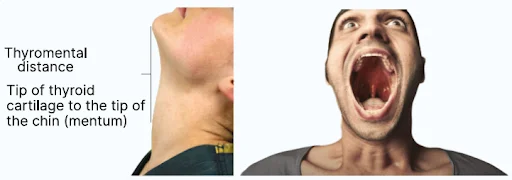
- Tell the patient to open the mouth
- As he opens the mouth (look for 2 parameters)
- As he lift the chin (look for 2 parameters)
- Mallampati classification and interincisor distance

Flashcard 3
Mallampati Classification
- Tell the patient to open the mouth
- If the doctor is able to see all the structures in the patient's mouth
- Then the patient has adequate space
- Put the laryngoscope and lift the tongue for intubation
- Visual classification of the structures - Mallampati classification
Flashcard 4
ASA Classification
- ASA class 1
- The patient is free from systemic illness
- Diabetes, BP, hypertension, heart disease
- No comorbidities
- ASA class 2
- Having systemic illness- well under control
- Ex: diabetic - FBL-90, pbs- 120
- ASA class 3
- Having systemic illness- not under control
- Ex: Diabetic: FBL - 200, pbs 380
- ASA class 4
- Having systemic illness - a constant threat to his life
- EX: having a history of recent stroke or coronary artery disease
- ASA class 5
- Moribund patient - multiple comorbidities
- EX: ruptured abdominal aortic aneurysm
- ASA class 6
- Brain dead patient
- Add suffix' E' depends on the emergency
- EX: A lady has a ruptured ectopic pregnancy management having no comorbidities - class '1E’

Flashcard 5
Spinal Anaesthesia
- Indication: used for below umbilical short-duration surgery
- Appendectomy
- LSCS
- Hernia
- Hydrocele
- Duration: 2-3 hours
- The patient is made to sit and choose a space for inserting the needle
- Locate Tuffier's line
- Given below spinal cord
- Sitting or lateral position
- Clean the site, locate the site
- Site: L3-L5 space
- L4, L5 easy to identify
- Landmark: Tuffier's line
- Keep hands on the highest point of the iliac crest back of the patient
- Introduce the Dura separating needle
- A thin bore
Layers Pierced in Spinal Anaesthesia
○ Skin → Subcutaneous tissue → Supraspinous ligament → Inter/Intra/Infra spinous ligament → Ligamentum flavum (toughest ligament) → feel snap/sudden loss of resistance → Dura → Arachnoid membrane (last layer) → Subarachnoid space (CSF).
Flashcard 6
Epidural Anaesthesia
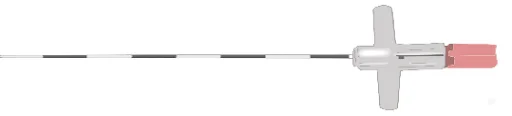
- Indication: Most commonly used for below umbilical long-duration surgeries
- Total hip replacement
- Total knee replacement
- In spinal, single shot technique is used
- In epidural, the needle enters into epidural space, and a catheter is placed
- One end of the catheter is in epidural space, other end is lying outside
- Top-up doses of the drug are given through the catheter
- Length: 9-10 cm
Layers Involved: Skin → Subcutaneous tissue → Supraspinous ligament→ Inter/Intra/Infra spinous ligament → Ligamentum flavum (toughest ligament) → feel snap/sudden loss of resistance (last layer) → Dura
Flashcard 7
Surface Anesthetic Cream
- Commonly used as Emla cream
- Equal/Eutectic Mixture of Local Anaesthesia
- 5% EMLA= Eutectic : 2.5% Lignocaine + 2.5% Prilocaine
- EMLA is usually used in pediatrics
- IV cannula refusal
- Contraindicated in Neonates
- Not needed
- Prilocaine absorbed into the skin causes Methemoglobinemia
Flashcard 8
Ketamine
- Acts on NMDA receptor blocker
- Effects opposite to Sodium thiopentone
- CNS: worst enemy
- Contraindicated in CNS
- Damages, increase ICP
- Contraindicated in head injury and neurosurgery
- Increases IOP
- Contraindicated in Glaucoma
- Increased risk of epilepsy, epileptic properties
- Contraindicated in epilepsy
- Hallucinations and delusions are seen
- Contraindicated in Schizophrenic patients
- Friend of all other systems
- CVS: IV induction agent of choice in shock, cyanotic heart diseases
- Contraindicated in IHD
- Cannot tolerate extreme changes in BP, HR
- Cause hypotension, tachycardia
- Respiratory: induction agent choice in bronchial asthma
- Causes bronchodilation
- Muscular: increases muscle tone
- Pain & Analgesic: only drug having analgesic effect
- Painless IV induction agent
- CNS: worst enemy
Flashcard 9
- Muscle relaxants releasing Histamine
- D.tubocurarine: maximum
- Mivacurium
- Scholene
- Atracurium
- Allergic reactions are seen
- The most common causes of allergic reactions are seen with muscle relaxants
- Followed by latex products
Flashcard 10
Malignant Hyperthermia
- Abnormally high temperature with sustained muscle contraction
- Seen in autosomal dominant patient
- Due to abnormal triggering of Ryanodine receptors
- Calcium released
- Muscle contracts/spasm starts in the Masseter muscle
- Due to abnormal triggering of Ryanodine receptors
- Triggers of malignant hyperthermia
- Local anesthetic causing malignant hyperthermia is Lignocaine, the most common
- Safest LA is procaine
- Muscle relaxants: Scholine
- Inhalational agents: almost all agents
- Maximum seen with Halothane
- Local anesthetic causing malignant hyperthermia is Lignocaine, the most common
- Treatment of Malignant hyperthermia
- IV Dantrolene sodium
Flashcard 11
Desflurane
- Day care surgery
- Least metabolized
- Airway irritation
- Not used
- Sevoflurane is used
- Best for cardiac surgery
- Vaporiser is Expensive
- Isoflurane is used
- Hepatic surgery
- Least metabolized in the liver
- Long duration surgeries
- Doesn't stay in the body
Flashcard 12
Nitrous oxide
- Stored in Blue color cylinders
- Good analgesic agents
- Contraindicated in
- In Pregnancy, can cause teratogenic effects in the fetus
- Bone marrow deformity
- Avoid closed-loop surgeries
- Intestinal obstruction surgery
- One part is obstructed
- Another part is filled with air
- Nitrous oxide expands air-filled cavities
- Lead to perforation
- In Pregnancy, can cause teratogenic effects in the fetus
- The second gas effect is seen
- Used as carrier gas
- Least potent
- Add another inhalational agent
- Increases concentration of other agents
- Used as carrier gas
- Diffusion hypoxia is seen
- Does not cause hypoxia during surgery
- Stop inhalational agents in the reversal phase
- Oxygen saturation falls
- ® Nitrous oxide has better diffusion than oxygen into alveoli
- 100% oxygen is given to prevent diffusion hypoxia
Flashcard 13
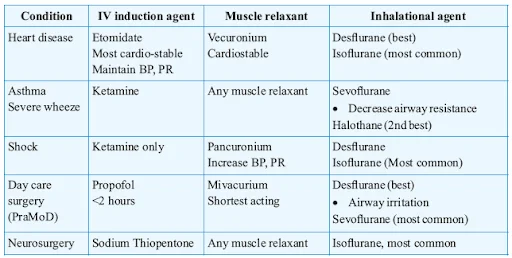
Summary of General Anaesthetics
Flashcard 14
Laryngeal Mask Airway (LMA)
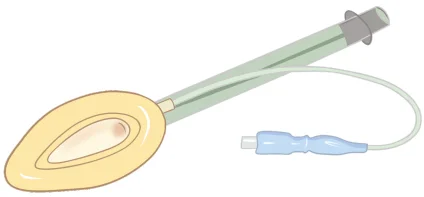
- Other Name: Supraglottic airway device
- Inserted through mouth and mask is fitted on supraglottic area
- Indications
- Failed intubation/Difficult intubation
- Minor surgeries: Squint surgery
- Sizes of LMA: Depend on the weight
- Adults
- Size 4: 50 to 70 kgs
- Size 5: 70 to 100 kgs
- Adults
- 1st generation LMA: LMA classic
- Has only one port
Flashcard 15
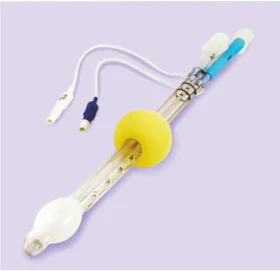
Tracheoesophageal Combitube
- Used in emergency situations
- No laryngoscopy is required
Inserted either into the esophagus or trachea
↓
Inflate the cuff
↓
Inflate the other cuff if the tube is inserted into the esophagus
↓
Prevent aspiration by blocking the esophagus
↓
Ventilation is done through the pores
To Remember the Best way to secure the airway: Endotracheal tube
Flashcard 16
Capnograph
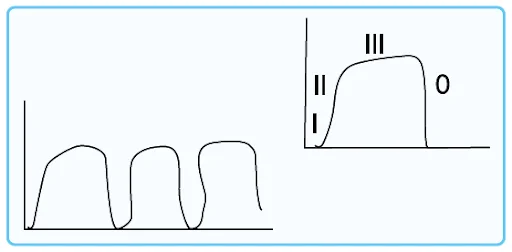
- The best test to confirm endotracheal intubation
- Measures exhaled CO2 (ETCO2)
- Normal capnograph: Has four phases
- Phase 1: Dead space ventilation
- Phase 2: Expiratory upstroke
- Angle: Alpha
- Phase 3: Alveolar plateau
- Phase 0: Inspiratory downstream
- Angle: Beta
- Measures exhaled Co2
- Angle: Beta
Flashcard 17
Double lumen tube
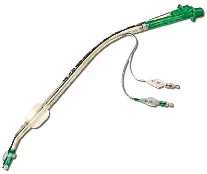
- Left lung cancer: General anesthesia
- Long endotracheal tube
- Pass it through the vocal cord until you feel resistance
- Change the direction of the tube
- Inflate the bronchial and tracheal cuff
- Pass it through the vocal cord until you feel resistance
- Used the surgeries that require one-lung ventilation
- Have bronchial and tracheal opening
- Ventilation of the tracheal pore: Gas moves into the both lungs
- Most common cause of hypoxia during one-lung ventilation: Displacement of tube
- It is confirmed by fiber optic bronchoscope
Flashcard 18
ACLS Algorithm
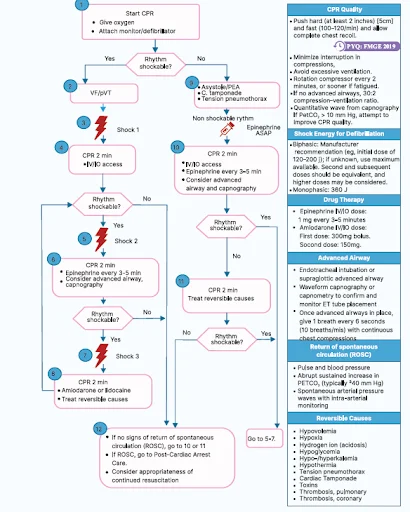
Flashcard 19
Monitoring in Anesthesia
- Oxygenation: Pulse oximeter
- Ventilation: Capnography
- Circulation:
- BP: IBP (Radial artery), NIBP
- ECG
- Lead II: Detect arrhythmia
- Lead IV: Detect ischemia
- Transesophageal echocardiography: Venous air embolism
- Major surgery
- Temperature
- Peripheral temperature:
- Core temperature: Major surgery
- Best site: Pulmonary artery
- Awareness: Bis monitoring
- Bi-spectral index monitoring
- Calculate the sum of the EEG
Flashcard 20
Positive End Expiratory Pressure
- Pressure required to keep the alveoli open
- At the end of expiration
- Uses
- ARDS patients
- Pulmonary edema
- Disadvantage
- Decreases the venous return
- Decrease the cardiac output
- Causes hypotension
- Increases the intracranial pressure
Curious about your potential NEET PG rank? Use our NEET PG Rank Predictor to get accurate insights and tailor your revision plan for success. Get started today!
Download the PrepLadder app now and unlock a 24-hour FREE trial of premium high-yield content. Access Video Lectures, digital notes, QBank, and Mock Tests for FREE to ace your NEET PG preparation. Elevate your study experience and gear up for success. Start your journey with PrepLadder today!

PrepLadder Medical
Get access to all the essential resources required to ace your medical exam Preparation. Stay updated with the latest news and developments in the medical exam, improve your Medical Exam preparation, and turn your dreams into a reality!
Navigate Quickly
Flashcard 1
History of Anaesthesia
Flashcard 2
Things to do in Airway Assessment
Flashcard 3
Mallampati Classification
Flashcard 4
ASA Classification
Flashcard 5
Spinal Anaesthesia
Layers Pierced in Spinal Anaesthesia
Flashcard 6
Epidural Anaesthesia
Flashcard 7
Surface Anesthetic Cream
Flashcard 8
Ketamine
Flashcard 9
Flashcard 10
Malignant Hyperthermia
Flashcard 11
Desflurane
Flashcard 12
Nitrous oxide
Flashcard 13
Summary of General Anaesthetics
Flashcard 14
Laryngeal Mask Airway (LMA)
Flashcard 15
Tracheoesophageal Combitube
Flashcard 16
Capnograph
Flashcard 17
Double lumen tube
Flashcard 18
ACLS Algorithm
Flashcard 19
Monitoring in Anesthesia
Flashcard 20
Positive End Expiratory Pressure