How Version X1 Changes The Way We Prepare For PG. INI-CET In 2026
Mar 2, 2026

How Version X1 Is Changing The Way We Prepare For PG. INI-CET
I know a final year MBBS graduate who has been studying for eleven months. She has covered all nineteen subjects. Can recognize terms and recall mnemonics easily. She also does well on quizzes that test her knowledge of topics. When she takes a full-length mock test with two hundred questions and no subject labels, her score drops by forty marks.
The problem is not that she does not have the knowledge; it is that she cannot retrieve it when she is under pressure. This is where Version X1 comes in. It is designed to help NEET PG and INI-CET aspirants like her.
Quick Answer
Version X1 is changing the way we prepare for PG entrance exams by focusing on retention rather than just delivering content. It has two hundred and eighty hours of revision that is mapped to previous years' questions, fifty hours of integrated essentials that teach you how to think like an examiner, twenty hours of cadaver dissection videos, five thousand new exam-aligned multiple choice questions, printed summary charts, and an AI-powered spaced repetition flashcard system called SPARK. Version X1 is designed to help students prepare for both PG and INI-CET exams.
NEET PG & INI-CET Relevance
Version X1 helps students with the main challenge they face when preparing for these exams. Retrieving learned content under timed and high-pressure conditions. The NEET PG exam tests two hundred multiple-choice questions in three and a half hours across nineteen subjects.
The INI-CET exam tests two hundred questions in three hours with forty-five-minute limits and puts more emphasis on conceptual integration. The features of Version X1. PYQ tagging, system-wise learning, spaced repetition recall. Are designed to help students with both exams.
In This Post:
We will talk about the problem with current PG preparation, how Version X1 tackles the retention gap, and how it can help students prepare for NEET PG and INI-CET exams. We will also compare the two exams. Provide a practical study framework for students.
The Real Problem With Current PG Preparation
I have been teaching students for twenty-five years, and I have seen the preparation landscape change a lot. There are more resources available now. Video lectures in every language, question banks with tens of thousands of questions. Despite all these resources, the pass rates have not improved much.
Why is that? It is because the problem is not access to content, but retention and retrieval.
I have seen students who start preparing with dedication, making notes, watching videos, and solving multiple-choice questions topic-wise. They build confidence in four or five months. Then, around month six or seven, they start revising and realize they have forgotten forty to sixty percent of what they studied in month one.
They panic, and the last two or three months become an attempt to re-cover old ground while keeping new content fresh. I tell my juniors that the brain is like a muscle. If you do not use it, it decays. Just reading your notes twice does not help. It creates an illusion of knowledge. You may recognize the content.
You cannot recall it independently. Version X1 confronts this problem head-on. Not by giving you content, but by providing smarter systems to make content stick.

How Version X1 Tackles the Retention Gap
Version X1 has a way to help with retention. This way is based on how our memory works.
Version X1 does this in steps.
Layer 1. This is where we learn things with context. We use something called Rapid Revision and Integrated Essentials. We do not learn facts by themselves. Instead, we connect them to the exam and to subjects. This really helps us remember.
When we learn things, and they are connected to things like where we learned them and how they are related, we remember them much better.
Layer 2. This is where we actively try to remember things. Version X1 does not just give us information. Hope we remember it. We have over 5,000 questions that make us think. We also have something called SPARK. This uses flashcards to help us remember the things we forget. It shows them to us again at the time.
Layer 3. This is where we use ways to learn. We watch videos we use printed charts. We listen to explanations. Each of these ways helps our brain remember things better.
All of these things work together to help us remember. Version X1 is a system that helps us retain information. Let me explain how each part of Version X1 works when we actually use it.
Rapid Revision — Studying What Actually Gets Asked
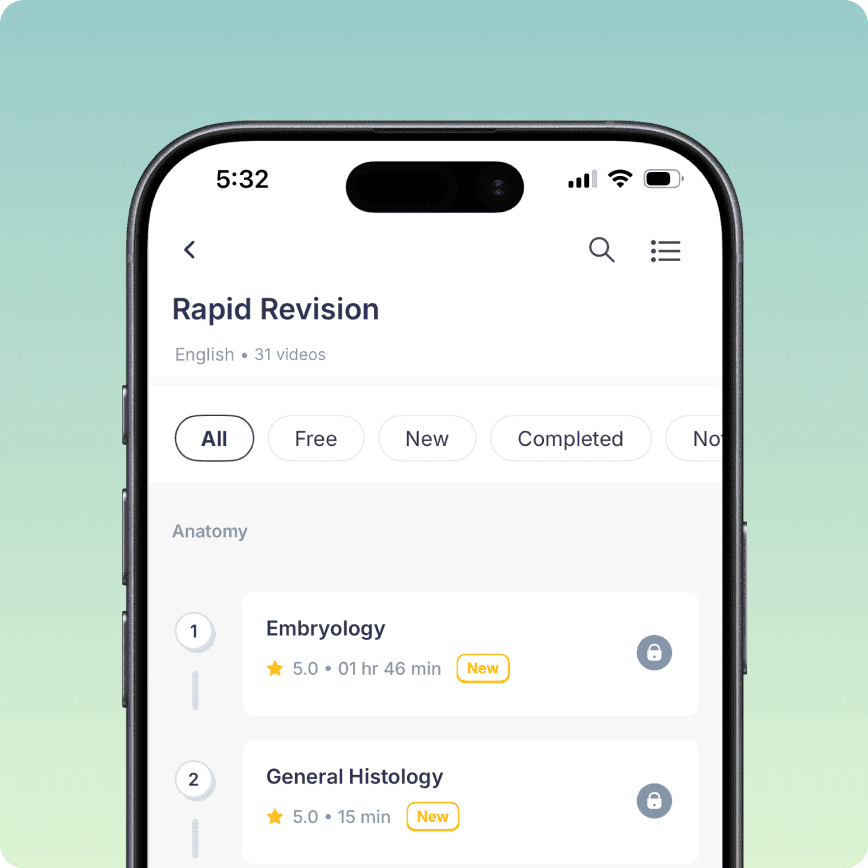
- I have seen a lot of people who do well in exams, and they all use one strategy. They revise by looking at previous year's questions. They do not just study a topic; they study it by looking at how the people who make the exams have tested it
- The Rapid Revision module in Version X1 is based on this idea. It has a lot of videos, around 280 hours, in English and Hinglish. Each video is connected to the previous year's questions from NEET PG, INI-CET, and FMGE. So when you study something like rheumatic heart disease, you do not just learn about the Jones criteria.
- You see how the people who make the exams have asked questions about it before. You see what the wrong options looked like and what the questions were about.
- This module also helps you see the mistakes you are making. I have seen a lot of students make the same mistakes over and over again. For example, some students get confused between the crescendo-decrescendo murmur and the pansystolic murmur.
- This is not because they do not know about it, but it is because they cannot tell the difference. The error file tagging in the module helps with this.
- For people who are taking the PG exam in August 2026, the Rapid Revision module is a good way to study for the last 2-3 months. For people who are taking the INI-CET exam in July, it is also helpful. They need to pay special attention to how the concepts are connected because that is what INI-CET likes.

Integrated Essentials — Thinking Like an Examiner
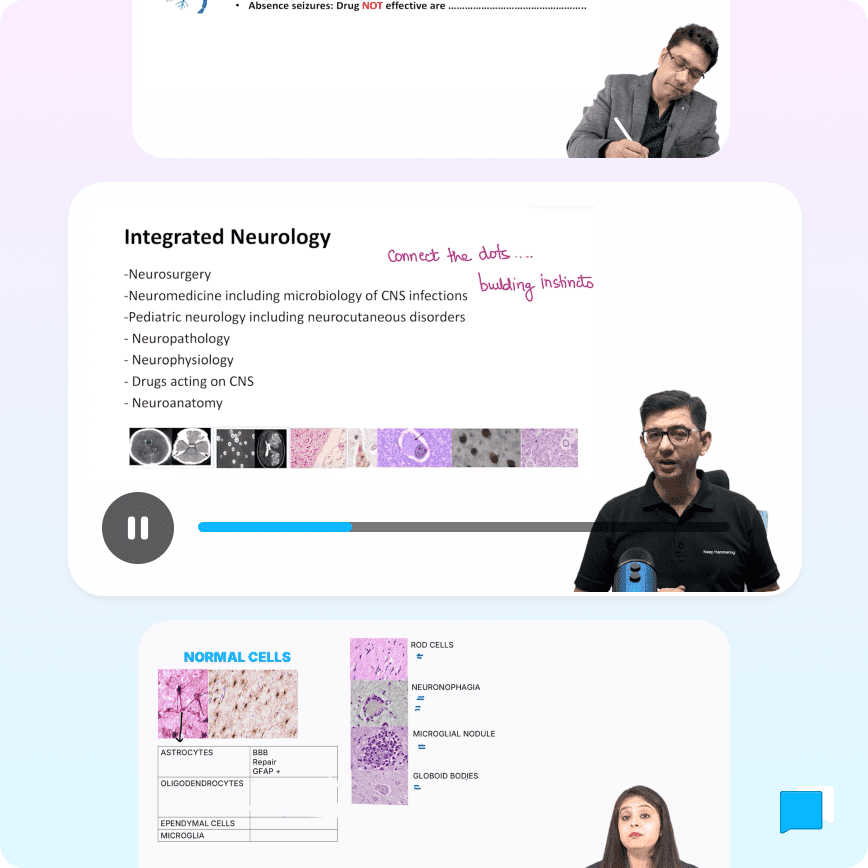
- Here is something that separates NEET PG from INI-CET at the question level. NEET PG tests how well you remember things about a subject. A Pharmacology question is about Pharmacology, a Medicine question is about Medicine.
- INI-CET is different because it tests how well you can think about things in a certain way. One question might be about what is happening in the body, how a drug works, and how to treat someone, all at the same time.
- The Integrated Essentials from Version X1 is a learning module that helps you learn about things in a way that's not just about one subject. It is 50 hours long. It helps you learn about things in a way that connects different subjects.
- For example, if you are learning about nephropathy, you would normally study it in different subjects like Medicine, Pathology, Pharmacology, and Biochemistry.
- With Integrated Essentials, you learn about the whole thing from start to finish. From what happens in the body to how it looks under a microscope to how someone is treated.
- From my experience teaching, I have seen that students who learn things in this connected way do better on questions that test how well they can think about things in a way. They usually score 15 to 20 marks higher.
- This is because when you understand why a certain drug is used to treat someone with nephropathy, you can answer questions about it from any angle. Pharmacology, Medicine, or Pathology. You do not need to remember facts. You just need to understand how things work.
- This is especially helpful for INI-CET because the test is divided into four sections with 50 questions each, and you only have 45 minutes for each section. This means you need to be able to think and not just remember things separately. Integrated Essentials is very helpful for this kind of test.
SPARK — The Science of Not Forgetting
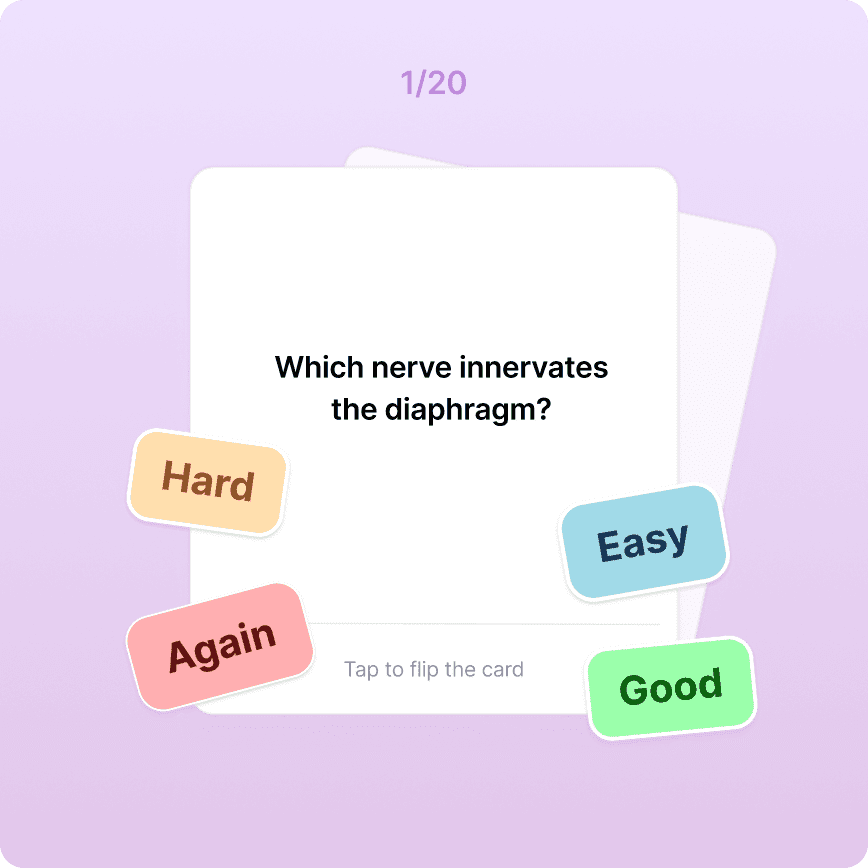
- The Ebbinghaus forgetting curve is something that has been known for a time in the field of cognitive psychology. It shows that we tend to forget fifty percent of new information within twenty-four hours and up to eighty percent within a week unless we make an effort to review it.
- The spacing effect is another thing that has been studied a lot. It shows that when we review things at longer and longer intervals, it helps us remember them better in the long run compared to trying to cram everything in at once.
- SPARK automates this idea for people studying for PG and INI-CET. It uses a system to keep track of how you do on each flashcard. Whether you get it right, wrong, or are not sure.
- If you are confident about a concept, it will come up again after a time. If you struggle with it, it will come up sooner and more often.
- After a while, this creates a study schedule that's just for you and your weaknesses. Every student has an experience with SPARK because every student forgets things differently.
- I like to think of this like what happens when doctors are training on the job. If a doctor sees a case once, they might forget it. If they see it a few times with some time in between, they will remember it for a long time.
- SPARK does the thing, but on a computer. Even if you only have twenty to thirty minutes a day to study, using SPARK can make a difference in how well you remember things over a few months.
Cadaver Dissection Videos & Printed Summary Charts
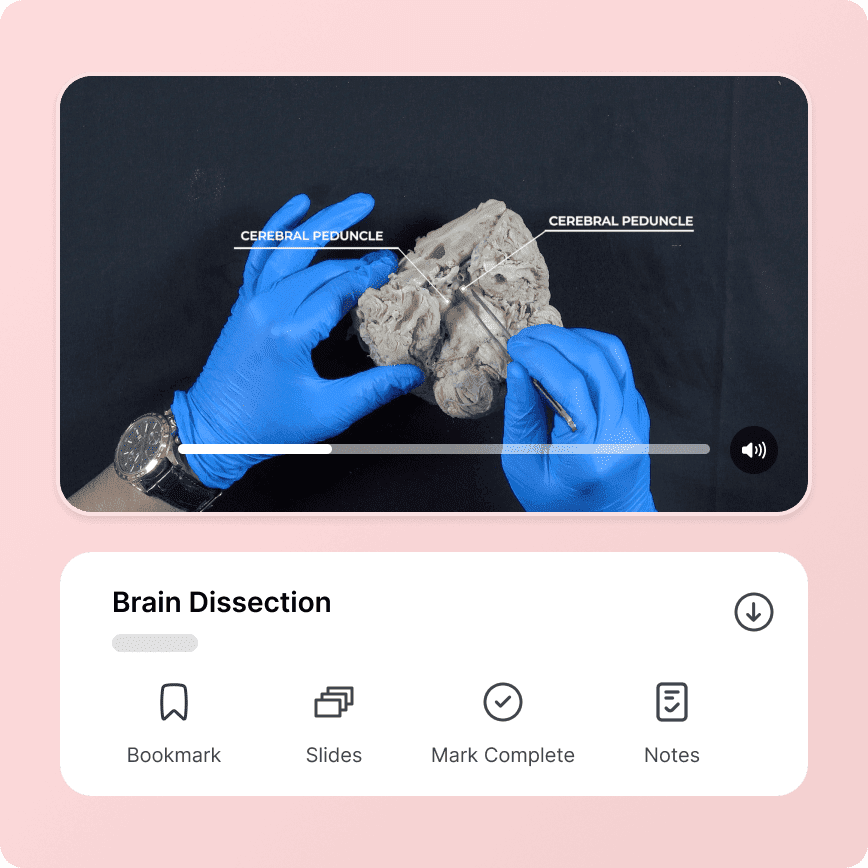
Dissection Videos, which are twenty hours long, have a purpose: they make anatomy three-dimensional. Both the NEET PG and the INI-CET have included image-based questions in recent years. This includes cross-sectional surgical anatomy and applied anatomy, which are now standard.
Students who have only studied from diagrams have a hard time when they are shown a cadaveric image or an axial CT slice. Real cadaver dissection videos help with this by showing structures in the place where they are normally found, with their colors, textures, and relationships.
Printed Summary Charts are also helpful because they add an offline dimension. Each chart takes a topic. Puts it on a single page that is focused on the exam. These charts are designed for the times in between. Like before a ward posting starts, during a lunch break, or on the commute to work. Switching between a screen and paper helps the brain process information in ways that help people remember things better.
Revamped QBank — 5,000+ New Questions Built for 2026
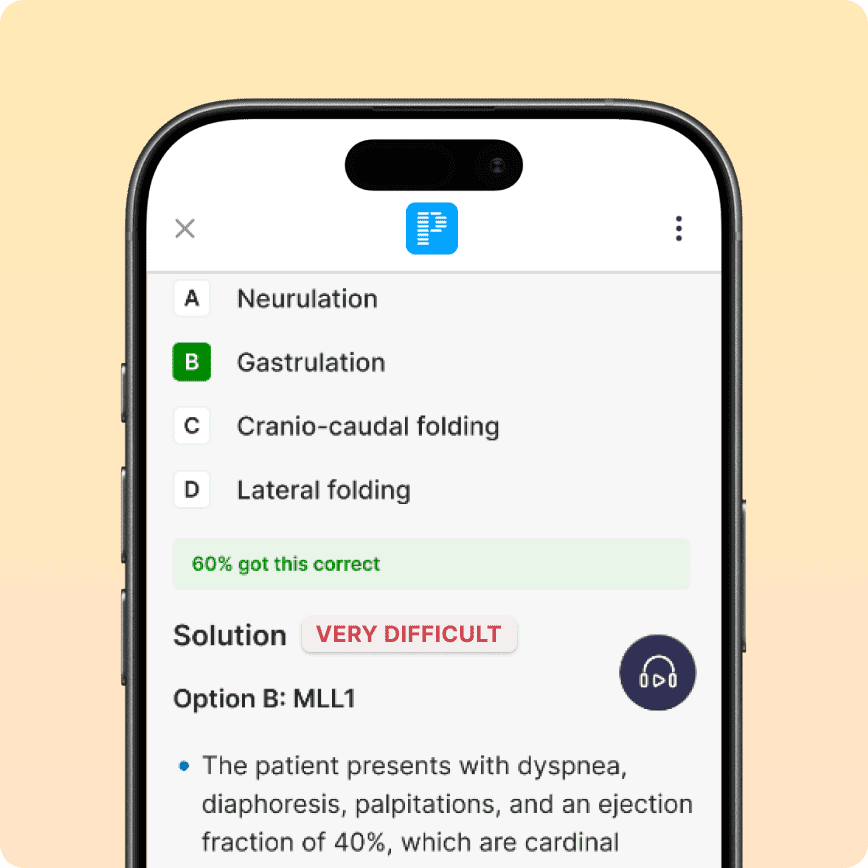
A QBank is not useful when its questions are no longer similar to how the exam frames problems. The NEET PG 2026 will test two hundred choice questions in three and a half hours in a single shift. This is a format change that was ordered by the Supreme Court to make sure the exam is fair.
The INI-CET will continue with its four-section structure, where each section is forty-five minutes long. Both exams now include clinical vignettes, image-based reasoning, and multi-concept integration.
The new version, called Version X1, adds five thousand multiple-choice questions to the existing eighteen thousand-plus question bank. These new questions are designed to match the difficulty levels and were reviewed with the help of recent top scorers.
They also cover topics that were not well represented in the question bank. For people who are preparing for both the PG and the INI-CET at the same time, this expanded bank provides the volume and variety of questions they need to get ready for both exams.
You can practice related choice questions with the PrepLadder QBank.
How Version X1 Maps to NEET PG vs INI-CET — Comparison Table
This is where the practical difference matters. NEET PG and INI-CET test different things differently. Version X1's features map onto both, but with different emphasis.
| Feature | How It Helps NEET PG | How It Helps INI-CET |
| Rapid Revision (280 hrs) | PYQ mapping directly targets NEET PG question patterns across 19 subjects | PYQ mapping covers INI-CET patterns; error files address conceptual traps common in AIIMS-style questions |
| Integrated Essentials (50 hrs) | Useful for clinical-vignette MCQs that test across 2 subjects | Essential — INI-CET heavily tests cross-subject integration in 45-minute timed sections |
| Dissection Videos (20 hrs) | Addresses increasing IBQ load in recent NEET PG papers | Directly relevant — AIIMS has historically emphasised image-based and applied anatomy |
| Revamped QBank (5,000+ new) | Volume + variety for 200-question, 3.5-hour single-shift format | Pattern-matched for INI-CET's conceptual difficulty and negative marking (-1/3 per wrong answer) |
| Printed Summary Charts | Ideal for last week's revision before the August 2026 exam | Quick-access recall for the 4-section timed format — rapid subject switching |
| SPARK Flashcards | Personalised weak-area targeting over a 3–6 month prep cycle | High-value for INI-CET where single-concept gaps are exposed by integrated questions |
| Best Use Phase | Final 2–3 months (June–August 2026) | Final 2–3 months (March–May 2026 for July session) |
A Practical Study Framework Using Version X1
I've seen many students move from preparation to the top ranks. Here is a simple plan to help you do the same:
- Months 1 to 4: Learn all 19 subjects using Version X's lectures. Don't skip any subject. Both NEET. The INI-CET tests everything you learn in MBBS. Make notes as you go. Practice questions topic-wise after each subject.
- Months 5 to 6: Switch to Integrated Essentials. Study by body systems, like cardiovascular or respiratory. Connect Pharmacology, Pathology, and Medicine. This helps INI-CET students get ahead.
- Months 7 to 8: Move to the 280-hour Rapid Revision. Focus on questions from exams. Do SPARK daily for 20 minutes. Use summary charts to revise. Take 2 to 3 mock tests a week and check your mistakes.
- Last 2 Weeks: SPARK and summary charts. Analyse one test deeply. No new content. Trust what you've learned.
High-Yield Takeaways
- Version X1 is not an update. It's a way to learn and remember.
- 280 hours of Rapid Revision are videos that match NEET PG, INI-CET, and FMGE questions.
- Integrated Essentials helps you study one system across Pathology, Pharmacology, and Medicine.
- SPARK uses an algorithm to help you remember your weakest areas.
- INI-CET students benefit most from Integrated Essentials and SPARK.
- NEET PG students benefit most from Rapid Revision. More practice questions.
- 20 hours of dissection videos prepare you for image-based questions.
- Examiners often test the concept in different ways. Understanding connections helps more than memorising.
- A common trap is knowing a fact. Not applying it. SPARK and Integrated Essentials help with this.
- NEET PG 2026 is on 30 August 2026. The INI-CET July session is expected in May 2026. Plan your study phases accordingly.
Frequently Asked Questions
How does Version X1 help with NEET PG specifically?
Version X1 has a Rapid Revision module. It gives 280 hours of video content. This content covers all 19 PG subjects. It uses past year questions. It also has over 5,000 MCQs. These MCQs are like the exam. The module also helps you remember what you learn. It does this with a tool called SPARK. SPARK helps you recall things you forget.
Is Version X1 useful for INI-CET preparation?
Yes, it is. INI-CET tests how well you can think. It tests how well you can connect subjects. Version X1s Integrated Essentials can help. It has 50 hours of learning. It helps you learn by system. SPARK also helps. It helps you recall things fast. INI-CET is an exam. You have 45 minutes for each section.
Can I prepare for both PG and INI-CET with Version X1?
Yes, you can. NEET PG and INI-CET have the syllabus. Version X1 can help with both. The Rapid Revision module covers all 19 subjects. Integrated Essentials helps you connect subjects. The QBank gives you lots of practice questions. If you're taking both exams, focus more on Essentials for INI-CET.
When does Version X1 content go live?
Version X1 content will go live on 12 April 2026. Until then, you can still use Version X. You can also see demo videos of features.
What is the difference between Version X and Version X1?
Version X helps you learn. It has video lectures. It has 3D animations. It has an Audio QBank. Version X1 helps you remember. It has a Rapid Revision module. It uses past year questions. It has system learning. It has SPARK. SPARK helps you recall things. Version X helps you cover the syllabus. Version X1 helps you remember it on exam day.
How should I use SPARK alongside the QBank?
Use the QBank to practice. Solve questions like you're in the exam. See where you make mistakes. Use SPARK to help you remember. SPARK finds out what you forget. It shows you again. The QBank tests how much you know. SPARK helps you remember more. Together, they help you learn and recall.
CLINICAL PEARL
The exam does not test what you studied. It tests what you remember on the day you take it. Every tool you use to prepare should answer one question: Will I remember this when I am in the exam hall?
After twenty-five years of watching people prepare for exams, I noticed that the ones who get the highest ranks are not the ones who studied the most. The NEET PG aspirants who crack the top ranks are the ones who forgot the least. That is the change that PrepLadder Version X1 is all about.

PrepLadder
Access all the necessary resources you need to succeed in your competitive exam preparation. Stay informed with the latest news and updates on the upcoming exam, enhance your exam preparation, and transform your dreams into a reality!
Navigate Quickly
How Version X1 Is Changing The Way We Prepare For PG. INI-CET
The Real Problem With Current PG Preparation
How Version X1 Tackles the Retention Gap
Rapid Revision — Studying What Actually Gets Asked
Integrated Essentials — Thinking Like an Examiner
SPARK — The Science of Not Forgetting
Cadaver Dissection Videos & Printed Summary Charts
Revamped QBank — 5,000+ New Questions Built for 2026
How Version X1 Maps to NEET PG vs INI-CET — Comparison Table
A Practical Study Framework Using Version X1
High-Yield Takeaways
Frequently Asked Questions
How does Version X1 help with NEET PG specifically?
Is Version X1 useful for INI-CET preparation?
Can I prepare for both PG and INI-CET with Version X1?
When does Version X1 content go live?
What is the difference between Version X and Version X1?
How should I use SPARK alongside the QBank?
CLINICAL PEARL
Top searching words
The most popular search terms used by aspirants
- medical pg version x
- NEET PG Preparation Strategy
- neet pg version x