Rapid Revision Reignite Pathology: Question-Answer Format | PrepLadder
Sep 8, 2025

Cell Injury
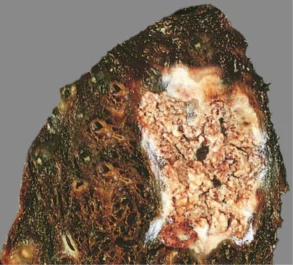
Big Question 1: What is Caseous Necrosis and where is it seen?
Broad Answer: Caseous necrosis is a form of tissue necrosis with a cheese-like (caseous) gross appearance. It is most characteristically seen in tuberculosis and fungal infections. Microscopically, it shows amorphous, granular, eosinophilic debris surrounded by inflammatory cells.
Detailed Questions
Q1.1: What is caseous necrosis?
Answer: A combination of Coagulative Necrosis (more common) + Liquefactive Necrosis.
- Cheese-like, soft, white gross appearance.
- A type of necrosis with a cheese-like, soft, white gross appearance.
Q1.2: Where is caseous necrosis commonly seen?
Answer:
- Tuberculosis.
- Fungal infections(histoplasmosis, coccidioidomycosis)
Q1.3: What is the microscopic appearance of caseous necrosis?
Answer:
- Amorphous, granular, eosinophilic debris.
- Surrounded by a border of inflammatory cells.

Ace Pathology in NEET PG – Get 100 One-Liners PDF Free!
Quick, high-yield one-liners to boost your preparation.
|
|
Neoplasia
Big Question 2: How are neoplasms classified and what are their histological variants?
Broad Answer: Neoplasms are classified into benign or malignant tumors, with specific nomenclature patterns and structural features. Some tumors defy naming conventions, while others originate from multiple germ layers or show mixed components.

Detailed Questions
Q2.1: How are benign tumors named and what are exceptions to the naming rule?
Answer:
- Benign tumors usually end with the suffix "-oma”
- Exceptions (though malignant):
- Lymphoma
- Melanoma
- Seminoma
- Chloroma (AML in soft tissue like orbit)
Q2.2: What distinguishes carcinomas from sarcomas?
Answer:
- Both are malignant tumors
- Carcinomas: arise from epithelial tissue
- Sarcomas: arise from mesenchymal tissue
Q2.3: What is a teratoma and its types?
Answer:
- Tumor derived from 2 or more germ layers
- Types:
- Mature teratoma: Benign
- Immature teratoma: May be malignant
- Example: Dermoid cyst = Mature cystic teratoma
Q2.4: What is a mixed tumor and give an example?
Answer:
- Tumor with epithelial and mesenchymal components
- Example: Pleomorphic adenoma (benign mixed tumor)
Q2.5: What is a hamartoma?
Answer:
- Haphazard proliferation of native tissue
- Example: Pulmonary hamartoma
Inflammation
Big Question 3: What are NETs and Emperipolesis in inflammation?
Broad Answer: NETs (Neutrophil Extracellular Traps) and Emperipolesis are specialized processes in inflammation, involved in defense and unique cell interactions.
Detailed Questions
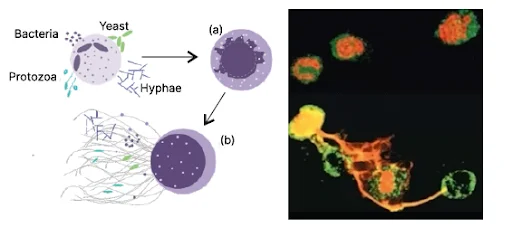
Q3.1: What are NETs and why are they called beneficial suicide?
Answer:
- NETs = nuclear chromatin released outside cell - traps bacteria
- Occur in severe infections (e.g., sepsis)
- Cell dies - “beneficial suicide”
- Amino acid involved: Arginine
- NETs -extracellular killing; phagocytosis - intracellular
- NETs - possible source of ANA - SLE
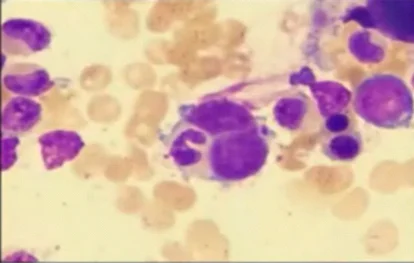
Q3.2: What is emperipolesis?
Answer:
- Cell-within-a-cell phenomenon (no killing)
- Seen in:
- M - MDS/MPN
- A - AIH
- R -Rosai-Dorfman disease
- C- CLL
Big Question 4 : What are the features and mechanisms of chronic inflammation and granulomas?
Broad Answer:
- Chronic inflammation involves macrophages, lymphocytes, and plasma cells, often forming granulomas with distinct cellular structures.
- Types of Cells:
- Lymphocytes
- Macrophages (most important)
- Plasma cells
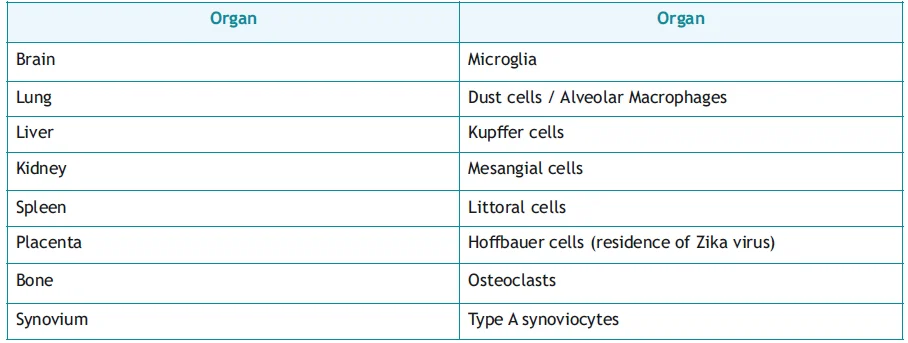
Q4.1: What are macrophage names in various organs?
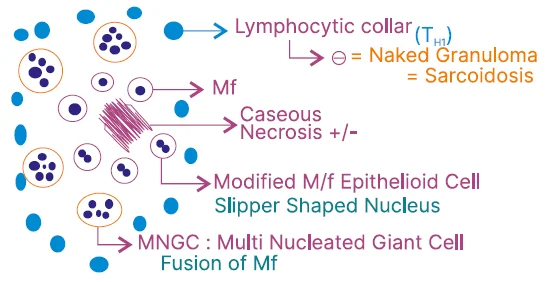
Q4.2: What are the components of granuloma?
Answer:
- Caseous necrosis (at centre)
- Present: Caseating granuloma
- Absent: Non-caseating granuloma
- Both caseating and non-caseating granuloma: TB (caseating more common), sarcoidosis (non-caseating more common)
- Lymphocytic collar (at periphery)
- TH1 lymphocyte: IFNγ
- Absent: Naked granuloma (sarcoidosis).
- Nuclei of cells surrounding caseous necrosis:
- Round nucleus - Macrophages
- Slipper-shaped nucleus - Modified macrophages or Epithelioid cells (most important cells of granuloma)
- MNGC or multinucleated giant cells.
- Fusion of macrophages.
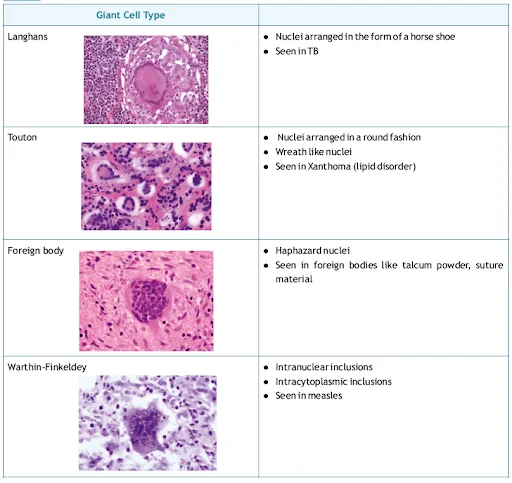
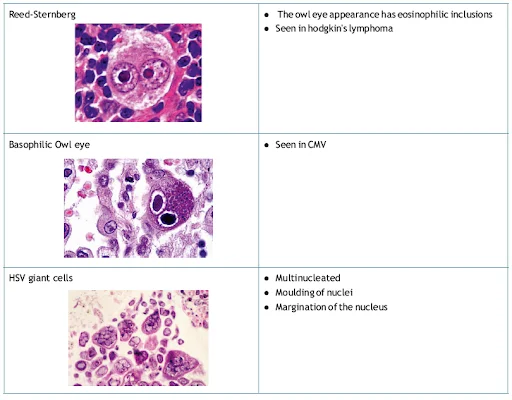
Q4.3: What are types of multinucleated giant cells?
Answer:
Q4.4: What special types of granulomas exist?
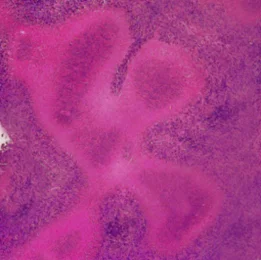
Answer: Stellate - cat scratch, LGV (lymphogranuloma venereum)
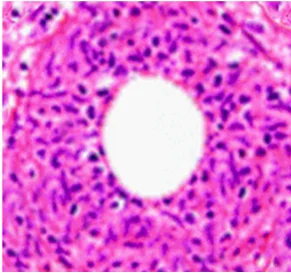
Doughnut - Q fever, allopurinol
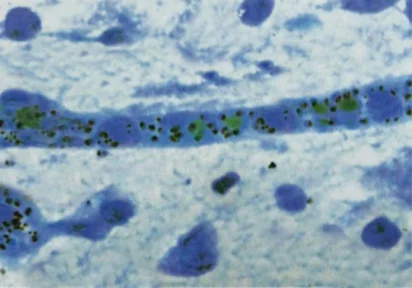
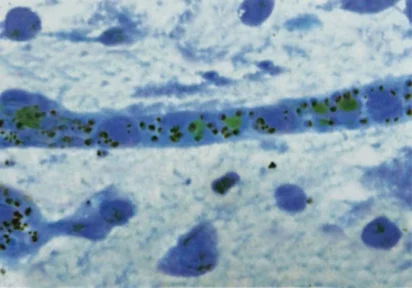
Durck - Cerebral malaria (Plasmodium falciparum), Field stain (special stain)
Rapid Revision Reignite is designed to give you an edge in your final prep with Q&E Notes in a Question-Answer format, RR LIVE Classes for same-day explanations, and a refined QBank of 3,000 curated exam-style questions—making your preparation smarter, faster, and more effective.
Download the PrepLadder app now and unlock a 24-hour FREE trial of premium high-yield content. Access Smarter Video Lectures also in हिंglish, Game Changing Qbank, Audio QBank, Structured Notes, Treasures, Mock test for FREE to ace your NEET PG preparation. Elevate your study experience and gear up for success. Start your journey with PrepLadder today!

PrepLadder
Access all the necessary resources you need to succeed in your competitive exam preparation. Stay informed with the latest news and updates on the upcoming exam, enhance your exam preparation, and transform your dreams into a reality!