Version X1 vs Version X: What's New & What's Better — A Feature-by-Feature Breakdown
Feb 26, 2026
An aspirant who scored 380 in a PG mock test six months ago now scores 520. She did not switch textbooks. She did not study for hours. She changed how she revised. From re-reading to actively recalling with the help of previous years' questions. That change in method, not study material, helped her score 140 marks more. This is the idea behind PrepLadders upgrade from Version X to Version X1. The platform and subjects remain the same. The way content is used to get marks is different.
QUICK ANSWER
- Version X was about delivering content. It had video lectures, 3D animations, an audio question bank with over 18,000 multiple-choice questions and structured notes.
- Version X1 keeps all of these. Adds a new layer to help students retain information.
- This includes 280 hours of revision with previous years' questions, 50 hours of essential topics, 20 hours of dissection videos, over 5,000 new multiple-choice questions, printed summary charts and a flashcard system.
- Version X1 will be available from 12 April 2026.
NEET PG RELEVANCE
- The NEET PG 2026 exam is on 30 August 2026. It will have a shift with 200 multiple-choice questions to be answered in 3.5 hours.
- Students need to check if their current study tools are good enough for recalling information under pressure.
- This comparison will help you see what Version X1 adds. If it will change your study plan.

The Core Philosophy Shift: Version X vs Version X1
- Video Lectures. What Changed?
- Rapid Revision. The Biggest Addition
- Integrated Essentials. A New Way to Study
- Anatomy: Dissection Videos vs Image Bank
- QBank. Old vs New
- Revision Tools: Treasures, vs Summary Charts + SPARK
- Notes. Whats Updated?
- Complete Comparison Table
- Who Should Upgrade?
- FAQs
The Core Philosophy Shift: Version X vs Version X1
To really understand the difference, we need to look at why Version X1 was created in that place. Version X was about finding a way to study faster without leaving anything out.
- It made lectures more fun to watch with nice pictures and real-life examples.
- It also used 3D animations and real patient cases to help explain things.
- Version X was really good at covering the syllabus for the first time, and it still is.
Now Version X1 is trying to answer a question: how can I make sure I remember what I studied when it is time for the exam?
- I have been teaching medicine for 25 years. I have seen the same thing happen over and over. Students who finish their work early but just read it again without thinking about it do not do as well as students who finish later but really work at remembering what they learned. The problem is not that they are not trying; it is just that they are not using the method.
- Version X gave you all the information you needed. Version X1 is about helping you remember that information so you can use it when you need it.
- This is not saying that Version X is not good enough; it is just that Version X1 is trying to help with a part of studying. The part where you are trying not to forget what you learned, not just trying to learn it in the first place.

Video Lectures — What Changed?
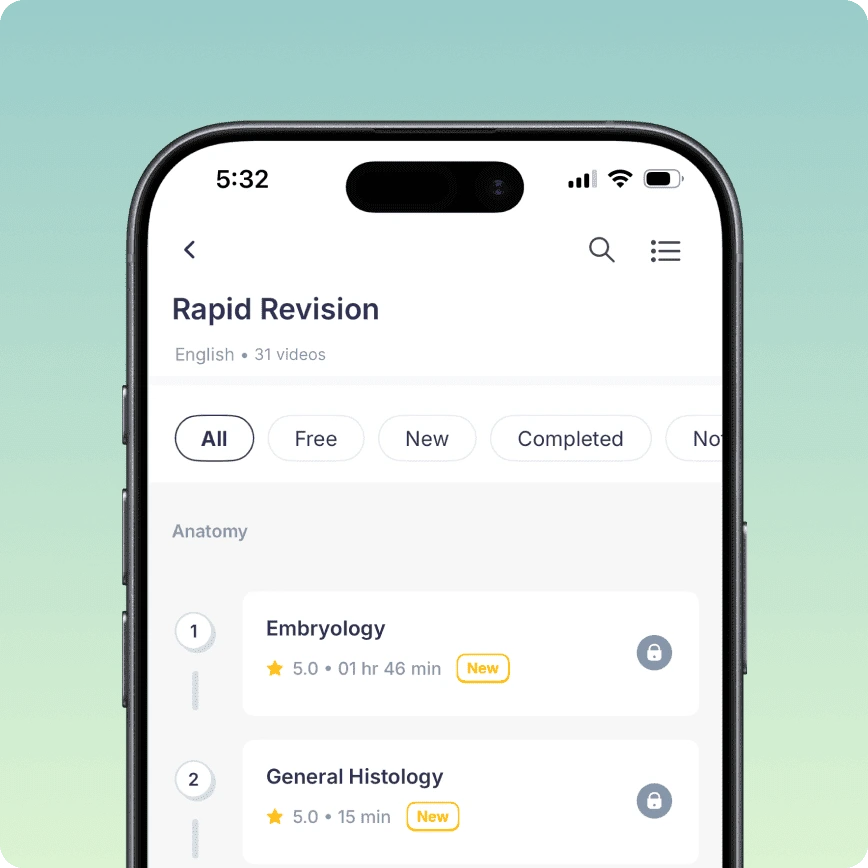
- Version X introduced a change to video lectures. They are now 15 percent shorter, which is really good. They also have 3D models, animations that really draw you in and real patient case demonstrations. You can watch these lectures in English and Hinglish.
- These lectures cover everything you need to know for the MBBS syllabus. It has 19 subjects. They are all covered. The lectures are really good for understanding the concepts and learning them for the time being. They set a standard.
- Version X1 has the lectures, but with some updates. They have updated 10 percent of the content to make sure it is current with the latest exam trends and changes. The notes that come with it are also updated to match the lectures.
- The big difference is the Rapid Revision module. It has 280 hours of content that's completely new. This is not a shorter version of the main lectures. It is content that is meant to help you revise, not learn for the first time.
Head-to-Head: Video Content
Aspect Version X Version X1 Main lectures 15% shorter, 3D models, animations Same + 10% content updates Rapid Revision Not available 280 hours, entirely new recordings PYQ mapping Not tagged Every Rapid Revision video is PYQ-mapped (NEET PG, INI-CET, FMGE) Error file tagging Not available Common mistakes flagged per topic Language English + Hinglish English + Hinglish (Rapid Revision in both)
Rapid Revision. The Important New Feature
This feature is so important that it gets its own section because it completely changes how you prepare in your last few months.
Here's what it is: 280 hours of video content made for revising.
What makes it different from rewatching lectures:
- PYQ Mapping: Each video is labeled with how often a topic has appeared in past NEET PG, INI-CET, and FMGE papers. You don't just revise a topic like fever. You see that examiners usually test it in a specific way. For example, they often ask which of the following is NOT a criterion in 70% of questions. Knowing this can help you get marks.
- Error File Tagging: Each video points out mistakes students make. I have seen students get confused between Hashimotos thyroiditis and De Quervain's thyroiditis every year. This is not because they didn't study. Because the key differences weren't highlighted when they first learned. This feature helps you avoid making mistakes.
- Exam Pattern Alignment: Recent NEET PG papers have clinical vignette-based questions. The Rapid Revision content is designed to match this format. It doesn't just teach you facts. It teaches you how facts appear in questions.
There's no equivalent in Version X. If you finished the lectures and wanted to revise, you either watched the same lectures again or used external notes. Version X1 gives you a revision pathway built just for revising.
Integrated Essentials — A Category That Didn't Exist Before
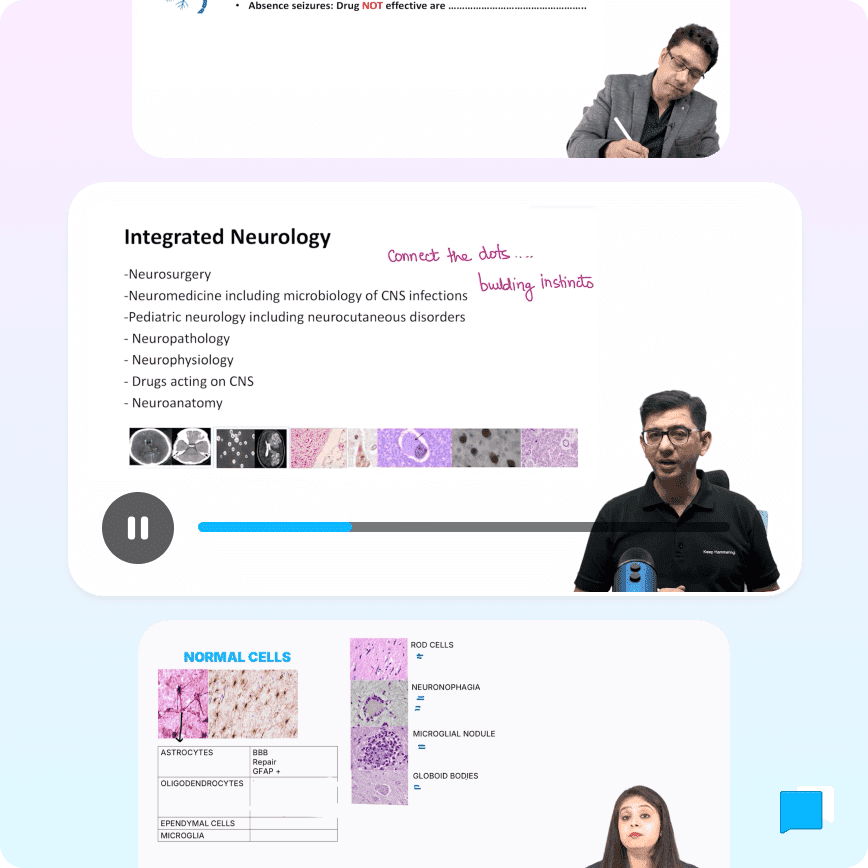
- Version X was different. It had subjects. Pathology was taught in one lecture and pharmacology in another. This is how medical education usually works. It is good for learning each subject deeply.
- Version X1 is new. It adds 50 hours of Integrated Essentials. This is a way of learning that combines information from many subjects into one flow.
Let's take blood pressure as an example. In Version X, you learn about it in subjects:
- Medicine (what it is, guidelines, damage to organs)
- Pharmacology (medicines, dosing)
- Pathology (changes in blood vessels, kidney damage)
- Anatomy (blood vessels in the kidney)
That is four study sessions. There is a lot of overlap. It can be hard to switch between subjects.
- In Integrated Essentials, high blood pressure is one module. You learn about what causes it, how it changes the body, how medicines work and how to treat it all in one session.
- You understand why a certain medicine protects the kidney and when to prescribe it. From my experience teaching, this connected understanding is what makes a difference between students who score high and those who do not. Examiners often ask questions that combine subjects.
- A question might describe a kidney biopsy. Ask for the best medicine. If you studied subjects separately, you need to look up two things. If you studied them together, you only need to look up one thing.
- The Integrated Essentials approach helps you learn efficiently. It helps you understand how different subjects fit together. This makes it easier to answer questions. It also helps reduce load. You can focus on learning rather than switching between subjects.
Head-to-Head: Learning Structure
Aspect Version X Version X1 Learning approach Subject-wise (19 separate subjects) Subject-wise (retained) + System-wise (50 hrs new) Cross-subject integration Student must connect independently Integrated Essentials connects automatically Overlap handling Same concept repeated across subjects Overlap eliminated — one connected flow Best for Building subject depth The student must connect independently 
Anatomy: Dissection Videos vs Image Bank
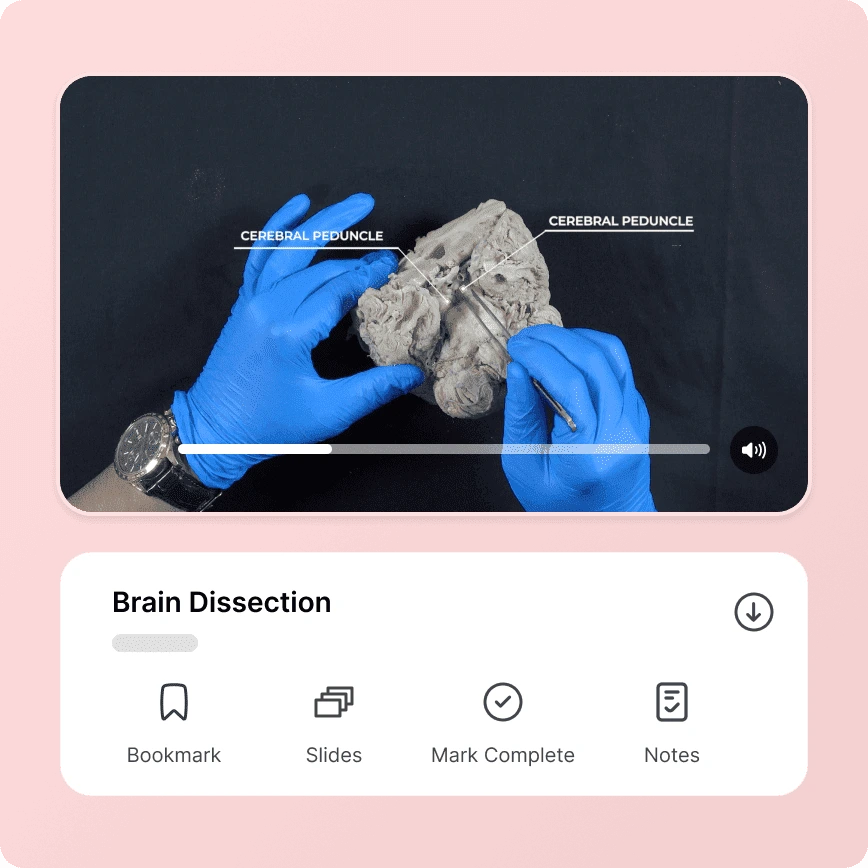
Version X introduced a high-quality Image Bank — clinical photographs, radiological images, and medical illustrations designed for image-based question (IBQ) practice. This was a significant step forward because IBQs have been steadily increasing in both NEET PG and INI-CET.
Version X1 retains the Image Bank and adds 20 hours of real cadaver dissection videos. These show anatomical structures as they appear in the human body — not idealised textbook diagrams, but real tissue with natural colour, texture, and three-dimensional relations.
On the wards, I've seen the difference this makes. Students who've only studied from atlas diagrams struggle when shown a cross-sectional CT image or an operative photograph. They can label a diagram but can't identify the structure in situ. Cadaver dissection videos bridge this gap — especially for cross-sectional anatomy, surgical relations, and applied anatomy questions.
Head-to-Head: Anatomy Support
Aspect Version X Version X1 Image Bank High-quality clinical images & IBQs Retained Cadaver dissection Not available 20 hours of real dissection videos 3D understanding 3D models in main lectures 3D models + real cadaveric spatial relations Cross-sectional anatomy Limited to diagrams and images Real structures shown in cross-section
QBank — Old vs New
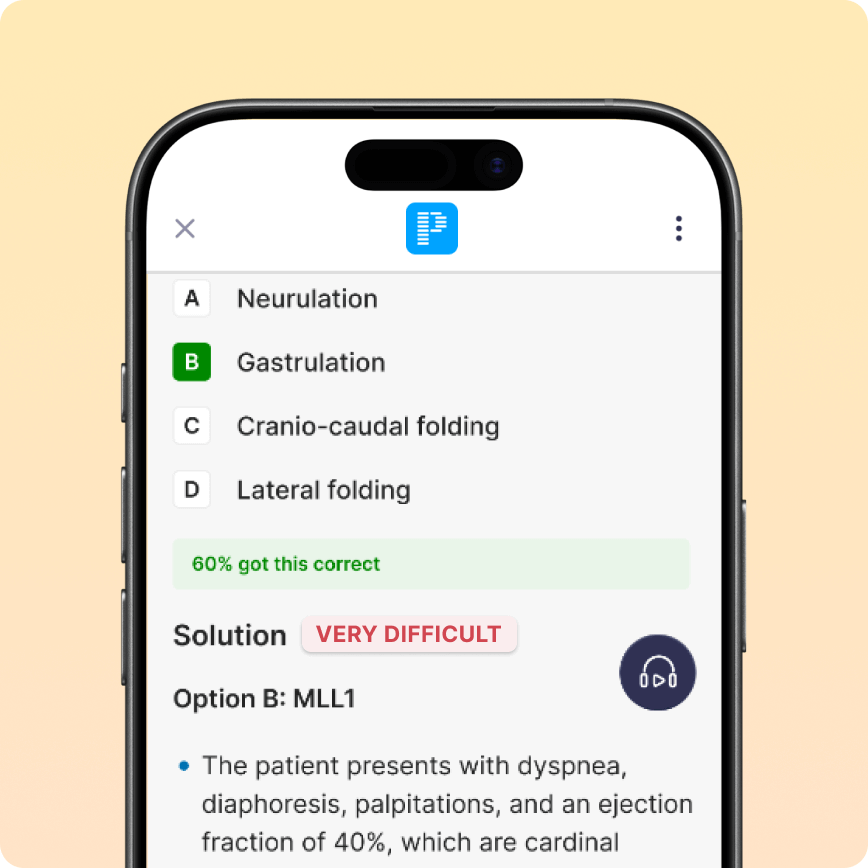
Version X launched QBank X with 18,000+ MCQs across 19 subjects — featuring clinical scenarios, one-liners, IBQs, and PYQs. A standout addition was the Audio QBank, where faculty-narrated explanations in English and Hinglish allowed aspirants to learn from the QBank on the go. The QBank also had 20% more image-based questions than previous versions and a triple-expert review process for accuracy.
Version X1 retains the entire existing QBank and adds 5,000+ new MCQs. These new questions are:
- Aligned with the latest NEET PG question framing (clinical vignettes, multi-concept integration)
- Updated to match current difficulty levels
- Reviewed with inputs from recent top-scoring aspirants
- Designed to cover topics that were previously underrepresented
The total question pool now exceeds 23,000 MCQs — making it one of the most extensive practice banks available for PG medical entrance preparation.
In clinical practice, I compare QBank evolution to drug formulary updates. A QBank that doesn't refresh its questions to match current exam patterns is like a formulary that still lists outdated treatment protocols. The 5,000 new questions ensure you're practising with the kind of questions you'll actually face.
Practice related MCQs with the PrepLadder QBank.
Head-to-Head: QBank
Aspect Version X Version X1 Total MCQs 18,000+ 23,000+ (18,000 existing + 5,000 new) Audio QBank English + Hinglish explanations Retained IBQ coverage 20% more than previous versions Retained + new IBQ questions added Triple-expert review Yes Yes (new questions also reviewed) Topper input Not specified New questions reviewed with recent top scorers Exam pattern match Matched to Version X era patterns Updated to match 2025–26 exam framing
Revision Tools: Treasures vs Summary Charts + SPARK
This is where the biggest functional gap existed in Version X — and where Version X1 makes its most meaningful additions.
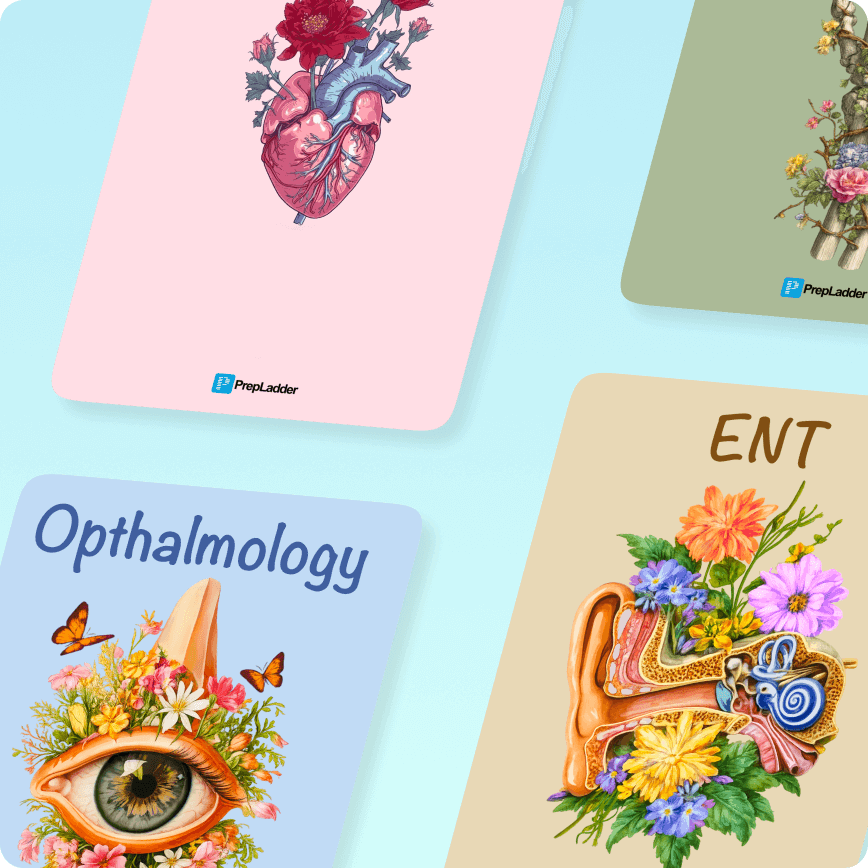
Version X offered Treasures — digital quick summary charts covering must-know concepts. These were useful for revision but limited to screen-based access and static content. There was no active recall mechanism — Treasures were a reference tool, not a retrieval tool.
Version X1 replaces the revision approach with two new tools:
Printed Summary Charts: Physical, one-page summaries for each topic. Exam-focused, stripped to only repeatedly asked concepts. Designed for offline, on-the-go revision. The shift from screen to paper isn't trivial — research on multi-modal encoding shows that engaging different sensory channels (visual on screen, tactile on paper) strengthens memory traces.
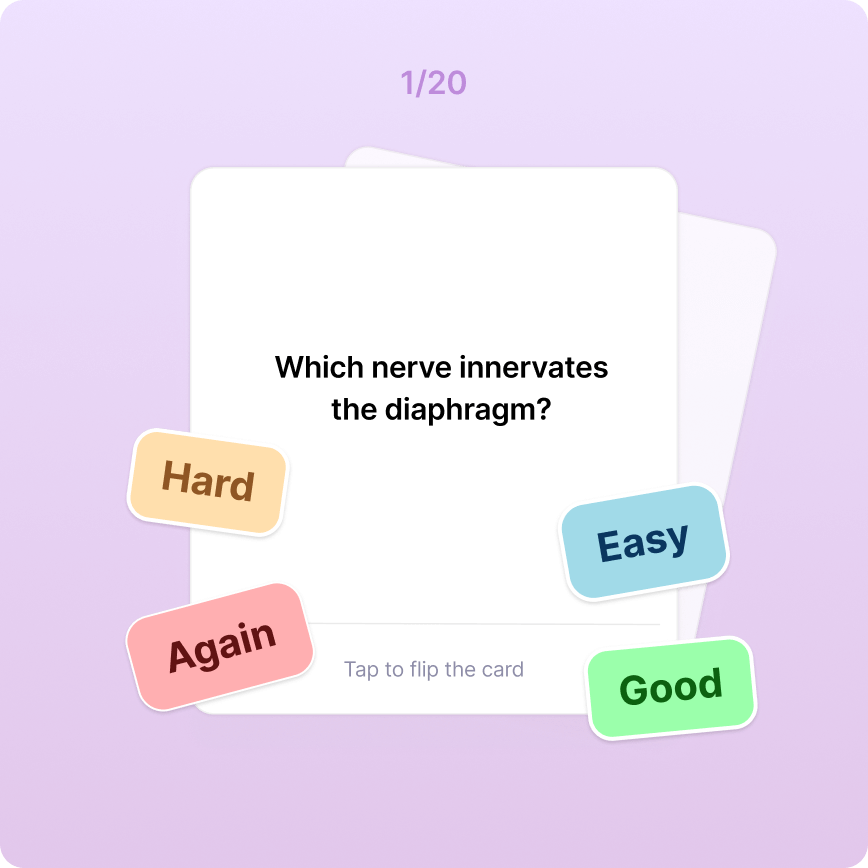
SPARK: This is the feature that has no equivalent in Version X. SPARK is a spaced-repetition flashcard system that tracks what you remember and what you forget. Concepts you recall easily are shown less often. Concepts you struggle with are resurfaced at scientifically optimised intervals — leveraging the Ebbinghaus forgetting curve and the spacing effect.
SPARK transforms revision from a manual, unstructured process ("let me read my notes again") into an automated, personalised, data-driven one ("the system knows I'm weak on aminoglycosides and shows me those cards more often"). No two students get the same SPARK schedule — because no two students forget the same things.
On the wards, I tell residents: you learn a clinical sign by encountering it repeatedly across different patients. SPARK replicates that spaced clinical exposure digitally for exam content.
Head-to-Head: Revision Tools
Aspect Version X Version X1 Quick revision Treasures (digital summary charts) Printed Summary Charts (offline, physical) Active recall tool Not available SPARK (spaced-repetition flashcards) Personalisation Static — same content for everyone SPARK adapts to individual weak areas Recall tracking Not available SPARK tracks what you remember vs forget Offline access Digital only Printed charts available anywhere
Notes — What's Updated?
Version X launched structured digital notes aligned with video lectures — featuring high-quality images, medical illustrations, flowcharts, and mind maps. Hard copy notes were also available for ELITE plan users.
Version X1 updates the notes to reflect the 10% changes made to the main video lectures. Updated hard copy notes are available — dispatch is expected in the first week of April 2026. Rapid Revision notes are expected to be dispatched in the second week of April 2026.
The core notes structure remains the same. The updates are targeted — aligning with refreshed lecture content and current exam trends rather than a complete overhaul.
Complete Version X1 vs Version X Comparison Table
Feature Version X Version X1 What Changed Core philosophy Learn efficiently Retain effectively Shift from delivery to recall Main video lectures 15% shorter, 3D, animations, English + Hinglish Same + 10% content updates Incremental refresh Rapid Revision 20 hours of real dissection videos 280 hrs, PYQ-mapped, error-tagged Entirely new Integrated Essentials Not available 50 hrs system-wise learning Entirely new Cadaver dissection Not available 20 hrs real dissection videos Entirely new QBank total 18,000+ MCQs 23,000+ MCQs +5,000 new questions Audio QBank English + Hinglish Retained No change Image Bank High-quality IBQ practice Retained No change Revision tools Treasures (digital) Printed Summary Charts + SPARK Major upgrade Active recall Not available SPARK spaced-repetition Entirely new Notes Structured digital + hard copy Updated to match 10% lecture changes Incremental refresh Test series Champions Exam + custom tests Retained No change Performance analytics Available Retained No change Version switching Toggle between older versions + X Toggle between X and X1 Progress retained Content launch Live 12 April 2026 — Best suited for First-time syllabus coverage Revision, retention & rank improvement Different prep stages
Who Should Upgrade — And Who Should Wait?
Not every aspirant needs Version X1 right now. Here's a framework based on where you are in your preparation:
Upgrade to Version X1 if:
- You've already completed one full pass of the syllabus and are entering the revision phase
- Your mock test scores have plateaued despite continued study — this typically signals a retention problem, not a knowledge gap
- You're preparing for both NEET PG (August 2026) and INI-CET (July session, expected May 2026) and need tools that serve both exam formats
- You want a structured, data-driven revision system rather than manual re-reading
Stay with Version X if:
- You're still in your first pass of the syllabus and haven't covered all 19 subjects yet
- You started preparation recently and need to build a conceptual foundation before focusing on retention
- Version X1 content goes live on 12 April 2026 — until then, you'll have Version X access regardless
The practical middle ground: Even if you're mid-syllabus, securing Version X1 access now means you'll have the full retention toolkit ready the moment you enter the revision phase. Since progress is retained when switching between versions, there's no penalty for starting with Version X lectures and migrating to Version X1 tools later.
High-Yield Takeaways
- Version X1 adds 6 entirely new features on top of Version X: Rapid Revision, Integrated Essentials, Dissection Videos, 5,000 new MCQs, Printed Summary Charts, and SPARK
- The main video lectures received 10% content updates — not a full reshoot, since they were freshly recorded for Version X
- Rapid Revision (280 hrs) is the single largest addition — entirely new recordings, PYQ-mapped, error-tagged, available in English + Hinglish
- SPARK has no Version X equivalent — it's the first personalised, spaced-repetition recall tool in the ecosystem
- Total QBank now exceeds 23,000 MCQs (18,000 existing + 5,000 new)
- Integrated Essentials is especially high-value for INI-CET aspirants who face cross-subject questions under 45-minute sectional time limits
- You can toggle between Version X and Version X1 — your progress, analytics, and QBank data are retained
- Version X1 content goes live on 12 April 2026; until then, Version X content remains accessible
- Examiners commonly test the same concept across multiple papers — integrated understanding (X1) beats siloed memorisation (X) every time
- A classic preparation trap: confusing "I recognise this" with "I can recall this under pressure" — SPARK is specifically built to close this gap
For topic-wise QBank practice, check the PrepLadder app.
Frequently Asked Questions
What is the main difference between Version X and Version X1?
Version X focused on efficient content delivery — 15% shorter lectures, 3D animations, Audio QBank. Version X1 adds a retention layer: 280 hours of PYQ-mapped Rapid Revision, 50 hours of Integrated Essentials, SPARK spaced-repetition flashcards, cadaver dissection videos, 5,000 new MCQs, and Printed Summary Charts. Version X helps you learn. Version X1 helps you remember.
Are Version X1 video lectures completely new?
The main lectures received 10% content updates — targeted refreshes rather than full reshoots, since they were freshly recorded for Version X. The major new video content is the 280-hour Rapid Revision module, which is entirely new and separately recorded with PYQ mapping and error file tagging.
Will I lose my Version X progress if I switch to Version X1?
No. You can toggle between Version X and Version X1. Your progress, analytics, and QBank performance data are retained in your current version. There's no penalty for switching.
When does Version X1 content go live?
Version X1 content is scheduled to go live on 12 April 2026. Until then, you retain full access to existing Version X content and can preview demo videos of Version X1's new features.
Is the QBank in Version X1 completely different?
No. Version X1 retains the full 18,000+ MCQ bank from Version X (including Audio QBank and IBQs) and adds 5,000+ new questions. The new questions are aligned with 2025–26 exam patterns and reviewed with input from recent top scorers. Your existing QBank progress is preserved.
What is SPARK, and does Version X have anything similar?
SPARK is a smart digital flashcard system powered by spaced-repetition algorithms. It tracks what you remember and what you forget, then resurfaces weak concepts at scientifically optimised intervals. Version X does not have an equivalent feature — SPARK is entirely new to Version X1.
CLINICAL PEARL
"Version X gave you the map. Version X1 gives you the muscle memory to navigate it without looking. In an exam hall, you don't have time to think — you need to know."
After training 40+ batches, I can say that the students who improve their ranks most dramatically between attempts aren't the ones who study new material. They're the ones who find better ways to retain what they already know. That's the Version X1 thesis in one sentence.

PrepLadder
Access all the necessary resources you need to succeed in your competitive exam preparation. Stay informed with the latest news and updates on the upcoming exam, enhance your exam preparation, and transform your dreams into a reality!
Navigate Quickly
The Core Philosophy Shift: Version X vs Version X1
The Core Philosophy Shift: Version X vs Version X1
Video Lectures — What Changed?
Head-to-Head: Video Content
Rapid Revision. The Important New Feature
What makes it different from rewatching lectures:
Integrated Essentials — A Category That Didn't Exist Before
Head-to-Head: Learning Structure
Anatomy: Dissection Videos vs Image Bank
Head-to-Head: Anatomy Support
QBank — Old vs New
Head-to-Head: QBank
Revision Tools: Treasures vs Summary Charts + SPARK
Head-to-Head: Revision Tools
Notes — What's Updated?
Complete Version X1 vs Version X Comparison Table
Who Should Upgrade — And Who Should Wait?
High-Yield Takeaways
Frequently Asked Questions
What is the main difference between Version X and Version X1?
Are Version X1 video lectures completely new?
Will I lose my Version X progress if I switch to Version X1?
When does Version X1 content go live?
Is the QBank in Version X1 completely different?
What is SPARK, and does Version X have anything similar?
CLINICAL PEARL
Top searching words
The most popular search terms used by aspirants
- medical pg version x
- neet pg version x