20 Must-Know Surgery Flashcards NEET PG 2026
Jan 21, 2026


Flashcard 1
Necrotising Fascitis

Clinical features
- It is characterized by blackish discolouration of skin, erythema and edema
- Woody hard texture of subcutaneous tissue on palpation
- Necrosis of the skin, superficial fascia, deep fascia
- Typically, muscle is spared
- It is a polymicrobial infection (i.e. Both aerobe & anaerobes are responsible)
- The single most common organism is the Group A Beta-hemolytic streptococci.
- The most important presenting symptom is severe pain.
- Sometimes, without treatment, pain decreases: Ominous sign
- The pain decreases due to thrombosis of small vessels and destruction of peripheral nerves
|
|
Flashcard 2
Stages of Tuberculous Lymphadenitis


Flashcard 3
Surgical Classification of Wound

Flashcard 4
Types of Abnormal Scars
|
Hypertrophic Scar |
Keloid |
|
 |


Flashcard 5
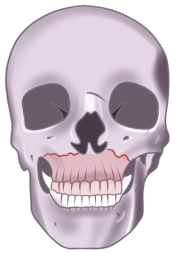
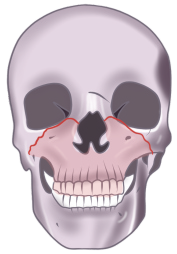
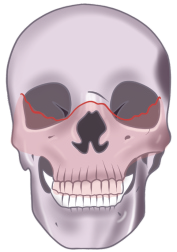
Midface Fractures
Le Fort I Le Fort II Le Fort III The fracture line runs above & parallel to the palate.
Separates alveolus and palate from facial skeleton.Pyramidal in shape.
Fracture line passes through:
Root of Nose.
Lacrimal bone.
Orbital floor.
Maxillary sinus (upper part).
Pterygoid plate.
Orbital floor always involved
Mnemonic: Nose Lao Maxilla PeComplete disjunction of the facial skeleton from the skull.
Fracture line passes through:
Nasal bridge.
Septum.
Ethmoid bone.
Orbit.
Frontozygomatic suture.
Mnemonic: NSE of Z
Flashcard 6
ATLS Modification of Parkland Formula

Flashcard 7
Basal cell carcinoma


- It is also known as "Rodent Ulcer/ Tear Ca"
- Usually present above an imaginary line drawn between the ear lobule and the corner of the mouth
- Arises from the basal layer of the epidermis
- Most common site: Nose > Inner Canthus
- The most common type of BCC: Nodular
- Central depression of umbilication
- Small pearly white nodules at the periphery
- Dilated or telangiectasia vessels are seen on the surface
- Investigation of choice: Biopsy
- Management: Wide local Excision with a 2 cm margin
- MOH'S Micrographic Surgery (for both BCC & SCC): aggressive tumors involving vital areas/cosmetic areas and recurrent tumors
Flashcard 8
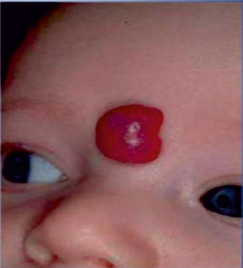
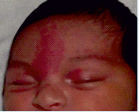
Vascular Anomalies of Skin
Strawberry Angioma Salmon's Patch Port Wine Stain Type of capillary Hemangioma
The baby who is normal at birth and it appears after 1 - 3 weeks and grows along with the child till 1 year.
In 90% of cases: Complete involution in 9 years
Emptying sign positiveIt is also known as macular stain/stork bite
It is present at birth
Generally seen in the midline from forehead to occiput
It disappears at 1 year of Age·It is present at birth
It grows along with the child
It is seen along the distribution of the fifth cranial nerve or Trigeminal nerve
It is seen on the face It persists

Flashcard 9
Subclavian Artery Stenosis

- MC cause of subclavian artery stenosis: Atherosclerosis
- MC involved vessel: Left SCA > Right SCA.
- MC site of stenosis: 1st part of left SCA. It occurs just distal to the origin of SCA & proximal to the origin of the vertebral artery.
Flashcard 10
Grading of Clinical Manifestations

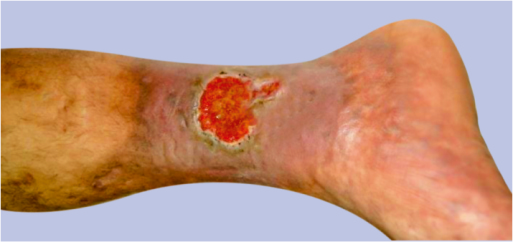
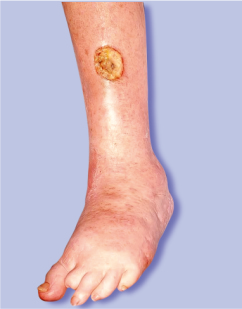
Venous Ulcer Arterial Ulcer Typical features of Venous Ulcer:
Sloping edges
Pink granulation tissue at the base
Hyperpigmentation of skin around the ulcer
Cause of Hyperpigmentation of skin: Hemosiderin DepositsTypical features of Arterial Ulcer:
Punched out
Thin shiny skin
Absence of hair
Brittle nails
Flashcard 11
CA Lung / Bronchogenic Carcinoma
- Arises from the respiratory epithelium of bronchi, bronchioles and alveoli.
- It mainly arises from lung hilum (except bronchoalveolar carcinoma & certain adenocarcinoma)
- Most common type of lung neoplasm
- The most common visceral malignancy worldwide
- The most common malignancy responsible for deaths

Flashcard 12
Metastatic Breast Cancer
- Stage IV is included in metastatic breast cancer.
- Two principles are followed in the case of metastatic breast cancer:
- Survival is prolonged
- Simultaneously, the quality of life is improved.
| Hormone Therapy | Chemotherapy |
| If ER/PR is positive Asymptomatic visceral metastasis Bony or soft tissue metastasis | ER/PR is negative Symptomatic visceral metastasis If the tumor is hormone refractory |
Flashcard 13
TRAM Flap

- Transverse Rectus Abdominis Muscle flap
- It is based on Inferior Epigastric vessels.
- It is a type of Free flap
- Restore vascularity of inferior epigastric artery and vein with internal mammary artery and vein.
- Disadvantage
- Cutting of the abdomen causes weakness in the infra-umbilical region.
- This leads to an increased risk of hernia.
- Most commonly used
- Not the best flap
Flashcard 14
Management of Solitary Thyroid Nodule

Flashcard 15
MEN 2 / Sipple Syndrome
- MEN 2 is also known as MEN 2A / Sipple syndrome.
- MEN 2B is also known as MEN 3.
Characteristics of MEN 2 / MEN 2A (Mnemonic: “MP in PHC”)
- Medullary carcinoma thyroid
- Pheochromocytoma
- Parathyroid hyperplasia/adenoma
- Hirschsprung disease
- Cutaneous lichen amyloidosis
Factors common to MEN 2A and MEN 2B. They are:
- Medullary carcinoma thyroid
- Pheochromocytoma
- RET oncogene mutation is responsible for both MEN 2A and MEN 2B.
Flashcard 16
Salivary Gland
- Most common salivary gland tumor: Pleomorphic adenoma
- Most common malignant salivary gland tumor in children and adults: Mucoepidermoid carcinoma
- Most common neoplasm of the salivary gland in children: Hemangioma
- Most common malignant tumor of minor salivary gland: Adenoid cystic carcinoma
- All salivary gland tumors are more common in parotid:
- Pleomorphic adenoma
- Warthin's tumor - exclusively seen in the parotid
- Mucoepidermoid Carcinoma - exclusively seen in the parotid
- Acinic cell Carcinoma - exclusively seen in the parotid
- Lymphoma
- Metastasis
- Except
- Adenoid cystic carcinoma: More common in minor salivary glands.
- Squamous cell carcinoma: More common in the submandibular gland.
Flashcard 17
Hiatus Hernia

Type I
Sliding hernia
- Herniation of GE junction
- Reflux
Type II
True Paraesophageal Hernia/ Rolling Hernia
- Herniation of fundus
- Abdominal pain
Type III
Mixed paraoesophageal hernia
- Herniation of GE junction and fundus
- Reflux
- Abdominal pain
Type IV
Herniation of content other than stomach
- Abdominal pain
- Increased risk of complications
Flashcard 18
Modified Johnson's Classification for Gastric Ulcer


- Most common type - type I.
- Type II to type V associated with blood group O.
- Type I is associated with blood group A.
- Type I, IV, and V - Normal or decreased acid production.
- Type II and III - Increased acid production.
Treatment
- Type II and III - Truncal vagotomy and antrectomy.
- Type I – Distal gastrectomy is done.
- Type IV – Special procedures to excise ulcer locally
- Type V – Stop NSAIDs.
Flashcard 19
Peutz Jeghers Polyp

- Multiple Hamartomatous polyps
- Most common site: Jejunum (Small intestine)
- Mutated Gene: LKB-1, STK-11
- Located on chromosome 19
- It increases the risk of carcinoma pancreas.
- Patients will have hypermelanotic macules.
- Present over the
- Lips and perioral
- Buccal mucosa
- Present over the
- Histology:
- Tree-like pattern
- Other Name: Arborization, Pseudoinvasion

Flashcard 20
Signs of Acute appendicitis
Rovsing's sign
- Most characteristic sign.
- Pain in right iliac fossa while pressing left Iliac fossa.
Obturator sign
- Pain on internal rotation of right thigh over hip joint.
- Positive in pelvic appendicitis.
Psoas sign
- Hyperextension of the right hip joint causes pain in the right iliac fossa.
- Positive in retrocecal appendicitis.
Ochsner Sherren Regime
- Conservative management of appendicular lump.
- CECT should be performed to confirm the diagnosis.
- Start with IV antibiotics
- Monitor vitals - pulse and temperature for every 4 hours.
- If the condition improves after 4 to 6 weeks - Interval appendectomy is performed.
- Done if recurrent appendicitis is present.
Download the PrepLadder App and get the best NEET PG online coaching with world-class video lectures also in हिंglish, QBank, Mock Tests and more!
Download PrepLadder's best app for neet pg preparation for Android
Download PrepLadder's best app for neet pg preparation for ios

PrepLadder Medical
Get access to all the essential resources required to ace your medical exam Preparation. Stay updated with the latest news and developments in the medical exam, improve your Medical Exam preparation, and turn your dreams into a reality!
Navigate Quickly
Flashcard 1
Necrotising Fascitis
Clinical features
Flashcard 2
Stages of Tuberculous Lymphadenitis
Flashcard 3
Surgical Classification of Wound
Flashcard 4
Types of Abnormal Scars
Flashcard 5
Midface Fractures
Flashcard 6
ATLS Modification of Parkland Formula
Flashcard 7
Basal cell carcinoma
Flashcard 8
Vascular Anomalies of Skin
Flashcard 9
Subclavian Artery Stenosis
Flashcard 10
Grading of Clinical Manifestations
Flashcard 11
CA Lung / Bronchogenic Carcinoma
Flashcard 12
Metastatic Breast Cancer
Flashcard 13
TRAM Flap
Flashcard 14
Management of Solitary Thyroid Nodule
Flashcard 15
MEN 2 / Sipple Syndrome
Characteristics of MEN 2 / MEN 2A (Mnemonic: “MP in PHC”)
Factors common to MEN 2A and MEN 2B. They are:
Flashcard 16
Salivary Gland
Flashcard 17
Hiatus Hernia
Flashcard 18
Modified Johnson's Classification for Gastric Ulcer
Treatment
Flashcard 19
Peutz Jeghers Polyp
Flashcard 20
Signs of Acute appendicitis
Ochsner Sherren Regime
Top searching words
The most popular search terms used by aspirants
- NEET PG Surgery Preparation