Pre-Anesthetic Checkup (PAC)
Jul 13, 2026

A pre-anesthetic Checkup (PAC) is an important tool for an anesthetist. During the pre-anesthetic checkup, the patient is screened for parameters.
- Airway assessment
- Hemoglobin concentration
- Fasting status
- H/O of comorbidities
We will discuss these in detail. Pre-anesthetic checkups are a very important part of anesthesia. PAC decides whether a person is healthy enough to undergo anesthesia.
Quick Answer Box: What is PAC?
- PAC Full Form: Pre-Anesthetic Checkup.
- What it is: A mandatory medical evaluation performed before any surgical procedure.
- Who performs it: An anesthesiologist.
- What it determines: Your fitness for anesthesia. It screens your airway, heart, lungs, and blood parameters to ensure you can safely survive surgical stress.

Airway Assessment
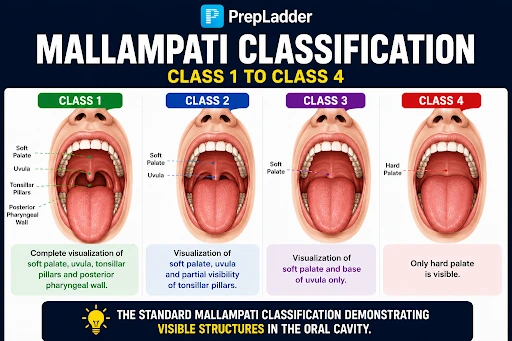
Ask the patient to open their mouth.
- Mallampati Classification: Mallampati classification is done to determine the difficulty of the airways during intubation. The structures seen in the mouth
- Hard palate
- Soft palate
- Uvula
- Tonsillar pillar
Mallampati Classification

Class 1: Hard palate, soft palate, uvula, the tip of uvula, and tonsil pillars are visible.
Class 2: Hard palate, soft palate, uvula, and tonsil pillars are visible. The tip of the uvula is not visible.
Class 3: Hard palate, soft palate, and base of the uvula are visible.
Class 4: Only the hard palate is visible. For minor surgeries, noninvasive methods of oxygenation are used. For emergencies, tracho-thyroidectomy or tracheostomy
Class 0: Hard palate, soft palate, uvula, tip, and tonsillar pillars, along with the tip of the
epiglottis, are visible. Seen only when a previous airway surgery was performed on a patient
- Modified Mallampati classification:
This is done to assess the size of the tongue for the Laryngoscope. The initial version of the Mallampati classification was Class 3, which was further modified by Sampson and Young, who added Class 4.
- Inter-incisor distance

The Inter-incisor distance with maximal mouth opening with a normal value of >5cm/admits 3 fingers. Inter incisor distance (IID) <4 cm is an indication for difficult intubation and Low IID (<4 cm) is seen in
- Tetanus
- Tobacco chewers developing submucous fibrosis (SMF)
- Mandible fractures
- Fracture in TMJ
The best way to intubate patients with low IID is by Tracheostomy
Ask the Patient to Lift the Chin
- Thyromental Distance
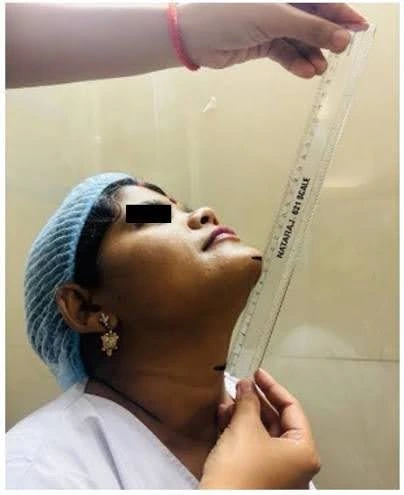
The distance between mentum and thyroid (should be ≥6.5 cm). In webbed neck patients, thyromental distance is <6.5 cm, which makes intubation difficult as the extension of the neck in these patients is minimal.
- Sternomental Distance
Distance between the sternum and the mentum (it should be> 12.5 cm)
Hemoglobin Concentration Required
The minimal requirement for surgeries theoretically is 10 g/dl and practically depends upon the type of surgery. Before surgery, extra blood is also arranged for the patient to make sure every emergency situation is covered.

Fasting Status
Fasting status before surgeries reduces the risk of aspiration. For Adults, the following rules are followed:
- 8 hours - Solid food
- 6 hours for semisolid food
- 2 hours for liquid food without pulp
For Infant:
- 6 hours: Formula feed
- 4 hours: Breast milk
- 2 hours: Clear fluid
Patients with a high risk of aspiration (even in a fasting state) due to:
- Increased intragastric or intra-abdominal pressure
- Obesity
- Pregnancy
- Ascites
- GERD
- Hiatus Hernia
- Emergency Surgery
Co-Existing Medical Illness
H/o comorbidities and drug history indicate which medications need to be continued before the
surgery and which to be stopped.
Hypertensive Patients
- Anti-HTN: Should be continued in the same dose
- ACEi/ARBs are discontinued as they cause refractory hypotension
Diabetic Patients
- Oral hypoglycemics
- Should be discontinued
- Insulin
- Can be continued
- Reason: Insulin dose can be titrated, but OHD is a fixed dosage form
- If required, switch to insulin from ODH (Major surgeries, 48 hrs before surgery)
CAD Patients
- Medications can be continued
- Aspirin: 75 mg
- Exception: CNS, retinal surgeries, as the micro blood vessels might bleed.
- Atorvastatin or rosuvastatin
- Antianginal drugs
- Aspirin: 75 mg
- Medications need to be stopped
- Aspirin: >75 mg before 3-5 days of surgery
- Clopidogrel: Stop it 8 days before the surgery
- Warfarin: 3-5 days before surgery
- Heparin: Before 6 hours of surgery
- LMWH: 12 hours of surgery
- Ticlopidine: 14 days prior to surgery
In Young Patients
Antiepileptic/antithyroid Drugs
Continue the medication
Oral Contraceptives
- Oral contraceptives like estrogen-containing pills should be stopped 4 weeks prior to surgery due to the risk of thromboembolism.
- Progesterone only or combined pill → Continue the medication.
Oral Contraceptives
- Stop 3 weeks before surgery TCA's stopped due to the risk of developing postoperative delirium.
- MAO inhibitors stopped as it causes severe sympathetic reactions with pethidine
- Selegiline (MAO inhibitor) can be continued until the day of surgery.
TCA (nortriptyline or amitriptyline) / MAO Inhibitors
- Discontinued 24 to 48 hrs before the surgery
- Prolong the effect of muscle relaxants.
- Can be given with new-generation muscle relaxants (atracurium, mivacurium, and cisatracurium)
Lithium
- Should be continued
- Levodopa should be continued
Anticonvulsant
Anticonvulsants like Levodopa should be continued.
Smoking
- It should be stopped 6-8 weeks prior to surgery as smoking inhibits mucociliary activity, and nicotine increases the chances of bronchospasm.
- Stopping at least for 12 hours reduces Carboxyhemoglobin.
Steroids
If taken for > 1 week last year, it is continued, as the sudden stopping of steroids can suppress
endogenous cortisol
NSAIDS
Stop 24-48 hours before surgery since it aggravates renal damage.
Herbal medications
Stopped 6 weeks before any surgery, as they may pose problems on the kidney or liver
If the patient is having metallic stent (E.g. CAD)
- Elective surgery: The surgery has to be deferred for at least 1 month
- Drug-eluting stent: The surgery has to be deferred for at least 1 year

Summary of drugs before PAC:
All A's can be safely given
- Aspirin 75
- Antihypertensives, except ACE inhibitors
- Antiepileptic drugs
- Antithyroid
- Steroids
Specific drugs for PAC
- Heparin: 6 hours before surgery
- OCP: 4 weeks before surgery
- OHD: The day of surgery
- TCA: 3 weeks before surgery
Drugs that need to be stopped
- MAO inhibitors
- Lithium
- Clopidogrel
- Warfarin
Frequently Asked Questions
Q: What is the best way to intubate patients with low Inter Incisor Distance?
Answer: Tracheostomy
Q: As a junior resident in the pediatric surgery department, you are overseeing an infant scheduled for hypospadias repair surgery. What instructions would you provide to the mother concerning preoperative fasting for the infant on the mother's milk?
A. 4hr
B. 6hr
C. 2hr
D. 8 hr
Answer: A. 4hr
Q: When should nortriptyline be discontinued before laparoscopic hernia repair surgery in a 49-year-old female with a paraumbilical hernia with a defect of 3cm and a history of neuropathic pain?
Answer: TCA → Stop 3 weeks before surgery (Risk of developing postoperative delirium).
Q: A 30-year-old female is brought to the emergency department with a series of seizures for more than 30 minutes without returning to normal consciousness. The seizures last for more than 5 minutes. The patient has a severe tongue bite during these seizures, causing a swollen tongue. The tongue blocks the airway, showing the soft and hard palate and the base of the uvula. The ETT is indicated but isn't easy because of the traumatized tongue. What grade of MPC is given in this case?
Answer: The patient belongs to Mallampati Class III
Q: What is the minimal hemoglobin requirement for surgeries?
Answer: 10 g/dl
Q: What is the PAC full form in medicine?
The PAC full form in medicine is Pre-Anesthetic Checkup. It is a mandatory evaluation by an anesthesiologist to ensure a patient is fit for surgery and anesthesia.
Q: What is the best way to intubate patients with a low Inter-Incisor Distance?
For patients with severely restricted mouth opening (IID <4 cm), the safest way to secure the airway is via a Tracheostomy.
Q: As a junior resident, what instructions would you provide to a mother concerning preoperative fasting for an infant on breast milk?
The infant must fast from breast milk for exactly 4 hours before the surgery.
Q: When should Nortriptyline (TCA) be discontinued before an elective surgery?
TCAs are generally stopped 3 weeks before surgery to reduce the risk of developing postoperative delirium and to prevent the prolonged effect of muscle relaxants.
Q: A patient presents with a swollen, traumatized tongue that blocks the airway. Only the hard palate, soft palate, and base of the uvula are visible. What Mallampati class is this?
Based on the visible structures, the patient belongs to Mallampati Class III
Q: What is the minimum theoretical hemoglobin requirement for elective surgeries?
The theoretical minimal requirement is 10 g/dl, though practically it is assessed based on the anticipated blood loss of the specific surgery.
Final Clinical Pearl
Anesthesia is hours of sheer boredom interrupted by moments of sheer terror. The entire goal of the Pre-Anesthetic Checkup is to eliminate that terror. You do not rush a patient into the OR without checking their thyromental distance or asking about their morning ACE inhibitor dose.
Treat your exam preparation exactly the same way. Screen your weak subjects. Build your 20th Notebook. Manage your 42-minute clock ruthlessly. Secure your foundation so that when the hard lock hits, you are already completely safe. Trust your training and claim your seat.
Sign up for our PrepLadder app today to learn more about this. Access Video Lectures, digital notes, QBank, and Mock Tests for FREE to ace your NEET PG preparation. Elevate your study experience and gear up for success. Start your journey with PrepLadder today!

Dr. Jaschandrika Rana
Dr. Jaschandrika Rana is a dedicated Medical Academic Content Writer with over 5 years of experience. She creates insightful and motivating content for medical aspirants preparing for the FMG Exam, Medical PG Exam, Residency courses, and the NEET SS Exam. Dr. Rana’s work inspires future medical professionals to achieve top ranks and excel in their careers.
Navigate Quickly
Airway Assessment
Ask the patient to open their mouth.
Ask the Patient to Lift the Chin
Hemoglobin Concentration Required
Fasting Status
Co-Existing Medical Illness
Hypertensive Patients
Diabetic Patients
CAD Patients
In Young Patients
Summary of drugs before PAC:
Frequently Asked Questions
Final Clinical Pearl
Top searching words
The most popular search terms used by aspirants
- NEET PG Anesthesia