High-Yield Anaesthesia Topics for NEET PG 2026: Important Drugs, Techniques & Exam Concepts
Apr 16, 2026

A 28-year-old male with ASA Grade I status is scheduled for emergency appendectomy. The patient develops severe jaw stiffness within 30 seconds after receiving succinylcholine. His body temperature increases to 40.2°C. End-tidal CO₂ shows an immediate and dramatic increase. The anaesthetist immediately reaches for a specific drug. What is it, and why? If you hesitated, Anaesthesia deserves more of your revision time, as it is one of the highest-scoring short subjects in recent NEET PG papers.
QUICK ANSWER
The NEET PG Anaesthesia syllabus tests candidates on the stages of general anaesthesia, induction agents, inhalational agents, local anaesthetics, muscle relaxants, and regional techniques. The most commonly tested drug is succinylcholine (a depolarising muscle relaxant that causes fasciculations). Dantrolene (2.5 mg/kg IV) serves as the treatment for malignant hyperthermia. Propofol (2-2.5 mg/kg IV) acts as the most effective induction agent for brief medical procedures.
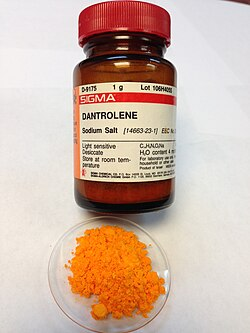
The sodium salt of dantrolene
NEET PG RELEVANCE
In the NEET PG exam, anaesthesia appears as a subject with a moderate-to-high frequency, accounting for 3-6 questions per exam. High-yield focus: stages of anaesthesia, MAC values of inhalational agents, spinal vs epidural differences, and malignant hyperthermia management. The recent examinations now require students to answer pharmacology-based questions that test their knowledge of drug mechanisms, adverse effects, and clinical applications.
In This Post:
- Stages of General Anaesthesia - Guedel's Classification
- Induction Agents - Drugs, Doses & Key Differences
- Inhalational Anaesthetic Agents - MAC Values & Properties
- Local Anaesthetics - Mechanism, Classification & Toxicity
- Muscle Relaxants - Depolarizing vs Non-Depolarizing
- Spinal vs Epidural Anaesthesia - Comparison Table
- Malignant Hyperthermia - Diagnosis & Emergency Management
- High-Yield Points for NEET PG
- FAQs
Stages of General Anaesthesia - Guedel's Classification
- This section presents information on induction agents through detailed descriptions of drugs, their dosing requirements, and the fundamental distinctions among them.
- Using MAC values and their respective characteristics, the document explains the properties of inhalational anaesthetic agents.
- The document explains how local anaesthetics work, their different types, and their potential harmful effects.
- The document explains the two types of muscle relaxants: depolarising and non-depolarising.
- The document provides a comparison table of spinal and epidural anaesthesia.
- This part describes the methods used to diagnose malignant hyperthermia and the procedures needed for its urgent treatment. The document presents critical information that medical professionals should know for the NEET PG exam. The document provides answers to frequently asked questions.
General anaesthesia is the reversible state of unconsciousness, analgesia, amnesia, and muscle relaxation produced by a combination of intravenous and inhalational agents. Arthur Guedel described four stages using diethyl ether as the reference agent. While modern balanced anaesthesia bypasses most stages rapidly, examiners still love testing this classification.
- Stage I (Analgesia) extends from the start of anaesthetic administration to loss of consciousness. Pain perception diminishes, but the patient remains conscious.
- Stage II (Excitement/Delirium) is the most dangerous stage - characterised by irregular breathing, breath-holding, laryngospasm, vomiting, and involuntary movements. In my clinical teaching, I always emphasise: the goal of induction is to pass through Stage II as quickly as possible. This is exactly why rapid-acting IV agents like Propofol replaced slow-onset inhalational induction in adults.
- Stage III (Surgical Anaesthesia) has four planes (Guedel's planes) and is the target depth for surgery. Plane 2 of Stage III is considered ideal for most surgical procedures.
- Stage IV (Medullary Depression) represents overdose - respiratory arrest and cardiovascular collapse occur here. On the wards, you will never intentionally see Stage IV, but NEET PG expects you to know it signals brainstem depression.
On NEET PG, expect questions asking which stage is associated with laryngospasm (Stage II) or at which plane eyeball movements cease (Plane 3 of Stage III).

Induction Agents - Drugs, Doses & Key Differences
The most common cause of exam mistakes in this section is the confusion between induction and maintenance doses. I will explain which treatment agents are essential for this case.
Propofol:
- The induction agent with the most widespread use in current practice requires a dose of 2 to 2.5 mg/kg administered via intravenous injection.
- The drug binds to GABA-A receptors, resulting in a rapid effect lasting 30 to 45 seconds and enabling fast recovery.
- The primary adverse effect of the drug causes people to lose blood pressure because their blood vessels expand.
- The antiemetic effects of Propofol are an established scientific fact that examiners test repeatedly. Students I encountered during my clinical work lost points because they could not remember that Propofol is an antiemetic.
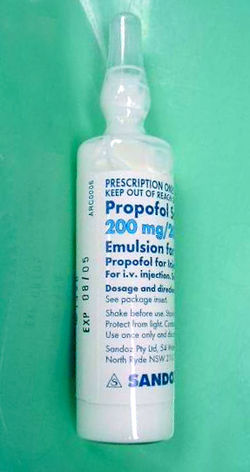
A 20 ml ampoule of 1% propofol emulsion
Thiopentone sodium:
- The ultra-short-acting barbiturate thiopentone sodium, which has a dosage range between 3 to 5 mg/kg administered through intravenous injection, serves as the traditional standard.
- Porphyria patients must not use this medication because it contains an absolute prohibition that will appear on every examination.
- The drug causes laryngospasm and has no pain-relieving properties.
- The drug cannot be used during status asthmaticus.
Ketamine:
- Among all induction agents, the only one that delivers three different medical effects while keeping cardiovascular function intact is one that requires a dosage range between 1 to 2 mg/kg administered through intravenous injection.
- The drug increases heart rate and blood pressure, making it suitable for treating shock and hypovolemic conditions.
- The treatment leads to emergence phenomena, which include hallucinations and vivid dreams, yet these symptoms can be treated by giving the patient a benzodiazepine such as midazolam.
- The drug is the primary choice for paediatric anaesthesia in developing countries because it is highly safe.
Also Read : Important One Liners in Anesthesia
Etomidate:
- Etomidate is administered at a dose of 0.2 to 0.3 mg/kg via intravenous injection to achieve cardiovascular stability.
- Clinicians prefer this method for patient induction because it yields better outcomes in patients with existing cardiac conditions.
- The method prevents 11β-hydroxylase from producing its vital hormone, making the drug unsuitable for back-to-back use or for treating multiple infections.
A classic NEET PG examination trap asks test-takers which induction method is safest for patients with hemodynamic instability. The answer is Ketamine for trauma/shock; Etomidate for cardiac patients with stable volume status.
Inhalational Anaesthetic Agents - MAC Values & Properties
Minimum Alveolar Concentration (MAC) is the concentration of an inhalational agent at 1 atmosphere that prevents movement in response to a surgical incision in 50% of patients. MAC is the single most important concept in inhalational anaesthesia for NEET PG.
Key MAC values you must memorise:
- Nitrous Oxide (N₂O): MAC = 105 (cannot produce surgical anaesthesia alone at 1 atm)
- Desflurane: MAC = 6.0
- Sevoflurane: MAC = 2.0
- Isoflurane: MAC = 1.15
- Halothane: MAC = 0.75
- Methoxyflurane: MAC = 0.16 (most potent; withdrawn due to nephrotoxicity)
Here’s a mnemonic I teach my students: "No Dose Shall Impose Half Measures" (N₂O → Desflurane → Sevoflurane → Isoflurane → Halothane → Methoxyflurane) arranged from highest to lowest MAC, which is lowest to highest potency, since MAC is inversely proportional to potency.
Halothane makes the myocardium more sensitive to catecholamines, which leads to arrhythmias. The drug causes Halothane hepatitis through immune-mediated effects, which occur after repeated exposure to the substance.
Sevoflurane interacts with soda lime to create Compound A, which causes kidney damage in rats, although its actual impact on human health remains uncertain.
Methoxyflurane causes kidney damage through oxalic acid crystals, which depend on the amount of the drug administered.
N₂O causes diffusion hypoxia at the end of anaesthesia because it expands gas-filled cavities, which makes it dangerous to use in closed air spaces, such as in pneumothorax and middle ear surgery.
In NEET PG, questions often connect a specific agent with its particular toxic effects. You must learn these direct relationships in their entirety.

Local Anaesthetics - Mechanism, Classification & Toxicity
Local anaesthetics (LAs) work by blocking voltage-gated sodium channels that control nerve impulse transmission. The drug exists in an ionised state, which cannot pass through membranes, and in an uncharged state, it can. This concept drives the exam-favourite question: why do local anaesthetics fail in infected/acidic tissue? The answer - acidic pH shifts the equilibrium toward the ionised form, reducing membrane penetration. This process results in ion trapping.
LAs are divided into two groups based on their intermediate chain links:
Amides (Lidocaine, Bupivacaine, Ropivacaine) - contain "i" in the prefix before "-caine." The liver performs its metabolic breakdown. Esters (Procaine, Cocaine, Tetracaine) - their metabolites are processed by plasma cholinesterase (pseudocholinesterase). Esters are more likely to cause allergic reactions due to their metabolite, para-aminobenzoic acid (PABA).
Bupivacaine is considered the most dangerous local anaesthetic because it strongly binds to cardiac sodium channels, which function with fast-in slow-out kinetics. The medical procedure of 20% IV Intralipid emulsion (lipid rescue therapy) treats Bupivacaine cardiotoxicity. Ropivacaine serves as a safer alternative, which creates less danger to heart function and prevents muscle movement.
Lidocaine is known as the most versatile local anaesthetic because it is used for infiltration, nerve blocks, topical anaesthesia, epidural, spinal (5% hyperbaric), and IV antiarrhythmic (Class IB) use. The maximum safe dose of Lidocaine is 4.5 mg/kg without adrenaline and 7 mg/kg with adrenaline.
In clinical teaching, I educate students that doctors block nerves in the following sequence:
First, they block small unmyelinated C fibres (pain, temperature), and finally, they block large myelinated Aα fibres (motor).
The process of recovery happens in reverse order. The patient who receives spinal anaesthesia experiences pain relief before motor function loss, which occurs afterwards.
Muscle Relaxants - Depolarizing vs Non-Depolarizing
Succinylcholine (also known as suxamethonium) is the only depolarizing neuromuscular blocker in use. The drug binds to the nicotinic receptor as an acetylcholine mimic, which leads to initial muscle depolarization that manifests through visible muscle contractions before the drug establishes permanent muscle paralysis.
The drug reaches its full effects between 30 and 60 seconds, while its effects last for an ultra-short period which extends between 5 and 10 minutes because plasma cholinesterase enzymes, including pseudocholinesterase and butyrylcholinesterase, break down the substance.
Succinylcholine can cause hyperkalaemia (raises serum K⁺ by 0.5-1.0 mEq/L). The situation becomes life-threatening because burns, crush injuries, denervation injuries and upper motor neuron lesions cause receptor upregulation, which results in enormous potassium release.
The drug becomes forbidden for use in burn patients during the first 24 hours after their injury and in patients who have been diagnosed with pseudocholinesterase deficiency because this condition causes extended apnoea, which doctors identify through the Dibucaine number test that indicates normal results above 70.
Among non-depolarising agents, Atracurium, Vecuronium, Rocuronium and Pancuronium act as competitive blockers of the nicotinic receptor.
Atracurium undergoes Hofmann degradation (organ-independent elimination) - making it the agent of choice in hepatic and renal failure.
Rocuronium shows the quickest effect among non-depolarizing drugs, while Sugammadex functions as the exclusive method to reverse its effects through its selective relaxant binding capability; traditional methods require the combination of Neostigmine and Glycopyrrolate to achieve reversal.
Examiners often test this mechanism difference:
The Phase I depolarising block shows no fade on train-of-four testing and no post-tetanic facilitation.
The non-depolarising block displays fade patterns during train-of-four testing which leads to post-tetanic facilitation.
Spinal vs Epidural Anaesthesia - Comparison Table
This is one of the most frequently tested comparisons in Anaesthesia for NEET PG. During ward postings, I always point out to students how the clinical differences follow directly from where the needle tip sits.
| Feature | Spinal Anaesthesia | Epidural Anaesthesia |
| Site of injection | Subarachnoid space | Epidural space |
| Needle used | 25G Quincke (cutting) or Whitacre (pencil-point) | 16-18G Tuohy needle |
| Level of insertion | Below L2 (usually L3-L4) | Any spinal level |
| Volume of drug | Small (2-4 mL) | Large (15-20 mL) |
| Onset | Rapid (2-5 minutes) | Slow (15-20 minutes) |
| Duration | Fixed (2-3 hours without catheter) | Continuous (via catheter) |
| Segmental blockade | Difficult to achieve | Easily achieved |
| Post-dural puncture headache | More common | Rare (unless accidental dural puncture) |
| Hypotension | Rapid, significant | Gradual, less severe |
| NEET PG pearl | Drug of choice: 0.5% Bupivacaine (heavy/hyperbaric) | Loss of resistance technique used to identify epidural space |
| Images |  |  |
The most common complication of spinal anaesthesia is hypotension (due to sympathetic blockade). Post-dural puncture headache (PDPH) is postural - worse on sitting up, relieved on lying down - and treated with an epidural blood patch if conservative measures fail.
For a deeper exploration of regional anaesthesia techniques, PrepLadder's video lectures provide clinical correlations and animated demonstrations.
Malignant Hyperthermia - Diagnosis & Emergency Management
Malignant hyperthermia (MH) is a life-threatening pharmacogenetic disorder triggered by volatile inhalational agents (Halothane, Sevoflurane, Isoflurane, Desflurane) and succinylcholine. It results from a mutation in the Ryanodine receptor (RYR1) gene on chromosome 19, leading to uncontrolled calcium release from the sarcoplasmic reticulum in skeletal muscle.
The result: sustained muscle contraction → massive hypermetabolism → hyperthermia, metabolic acidosis, hyperkalaemia, rhabdomyolysis, and eventually multi-organ failure if untreated.
Clinical Features & Diagnosis
The earliest sign is an unexplained rise in end-tidal CO₂ (ETCO₂). Masseter muscle rigidity after succinylcholine is a strong warning sign. The temperature may rise by 1-2°C every 5 minutes. Lab findings include respiratory and metabolic acidosis, elevated creatine kinase (CK), hyperkalaemia, and myoglobinuria.
The gold-standard diagnostic test is the Caffeine-Halothane Contracture Test (CHCT), performed on muscle biopsy in susceptible individuals.
Emergency Management
TREATMENT ALGORITHM
Step 1: Stop all triggering agents immediately → switch to IV anaesthesia (Propofol/opioids) Step 2: Administer Dantrolene 2.5 mg/kg IV (repeat up to 10 mg/kg) - Dantrolene blocks RYR1 calcium release
Step 3: Active cooling (cold IV fluids, ice packs, gastric lavage) → correct hyperkalaemia (insulin + dextrose, calcium gluconate) → maintain urine output >2 mL/kg/hr (IV fluids + mannitol to prevent myoglobin-induced renal failure)
Step 4: Monitor in ICU for at least 24-48 hours - recrudescence occurs in ~25% of cases
On NEET PG, the single most tested fact: Dantrolene is the specific antidote for malignant hyperthermia. Do not confuse this with Dantrolene's other use as a skeletal muscle relaxant in spasticity.
High-Yield Points for NEET PG
- Stage II (Excitement) of anaesthesia is the most dangerous stage - marked by laryngospasm, vomiting, and irregular respiration.
- Propofol has antiemetic properties and is the induction agent of choice for day-care surgery.
- Thiopentone is absolutely contraindicated in acute intermittent porphyria.
- Ketamine is the only IV induction agent that produces analgesia, bronchodilation, and cardiovascular stimulation - the agent of choice in shock and asthma.
- MAC is inversely proportional to potency. N₂O has the highest MAC (105) and lowest potency; Methoxyflurane has the lowest MAC (0.16) and highest potency.
- Halothane causes myocardial sensitisation to catecholamines and Halothane hepatitis on repeat exposure.
- Succinylcholine is contraindicated in burns (after 24 hrs), hyperkalaemia, penetrating eye injury, and pseudocholinesterase deficiency.
- Dibucaine number diagnoses pseudocholinesterase deficiency - normal value >70.
- Bupivacaine is the most cardiotoxic local anaesthetic - treated with IV Intralipid 20% (lipid rescue).
- Dantrolene 2.5 mg/kg IV is the specific treatment for malignant hyperthermia. The earliest sign is a rise in ETCO₂.
- Examiners commonly test: Atracurium undergoes Hofmann degradation - safe in hepatic and renal failure. Sugammadex reverses Rocuronium.
- A classic NEET PG trap is asking the preferred anaesthetic technique for caesarean section - answer: spinal anaesthesia (rapid onset, reliable block).
Frequently Asked Questions About Anaesthesia for NEET PG
Q.1 What is the most dangerous stage of anaesthesia?
The most dangerous stage of anesthesia occurs during Stage II, which scientists call Excitement or Delirium. The condition manifests through laryngospasm, breath-holding, vomiting and irregular breathing patterns. The modern IV induction agent Propofol allows rapid execution of this process, which leads to decreased anesthesia induction risks.
Q.2 Which induction agent is preferred in a patient with shock?
In patients with shock, Ketamine (1-2 mg/kg IV) becomes the preferred treatment for patients experiencing shock or hypovolemia because it stimulates their sympathetic nervous system, which leads to increased heart rate and blood pressure. Ketamine provides two benefits that Propofol and Thiopentone do not: it maintains cardiovascular stability while delivering pain relief.
Q.3 What is the antidote for malignant hyperthermia?
The antidote for malignant hyperthermia is Dantrolene sodium (2.5 mg/kg IV, repeated up to 10 mg/kg). The drug operates by blocking Ryanodine receptors (RYR1) on the sarcoplasmic reticulum, thereby preventing uncontrolled calcium release from skeletal muscle.
Q.4 What is the difference between spinal and epidural anaesthesia?
Spinal anesthesia involves a drug injection method that targets the subarachnoid space located below L2 to create an immediate and complete blockage effect through a minimal drug volume requirement of 2-4 mL. Epidural anesthesia requires larger drug volumes, which range from 15-20 mL, to achieve effects that develop more slowly than spinal anesthesia while enabling continuous drug delivery through catheter-based systems.
Q.5 Why do local anaesthetics fail in infected tissue?
Local anesthetics often fail in infected tissue because the tissue exhibits an acidic pH level which drops below 7.4. The unionized and ionized forms exist for local anesthetics. Acidic pH conditions create a situation where the charged ionized form becomes dominant because it cannot penetrate nerve membranes. The process known as ion trapping causes this effect, which makes anesthetics less effective.
Q.6 How is Anaesthesia tested in NEET PG?
NEET PG tests a candidate's knowledge of Anaesthesia through pharmacology-based MCQs, which include questions on drug mechanisms, dosage requirements, adverse effects and contraindications. The test includes questions that require people to compare two things which include spinal versus epidural and depolarizing versus non-depolarizing. The clinical scenario questions assess candidates' knowledge of how to manage malignant hyperthermia and select an appropriate induction agent.
CLINICAL PEARL
"In anaesthesia, the drug you reach for in a crisis defines you more than the drug you chose for induction."
After 10 years of teaching, I can tell you that Anaesthesia questions in NEET PG reward those who know specific drugs, specific doses, and specific contraindications - not vague generalisations. Nail the tables, and you nail the marks.

PrepLadder
Access all the necessary resources you need to succeed in your competitive exam preparation. Stay informed with the latest news and updates on the upcoming exam, enhance your exam preparation, and transform your dreams into a reality!
Navigate Quickly
NEET PG RELEVANCE
Stages of General Anaesthesia - Guedel's Classification
Induction Agents - Drugs, Doses & Key Differences
Propofol:
Thiopentone sodium:
Ketamine:
Etomidate:
Inhalational Anaesthetic Agents - MAC Values & Properties
Local Anaesthetics - Mechanism, Classification & Toxicity
Muscle Relaxants - Depolarizing vs Non-Depolarizing
Spinal vs Epidural Anaesthesia - Comparison Table
Malignant Hyperthermia - Diagnosis & Emergency Management
Clinical Features & Diagnosis
Emergency Management
High-Yield Points for NEET PG
Frequently Asked Questions About Anaesthesia for NEET PG
Q.1 What is the most dangerous stage of anaesthesia?
Q.2 Which induction agent is preferred in a patient with shock?
Q.3 What is the antidote for malignant hyperthermia?
Q.4 What is the difference between spinal and epidural anaesthesia?
Q.5 Why do local anaesthetics fail in infected tissue?
Q.6 How is Anaesthesia tested in NEET PG?
CLINICAL PEARL
Top searching words
The most popular search terms used by aspirants
- NEET PG Anesthesia
- NEET PG Anesthesia Preparation
- NEET PG Preparation
- NEET PG Preparation Strategy
- NEET PG Preparation Tips