Rosacea: Types, Causes, Symptoms, Diagnosis, Risk Factors
May 29, 2023


Rosacea
Rosacea, is a common skin condition that causes visible blood vessels and a flushed appearance on the face. It might also cause microscopic, pus-filled pimples. Before momentarily abating, these symptoms and indicators may fluctuate over several weeks or months. Rosacea can be mistaken for ruddiness that develops spontaneously, other skin problems, or acne.
It is also known as Acne rosacea. It is a misnomer and is not related to Acne. In Rosacea, inflammation and vascular hyperactivity is seen, Flushing is seen when exposed to heat or spicy foods or when felt anxious or stressed. It is Predominantly seen in adults. Affected areas are conventions of face like Cheeks, Nose and Chin.
Read this blog further to get a quick overview of this important topic for dermatology and ace your NEET PG exam preparation.
Types of Rosacea:
There are 4 subtypes of Rosacea:
- Subtype 1-Erythematotelangiectatic rosacea (ETTR)
Erythema and telangiectasia (Dilated blood vessels) is seen
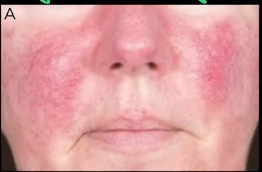
- Subtype 2- Papulopustular rosacea (PPR)
Papules and pustules are seen. In this no comedones are seen, Instead, telangiectasia is observed

- Subtype 3- Phymatous rosacea (PR).
Granulomatous lesion is seen on the nose. It is Also called potato nose
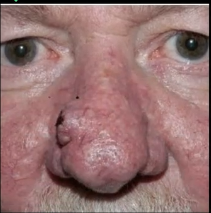
- Subtype 4- Ocular rosacea
Only ocular changes are seen. Skin changes are absent.
Dermatology Related Articles:

Causes of Rosacea
Below we have listed some common causes of Rosacea:
- Due to innate immunity
- Exposure to UV light
- Stress
- Hot spicy food
- Organisms include- Demodex, Staphylococcus epidermidis,Chlamydophila pneumonia
Signs of Rosacea
Some of the common signs of Rosacea includes:
- Flushing on face
- Pimple bumping
- Persistent redness
- Blood vessels become visible
Risk Factors for Rosacea
Rosacea can affect everyone. But if any of the following apply to you:
- Most commonly women are affected.
- If a person is Having sun-sensitive skin
- People older than 30 years of age
- Smokers
- Hereditary

Diagnosis of Rosacea
The doctor will thoroughly examine your signs and symptoms and obtain a medical history in order to determine whether you have rosacea. You should discuss any skin issues you are having with your doctor during your examination, such as redness, lumps or pimples, burning, itching, etc. There is no particular test to identify rosacea. Your doctor might advise you to see a dermatologist, who focuses on diseases of the skin.
Treatment
- Avoiding triggering factors
- For Subtype 1- Vasoconstrictors like Topical brimonidine and Oral propranolol
- For Subtype 2- Topical Metronidazole, Topical Ivermectin and Antibiotics like Doxycycline and Erythromycin
- For Subtype 3- Additionally, Retinoids can be given and Surgical/Laser corrections are done if necessary
To scale up your NEET PG preparation with the best-in-class video lectures, QBank, Mock Tests and more, download the PrepLadder App!
Download PrepLadder's NEET PG preparation app for Android
Download PrepLadder's NEET PG preparation app for iOS

PrepLadder Medical
Get access to all the essential resources required to ace your medical exam Preparation. Stay updated with the latest news and developments in the medical exam, improve your Medical Exam preparation, and turn your dreams into a reality!
Navigate Quickly
Rosacea
Types of Rosacea:
Causes of Rosacea
Signs of Rosacea
Risk Factors for Rosacea
Diagnosis of Rosacea
Treatment
Top searching words
The most popular search terms used by aspirants
- Medical PG Dermatology
- NEET PG Dermatology