NEET PG 2026 Detailed Exam Analysis, Exam Difficulty, Pattern, Repeats
Sep 1, 2026

The NEET PG 2026 exam, conducted by the National Board of Examinations (NBE) on 30 August 2026, brought a noticeable shift in the way candidates were tested.
Student feedback points to a paper that leaned heavily on clinical application, integrated concepts, long-stem questions, and close answer choices, making careful interpretation just as important as factual recall.
To understand the paper beyond first impressions, we surveyed candidates who appeared for the exam and analyzed their responses across difficulty level, question pattern, subject-wise weightage, number of attempts, and repeats.
Here’s a detailed breakdown of what the NEET PG 2026 paper actually looked like from the students’ perspective.

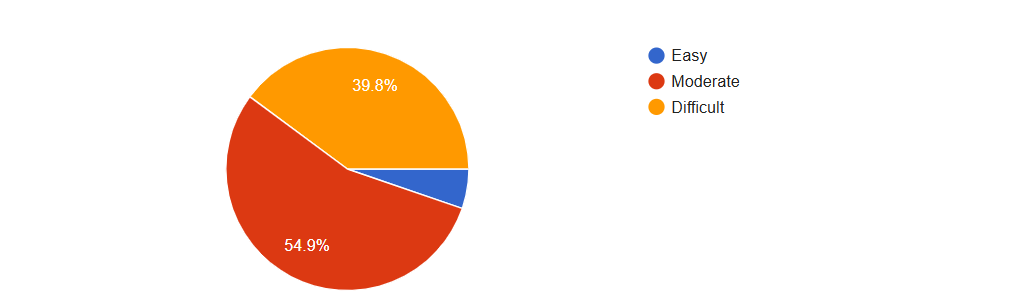
How Would You Rate the Overall Difficulty of the Exam?
The NEET PG 2026 exam was perceived as moderately difficult by a majority of students. Specifically, 54.9% of students rated the exam as moderate, 39.8% found it difficult, and only 5.3% found it easy.
Download Free NEET PG Previous Year
NEET PG 2026 Exam Pattern at a Glance
Particular NEET PG 2026 Exam Date August 30, 2026 Mode Computer-Based Test Total Questions 180 MCQs Maximum Marks 720 Sections 5 Questions per Section 36 Time per Section 42 minutes Correct Answer +4 marks Incorrect Answer −1 mark Unanswered Question 0 marks 
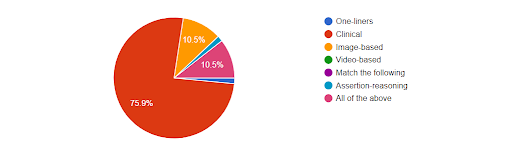
What Was the General Pattern of the NEET-PG Questions?
The NEET PG 2026 paper showed a strong clinical orientation, with 75.9% of respondents identifying Clinical questions as the dominant pattern. This indicates that the exam focused heavily on applying concepts to clinical scenarios rather than relying on direct recall.
Image-based questions and questions involving a combination of formats (“All of the above”) accounted for 10.5% each. Assertion-reasoning and direct one-liners formed only a very small share of the responses, while match-the-following and video-based questions were negligible.
Overall, the responses suggest a clear takeaway: clinical application and interpretation dominated the paper, reinforcing the importance of case-based learning and strong conceptual understanding over rote memorization.
Were the Questions Easy, Moderate, or Difficult?
Most students described the NEET PG paper as moderate to difficult, with a noticeable number calling it moderate but lengthy and tricky.
While several questions were based on familiar PYQs/PYTs and common topics, students felt the options were often close, stems were longer, and many questions required deeper clinical or conceptual interpretation rather than direct recall.
A smaller group found the paper easy to moderate, but overall feedback suggests that time management, application of concepts, and careful option elimination played a major role in determining difficulty.

Which Subjects Had Low Weightage in NEET PG '26?
Based on the student responses, the subjects perceived to have the lowest weightage were:
- Obstetrics & Gynecology (OBG) - 0 responses (0%)
- PSM - 5 responses (3.8%)
- Surgery - 6 responses (4.5%)
- Medicine - 7 responses (5.3%)
- Microbiology - 7 responses (5.3%)
- Pathology - 7 responses (5.3%)
Ophthalmology was also reported as relatively low-weightage, with 10 responses (7.5%).
Overall, student feedback suggests that OBG, PSM, Surgery, Medicine, Microbiology, and Pathology had comparatively lighter representation, while subjects such as Anesthesia, Anatomy, ENT, and Psychiatry were perceived to carry more weight in the paper.
Which Subjects Had High Weightage?
Based on the student responses, the subjects with the highest perceived weightage were:
- Obstetrics & Gynecology (OBG) — 108 responses (83.7%)
- Medicine — 90 responses (69.8%)
- Surgery — 85 responses (65.9%)
- PSM — 72 responses (55.8%)
- Pathology — 61 responses (47.3%)
- Microbiology — 56 responses (43.4%)
Overall, OBG emerged as the most prominently represented subject, followed by Medicine and Surgery. PSM also had substantial weightage, while Pathology and Microbiology stood out among the para-clinical subjects.
Subject-Wise Takeaway
Subject Reported Question Trend Medicine Clinical + management + integrated Surgery Application-oriented + clinical OBG Clinical + conceptual PSM Epidemiology + numerical/application Pathology Conceptual + integrated Pharmacology Drug application + clinical reasoning Microbiology Infectious disease + conceptual Pediatrics Clinical + management Anatomy Applied/clinical anatomy Physiology Conceptual/application Biochemistry Conceptual/integrated Dermatology Clinical + image-based Radiology Imaging/investigation-based Psychiatry Clinical scenarios ENT Clinical/applied Ophthalmology Clinical/image-based Orthopaedics Clinical/image-based Anaesthesiology Applied clinical concepts
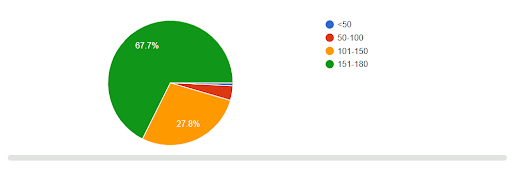
How Many Questions Did You Attempt in the Exam?
Most students reported attempting a large proportion of the paper. According to the responses, 67.7% attempted between 151–180 questions, while 27.8% attempted between 101–150 questions.
Only a very small proportion of students attempted 100 questions or fewer.
Overall, the responses suggest that despite the paper being perceived as lengthy and clinically oriented, most candidates were able to attempt more than 150 of the 180 questions.
How Important Were Images in NEET PG 2026?
Image-based questions were reported to have a significant presence.
Students and faculty mentioned images involving areas such as:
- Radiology
- Pathology
- Dermatology
- Ophthalmology
- Anatomy
- Clinical signs
However, the exact number of image-based questions cannot be confirmed from the available memory-based analyses, so an exact numerical figure should not be treated as official.
The broader lesson is clear:
Visual recognition and interpretation remain important skills for NEET PG.
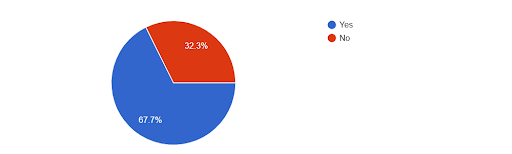
Was The Exam Easy to Finish Within the Allocated Time?
67.7% of students found the 3-hour 30-minute exam duration to be adequate, while 32.3% felt the time was insufficient. This highlights the importance of effective time management during the exam.
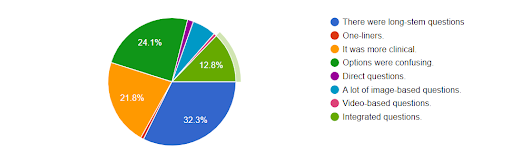
How were Difficult Questions Framed?
According to student responses, the difficult questions were largely driven by length, clinical application, and tricky options. Around 32.3% reported encountering long-stem questions, while 24.1% felt that confusing answer choices added to the difficulty. Another 21.8% said the paper was more clinical in nature, requiring greater application of concepts.
Additionally, 12.8% highlighted integrated questions, where concepts from multiple areas had to be connected. Direct questions, one-liners, and video or image-based questions accounted for a much smaller share of responses.
Overall, the feedback suggests that the challenge came less from straightforward recall and more from interpreting lengthy clinical scenarios, integrating concepts, and choosing between closely competing options.
Did You Employ Any Specific Strategy During the Exam?
Here are some of the strategies and techniques employed by students during the exam:
How Many Repeats Did You Encounter?
Student responses were quite varied, suggesting that the number of repeat questions was not uniform across the paper. Many students reported seeing only a few repeats, commonly in the range of 5–20 questions, while some estimated around 20–40.
A few students felt the overlap was much higher, with responses ranging from 50 to 70+ questions, and one respondent even estimated that a large part of the paper was linked to previous-year topics. However, others reported very few or no direct repeats at all.
Overall, the feedback suggests that direct repeats were limited for many students, but familiarity with previous-year topics still helped, as several questions appeared to revisit known themes in a more clinical or twisted format.
Did you find the NEET-PG Champions Exam by PrepLadder helpful?
Yes: 86.5%
Tell us About Your Overall Exam Experience
The responses below will help you gauge the overall exam experience of the students.
Share Recall Questions (As Many As Possible)
We asked the students to share some of the exam questions they could recall, and here are the responses we received:
Major Takeaways for Future NEET PG Aspirants
The 2026 paper provides several lessons for future preparation.
1. Build Concepts Before Rapid Revision
Rapid revision is powerful when you already have a conceptual foundation. It should not become a substitute for understanding.
2. Solve PYQs Regularly
But focus on concepts and patterns, not merely memorising answers.
3. Practise Clinical Questions
Learn to move from:
Presentation → Diagnosis → Investigation → Management
4. Prepare Integrated Topics
Connect subjects rather than studying each one in complete isolation.
5. Practise Images
Develop the ability to recognise and interpret common clinical and radiological findings.
6. Strengthen Next-Step Management
Know what should be done next, not only what the diagnosis is.
7. Practise Numerical Questions
Especially for PSM, where knowing the formula must be combined with correct interpretation of the data.
8. Don't Depend Entirely on One-Liners
Factual revision remains important, but the 2026 pattern suggests that facts increasingly need to be applied in context.
How was NEET PG 2026 Paper?
Overall, the NEET PG 2026 exam was perceived as moderate to difficult, with a clear emphasis on clinical application, long-stem questions, integrated concepts, and closely competing options.
While the paper demanded careful interpretation and effective time management, most students were still able to attempt a large proportion of the 180 questions.
Obstetrics & Gynecology, Medicine, Surgery, PSM, Pathology, and Microbiology emerged as some of the more prominently represented subjects.
Student feedback also suggests that while direct repeats were inconsistent, familiarity with previous-year topics and concepts remained valuable, as several questions appeared in more clinical or modified forms.
Overall, the paper reinforced the growing importance of strong conceptual understanding, clinical reasoning, and application-based preparation for NEET PG.
For future aspirants, this NEET PG 2026 exam review highlights the importance of focusing on clinical and concept-based preparation. At PrepLadder, we are fully equipped to help you excel with our ELITE Plan and QBank, which is now more aligned with the updated exam pattern. Don’t forget to check out our resources on the PrepLadder app to maximize your preparation and boost your chances of success.

PrepLadder
Access all the necessary resources you need to succeed in your competitive exam preparation. Stay informed with the latest news and updates on the upcoming exam, enhance your exam preparation, and transform your dreams into a reality!
Navigate Quickly
How Would You Rate the Overall Difficulty of the Exam?
Download Free NEET PG Previous Year
NEET PG 2026 Exam Pattern at a Glance
What Was the General Pattern of the NEET-PG Questions?
Were the Questions Easy, Moderate, or Difficult?
Which Subjects Had Low Weightage in NEET PG '26?
Which Subjects Had High Weightage?
Subject-Wise Takeaway
How Many Questions Did You Attempt in the Exam?
How Important Were Images in NEET PG 2026?
Was The Exam Easy to Finish Within the Allocated Time?
How were Difficult Questions Framed?
Did You Employ Any Specific Strategy During the Exam?
How Many Repeats Did You Encounter?
Did you find the NEET-PG Champions Exam by PrepLadder helpful?
Tell us About Your Overall Exam Experience
Share Recall Questions (As Many As Possible)
Major Takeaways for Future NEET PG Aspirants
1. Build Concepts Before Rapid Revision
2. Solve PYQs Regularly
3. Practise Clinical Questions
4. Prepare Integrated Topics
5. Practise Images
6. Strengthen Next-Step Management
7. Practise Numerical Questions
8. Don't Depend Entirely on One-Liners
How was NEET PG 2026 Paper?
Top searching words
The most popular search terms used by aspirants
- Medical PG Preparation
- NEET PG Exam Analysis