Aortic Dissection: Symptoms, Diagnosis & Treatment Insights
Oct 8, 2024

Circumferential or transverse tear in the intima
↓
Blood enters into intima-media space
↓
Separation of inner & middle layer
- Most common site of Aortic Dissection - Right lateral wall of ascending aorta.
- More commonly seen in males.
- Occurs in the 6th to 7th decade.


Predisposing Factors for Aortic Dissection
- Age
- Hypertension
- Marfan syndrome
- Pregnancy
- Other connective tissue disorders, for example Ehlers–Danlos syndrome, giant cell arteritis, systemic lupus erythematosus
- Coarctation of the aorta
- Turner or Noonan syndromes
- Aortic cannulation site (iatrogenic)
Diagnostics
- On CXR - widening of superior mediastinum with left sided pleural effusion.
- IOC depends on the presentation of patient:
- If the patient is Stable - CT Angio.
- If the patient is Unstable (PR > 100 bpm, BP < 100 mmHg) - Trans Esophageal Echocardiography (TEE)
Classification Of Aortic Dissection
DeBakey Classification
- Type I (60%) - Intimal tear in ascending aorta, which also involves descending aorta (most common).
- Type II - Dissection is just limited to ascending aorta.
- Type III - Intimal tear in descending aorta order with distal propagation.
Stanford Classification
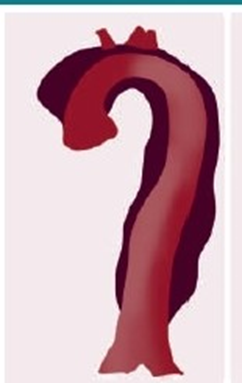
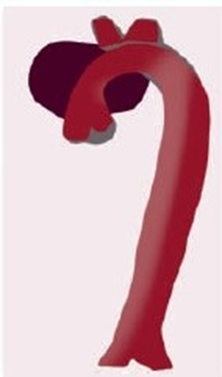
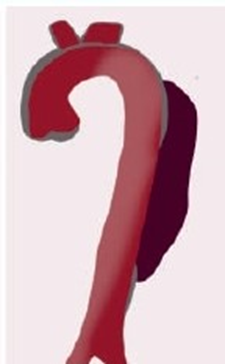
Percentage 60% 10-15% 25-30% Type DeBakey DeBakey DeBakey Stanford A (Proximal) Stanford A (Proximal) Stanford B(Distal)
Also read : Amoebic Liver Abscess : Epidemiology, Pathogenesis
Management
Initially control high blood pressure in all types of Aortic dissection and then refer to higher centers.
Surgical Management
Type A (Or Type I And Ii) Dissections
- Those involving the ascending aorta usually require surgical intervention. The chest is opened through a median sternotomy and CPB is started, with core cooling down to 18ºC.
- Aorta is cross-clamped as high as possible and opened. Cardioplegic solution is infused into the coronary ostia to arrest the heart in diastole.
- If the intimal tear is present and localized, the ascending aorta is excised with the tear and replaced with a synthetic graft. The distal anastomosis is performed with circulatory arrest.
Type B (Or Type Iii) Dissections
Best managed medically with antihypertensive drugs. when dissection is associated with evidence of malperfusion, such as organ, limb or neurological symptoms. The use of percutaneously placed endovascular stents is currently the standard intervention of choice in patients with complicated type B dissection.
Also read : Fluid from Nipple, Types, Causes, and Treatment Options
Outcomes
If type A dissection is untreated, the mortality rate is 50% within 48 hours and 75% within 1–2 weeks
If type B dissections: better prognosis
The surgical mortality rate is variable but is around 20–25% for proximal aortic dissection. The overall survival rate for patients leaving hospital, 80% at 5 years and 40% at 10 years.
FAQ’S
Q. Which drug is contraindicated in Aortic dissection?
Ans. Aspirin
Q. Which genetic condition is associated with a higher risk of aortic dissection?
Ans. Marfan syndrome
Download the PrepLadder app now and unlock a 24-hour FREE trial of premium high-yield content. Access Video Lectures, digital notes, QBank, and Mock Tests for FREE to ace your NEET PG preparation. Elevate your study experience and gear up for success. Start your journey with PrepLadder today!

PrepLadder Medical
Get access to all the essential resources required to ace your medical exam Preparation. Stay updated with the latest news and developments in the medical exam, improve your Medical Exam preparation, and turn your dreams into a reality!
Navigate Quickly
Predisposing Factors for Aortic Dissection
Clinical Features
Diagnostics
Classification Of Aortic Dissection
DeBakey Classification
Stanford Classification
Management
Surgical Management
Outcomes
FAQ’S
Top searching words
The most popular search terms used by aspirants
- NEET PG Surgery