How to Treat Infectious Diseases?
Nov 9, 2024


FLU
The flu is a contagious respiratory illness, generally mild to moderate & it is caused by influenza Viruses (Orthomyxovirus). Cough and tiredness can last for weeks. It can be prevented by getting the flu vaccination each year.
How to Treat FLU?
- Consume water and clear liquids.
- Take prescription antiviral medication within 48 hours of symptom onset.
- Take OTC medications for symptom relief, like Tylenol and Advil.
- Take rest.
Influenza Treatment Recommendations
- Oseltamivir: Tamiflu 75mg Twice daily for 5 days
- Oseltamivir – Renal Patients (creatinine clearance between 30 and 10 mL/minute): Tamiflu 75mg Once daily for 5 days
- Zanamivir: Relenza (two inhalations) 10mg Twice daily for 5 days
Influenza Prophylaxis Recommendations
- Oseltamivir: Tamiflu 75mg Once daily for 10 to 14 days
- Oseltamivir – Renal Patients (creatinine clearance between 30 and 10 mL/minute):Tamiflu 75mg Every other day for 10 to 14 days
- Zanamivir: Relenza (two inhalations) 10mg Once daily for 10 to 14 days
Also read: Constipation Causes, Diagnosis & Treatment Options Available

Points to be Noted
- For residents with breathing conditions (such as asthma and COPD): Relenza is not recommended, because it is an inhalation therapy.
Flu Shots are the Best Protection
- The influenza vaccine is still the #1 recommended protection against the influenza virus. If you have residents or staff members who have not been vaccinated and are not acutely ill, have them vaccinated right away.
Pneumonia
- Pneumonia is defined as inflammation and consolidation of the lung tissue due to an infectious agent.
- Potent cause of death in children
- Pneumonia that develops outside the hospital setting is considered community-acquired pneumonia
- Pneumonia developing 48 hours or more after admission to the hospital is termed nosocomial or hospital-acquired pneumonia.
- Community-acquired pneumonia is caused most commonly by bacteria that traditionally have been divided into 2 groups, typical and atypical. Typical organisms include S
- pneumoniae (pneumococcus) and Haemophilus and Staphylococcus species.
- Atypical refers to pneumonia caused by Legionella, Mycoplasma, and Chlamydia species.

How to Treat Pneumonia?
- Most people can be treated at home.
- If pneumonia becomes so severe that treatment is in the hospital, you may receive fluids and antibiotics in your veins, oxygen therapy, and possibly breathing treatments.
- Viral Pneumonia: Anti-virals like Oseltamivir (Tamiflu) and zanamivir (Relenza)
- Bacterial pneumonia: Patients with mild pneumonia who are otherwise healthy are treated with oral macrolide antibiotics (azithromycin, clarithromycin, or erythromycin).
- Patients with other serious illnesses, such as heart disease, chronic obstructive pulmonary disease, or emphysema, kidney disease, or diabetes are often given more powerful and/or higher dose antibiotics.
Also read: Prolactinoma Complete Overview
Severe Pneumonia Or Very Severe Disease
Any general danger sign
or
Chest indrawing
or
Stridor in calm child
- Give the first dose of ampicillin OR ceftriaxone IM. (p.13)
- If child under 6 months old; give 5 ml co-trimoxazole stat
- Give oxygen (p.13)
- If stridor: give nebulized adrenaline (p.13)
- Test blood sugar. Then treat/prevent low blood sugar (p.14)
- Keep child warm, and refer URGENTLY to hospital
Pneumonia
Fast breathing
- Give amoxicillin for 5 days (p.9)
- Soothe the throat and relieve the cough (p.11)
- Consider symptomatic HIV (p.7)
- If coughing for more than 21 days refer for possible TB or asthma
- Advise mother when to return immediately (p.26)
- Follow-up in 2 days
Cough Or Cold
No signs of pneumonia or very severe disease
- Soothe the throat and relieve cough (p.11)
- If coughing for more than 21 days refer for possible TB or asthma
- Advise mother when to return immediately (p.26)
- Follow up in 5 days if not improving
Also read: Grave's Disease Complete Overview
WHO Classification for Treatment of Children Aged 2 months – 5 years
No Pneumonia
Signs, Symptoms
Cough or cold No fast breathing, chest indrawing or indications of severe illness
Treatment
- Home remedies
- Patient can be treated at home
Pneumonia
Signs, symptoms
Increased respiratory rate
- 60 < 2 months
- 50 2-12 months
- 40 > 1 – 5 years
Treatment
- Cotrimoxazole or amoxicillin
- Patient can be treated at home
Severe Pneumonia
Signs, Symptoms
Chest indrawing
Treatment
- IV/IM penicillin
- The patient needed to receive care at the hospital.
Very Severe Pneumonia
Signs, Symptoms
Cyanosis, severe chest indrawing, inability to feed
Treatment
- IV penicillin + gentamicin
- The patient needed to receive care at the hospital.
Also read: Chronic Kidney Disease (CKD): Overview, Causes, and Management
Tuberculosis
- Tuberculosis is a chronic infectious disease caused by Mycobacterium tuberculosis which was discovered by Robert Koch. Also known as "Koch's Bacillus"
- The most common organ involved is lung (>80%) but it can involve any organ of the human body (except hair and nails)
- It usually affects human in the age group of 15 to 59 yrs
- TB is the most common opportunistic infection amongst HIV infected individuals.
- A sputum positive TB patient can infect 10-15 persons in a year
- TB should be suspected in anyone with cough for 2 weeks or more
- These persons should have a sputum examination in the nearest Microscopy Centre at the earliest.
How to Treat Tuberculosis?
Category-1
1. New sputum positive
2. Seriously ill, sputum negative, Pulmonary
3. Serious ill
Duration of treatment
Intensive phase (2 months)
Continuation phase (4 months)
Regimen
INH + RMP + ETB + PZA
INH + RMP
Category-2
Retreatment group
1. Relapse
2. Treatment failure
Duration of treatment
Intensive phase (3 months)
Continuation phase (5 months)
Regimen
INH + RMP + ETB + PZA
INH + RMP + ETB
Category-3
Retreatment group
1. New smear negative pulmonary
2. Extrapulmonary
Duration of Treatment
Intensive phase (2 months)
Continuation phase (4 months)
Regimen
INH + RMP
Also read: Understanding Addison's Disease: Causes, Symptoms, and Treatment
Anti-Tubercular Drugs
First Line Drugs
1. Isoniazid (H)
2. Rifampin (R)
3. Pyrazinamide (Z)
4. Ethambutol (E)
5. Streptomycin (S)
Second Line Drugs
- Ethionamide (Eto)
- Prothionamide (Pto)
- Cycloserine (Cs)
- Terizidone (Trd)
- Para-aminosalicylic acid (PAS)
- Thiacetazone (Thz)
- Rifabutin
Fluoroquinolones
- Ofloxacin (Ofx)
- Levofloxacin (Lvx/Lfx)
- Moxifloxacin (Mfx)
- Ciprofloxacin (Cfx)
Injectable Drugs
- Kanamycin (Km)
- Amikacin (Am)
- Capreomycin (Cm)
Point to be Noted
Bedaquiline (diarylquinoline) and Delamanid (nitroimidazole) are the 2 newly approved drugs for use in severe cases of MDRTB [PGI NOV 2016]
Also read: Understanding Cardiac Tamponade: Causes, Symptoms, and Treatment
Malaria
- Malaria is an acute disease caused by Plasmodium group of parasites and transmitted by anopheles mosquito.
- It is a disease that is seen all over the world, especially in developing countries.
- Common side effects of malaria are high fever, chills, headache, and other flu-like symptoms. Severe illness and death can normally be avoided if the disease is properly treated.
- Pregnant women are extremely vulnerable to malaria. If the disease is contracted during pregnancy, it can be passed to the infant or result in low birth weight, which decreases the baby's chance of survival.
How to Treat Malaria?
Primary Prevention
- Environmental improvement: Prevent mosquito breeding by removing water collections
- Anti mosquito measures – spray DDT on walls where mosquito rests
- Anti larval measures – spray larvicide in the water where mosquito breeds
- Prevent mosquito bites by using mosquito nets
- Chemoprophylaxis - Chloroquine
Secondary Prevention
- Early diagnosis and treatment
- To prevent complications especially cerebral malaria
- To prevent morbidity due to malaria
Drug Based Treatment for Malaria
Chemoprophylaxis (Suppressive treatment)
- Sporozoites before they infect hepatocytes
- Travellers travelling to countries prone to endemic malaria
- Drugs:
- Primaquine
- Chloroquine
- Mefloquine
- Doxycycline
Therapeutic Treatment
- Merozoites in Erythrocytic phase
- Active infection
- Drugs:
- Doxycycline
- Chloroquine
- Mefloquine
Gametocidal Treatment
- Gametocytes
- Prevents creation of resistant forms and spread of disease
- Drugs:
- Primaquine for P. falciparum,
- Chloroquine for all other
Radical Treatment (To prevent relapse)
- Hypnozoites in liver
- P. vivax and P. ovale infections
- Drugs:
- Primaquine
Typhoid
- Bacterial infectious disease contracted by consumption of food or drink contaminated with Salmonella typhi.
- Typhoid/enteric fever is endemic in most developing countries in Africa, Asia and Latin America
- It is primarily a disease of children and young adults.
- Man is the ONLY reservoir of Salmonella typhi.
- It is transmitted by ingestion of food/water contaminated by feces of patients/carriers
- Typhoid fever is caused by S. typhi; S. enterica, subspecies enterica, serotype typhi
Also read: Muscular Dystrophy: Overview of Types, Symptoms, and Management
How to Treat Typhoid?
- The aim of management is to kill the organism and correct effect of septicemia
- Most patients are treated at home
- For hospitalized patients, good nursing care, adequate nutrition, fluid/electrolytes
- Recognition and management of complications
- Antibiotic Therapy for Enteric Fever in Adults:
Empirical Treatment
- Ceftriaxone
- Azithromycin
Fully Susceptible
- Ciprofloxacin (first line)
- Amoxicillin (Second line)
- Chloramphenicol
- Trimethoprim-sulfamethoxazole
Multidrug-Resistant
- Ciprofloxacin
- Ceftriaxone
- Azithromycin.
Nalidixic Acid Resistant
- Ceftriaxone
- Azithromycin
- High-dose ciprofloxacin
Also read: Pneumocystis Jiroveci : Clinical Features, Microbiology
Polio
- Polio is also known as:
- Poliomyelitis
- Infantile Paralysis
- The polio virus is a picornavirus (family: Picornaviridae).
- It is an acute viral infectious disease which can lead to permanent paralysis of muscles in one or more limbs, the throat, or the chest in serious cases.
- Paralysis usually is seen in less than 1 % of the affected individuals.
- More than half of the cases are usually seen among children under 5 years of age.
- Through the widespread use of polio vaccines, polio has been fortunately wiped out from most of the countries since the 1960s.
How to Treat Polio?
- Supporting treatment aimed at limiting progression of disease is given.
- Prevention is the plausible method to treat polio by immunization with inactivated polio vaccine.
- Post polio paralysis is mild in 30% and permanent in 15%. In such cases, physical therapy is required.
- Hence, to put it short, there is no cure as such for treatment of polio infection.
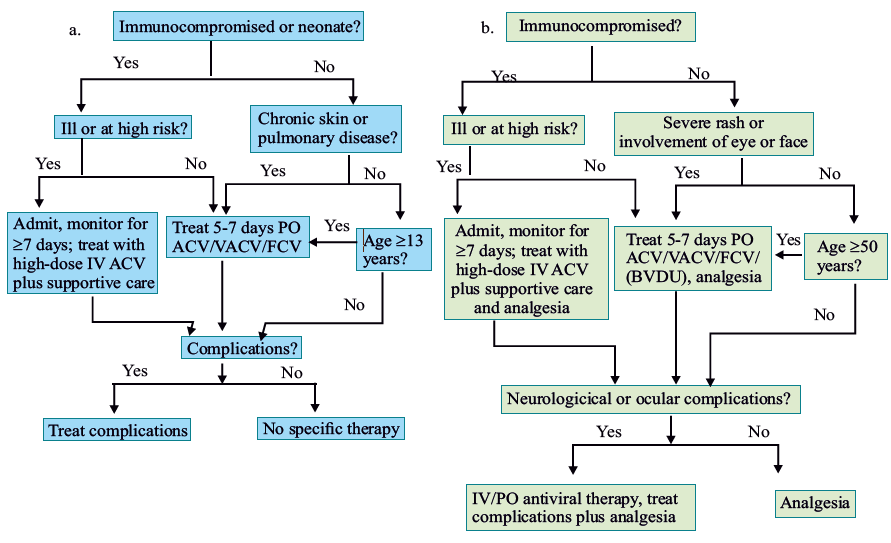
Chickenpox
- Chickenpox is a viral, highly contagious disease caused by the Varicella-Zoster virus.
- The most distinguishable feature of chickenpox is an itchy, blister-like rash on the skin.
- The disease is usually self diagnosable.
How to Treat Chickenpox?
Also read : Cranio-Vertebral Joints
Download the PrepLadder app now to access high-yield content with 24-hr Free Trial. Explore premium study resources like Video Lectures, digital notes, QBank, and Mock Tests for a seamless exam preparation. Start your NEET PG online coaching journey with PrepLadder.

PrepLadder Medical
Get access to all the essential resources required to ace your medical exam Preparation. Stay updated with the latest news and developments in the medical exam, improve your Medical Exam preparation, and turn your dreams into a reality!
Navigate Quickly
FLU
How to Treat FLU?
Influenza Treatment Recommendations
Influenza Prophylaxis Recommendations
Points to be Noted
Flu Shots are the Best Protection
Pneumonia
How to Treat Pneumonia?
Severe Pneumonia Or Very Severe Disease
Pneumonia
Cough Or Cold
WHO Classification for Treatment of Children Aged 2 months – 5 years
No Pneumonia
Pneumonia
Severe Pneumonia
Very Severe Pneumonia
Tuberculosis
How to Treat Tuberculosis?
Category-1
Category-2
Category-3
Anti-Tubercular Drugs
First Line Drugs
Second Line Drugs
Point to be Noted
Malaria
How to Treat Malaria?
Primary Prevention
Secondary Prevention
Drug Based Treatment for Malaria
Typhoid
How to Treat Typhoid?
Empirical Treatment
Fully Susceptible
Multidrug-Resistant
Polio
How to Treat Polio?
Chickenpox
How to Treat Chickenpox?
Top searching words
The most popular search terms used by aspirants
- NEET PG Medicine Preparation