Staphylococcaceae : Staphylococcus aureus and Clinical Implications
Oct 26, 2024


Classification of Gram Positive Cocci
a) Micrococcaceae Family
- Staphylococcus
- Micrococcus
b) Streptococcaceae Family
- Streptococcus
- Pneumococcus
- Enterococcus
Micrococcaceae Family
Difference between Staphylococcus and Micrococcus

Note:
- Hugh and Leifson medium used to assess glucose utilization.
- Bromothymol blue is the indicator.
Also read: Coccidian Parasites: Toxoplasma Gondii
Staphylococcus aureus
- Bunch of grapes appearance.
- Non-motile.
- Non-sporing.
- Catalase positive.
- Oxidase negative.
- Produce golden pigment.
Virulence Factors
- Cell Wall
- Peptidoglycan.
- Teichoic acid—for attachment.
- Cell Surface
- Protein A.
- Anti-complementary.
- Anti-phagocytic.
- Responsible for co-agglutination.
- Protein A.
Co-agglutination Test
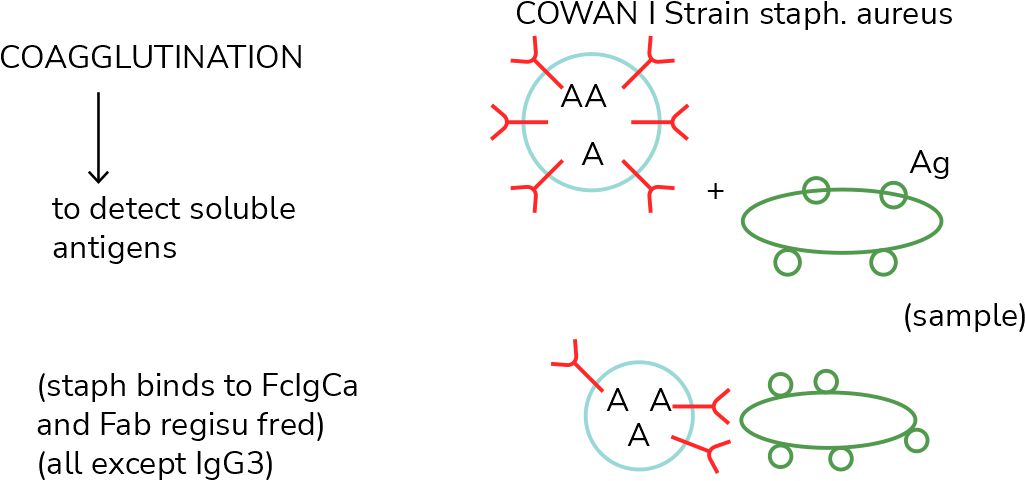
- Used to detect soluble antigens.
- COWAN I strain is used for Staphylococcus aureus.
- Protein A binds to the Fc segment of IgG.
- Fab region left free.
- Antigen can get attached and form clumps.
Toxins
- Hemolysins
- Alpha-hemolysins.
- Inactivated at 70 degrees and activated again at 100 degrees.
- Lyse sheep and human red blood cells.
- Beta-hemolysins or sphingomyelinase.
- Hot-cold phenomenon, i.e., starts working at 37°C and completes at 4°C.
- Lyse sheep red blood cells only contain a high content of sphingomyelin.
- Gamma-hemolysins.
- Lyse sheep and human red blood cells.
- Synergohymenotropic toxin.
- Delta-hemolysins.
- Lyse sheep and human red blood cells.
- Alpha-hemolysins.
- Panton-Valentine (PV) Toxin
- Secreted by Methicillin-resistant Staph. aureus (MRSA).
- Synergohymenotropic toxin with gamma-hemolysin.
- Epidermolytic/Exfoliative Toxin
- Staphylococcal scalded skin syndrome (SSSS).
- Site of action for toxin is Stratum granulosum (desmoglein 1).
- Ritter's disease, i.e., SSSS in children.
- Toxic Epidermal Necrolysis (TEN).
- Staphylococcal scalded skin syndrome (SSSS).
- Enterotoxin
- A-I, not F, R-T, V.
- Enterotoxin A is the most common.
- Heat stable.
- Causes food poisoning.
- Vagomimetic action leading to emesis.
Differential Diagnosis of Food Poisoning
- The incubation period of food poisoning is 1-6 hours, i.e., vomiting occurs 1-6 hours after food consumption.
- Food poisoning may be due to:
- Staphylococcus aureus (Milk, meat).
- Bacillus cereus (Chinese fried rice).
Enterotoxin F or TSST
- Toxic shock syndrome toxin.
- Associated with long-term tampon usage.
- Superantigen.
Criteria for Toxic Shock Syndrome
- Fever > 102°F.
- Hypotension with systolic blood pressure < 90 mmHg.
- Maculopapular rash.
- Involvement of any 3 of the following organs:
- GIT -> nausea, vomiting.
- Kidney -> serum creatinine levels 2 times the norm.
- Liver -> SGOT and SGPT levels 2 times the norm.
- CNS -> confusion.
- Muscle -> creatine phosphokinase (CPK) level 2 times the normal.
- Mucous membranes -> hyperemia.
- Coagulopathy -> platelet count < 100,000.
Enzymes
- Thermonuclease.
- DNAase.
- Phosphatase.
- Catalase.
- Coagulase.
Also read: Miscellaneous Pathogenic Bacteria

Clinical Features
- Skin and soft tissue infections
- Abscess.
- Cellulitis.
- Furuncles.
- Botryomycosis.

- Osteomyelitis.
- Food poisoning.
- Toxic shock syndrome.
- Toxic epidermal necrolysis.
- Pneumonia
- Hospital-acquired.
- Ventilator-acquired.
- Pneumatocele.
- Acute infective endocarditis.
- Infective arthritis.
- Necrotizing fasciitis.
- Sepsis.
Staphylococcus aureus is the most common cause of:
- Osteomyelitis.
- Hospital-acquired pneumonia.
- Ventilator-acquired pneumonia.
- Acute infective endocarditis.
- Native valve endocarditis.
Diagnosis
1. Microscopy

- Gram positive.
- Purple branch of grapes.
2. Culture
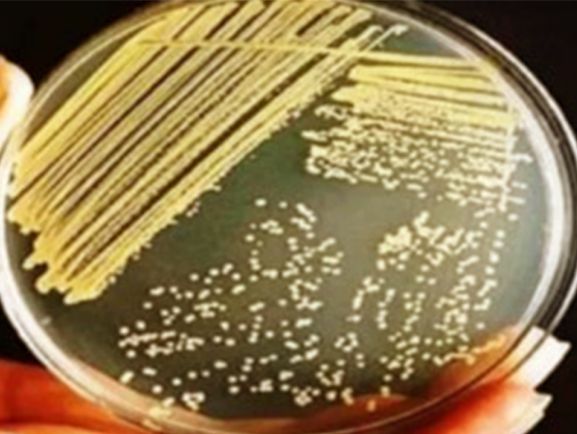
- Nutrient Agar
- Golden color in nutrient agar.
- Non-diffusible β-carotene staphyloxanthin pigment produced at 22 °C.
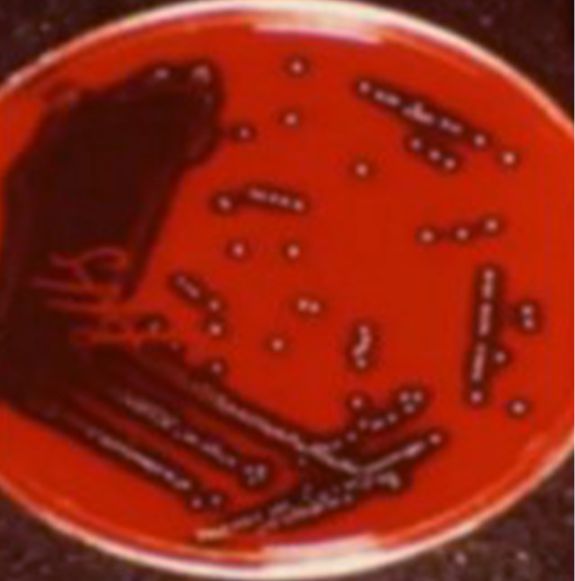
- Blood Agar
- Pin-head colonies with narrow zone beta-hemolysis.
- Selective Media
- S. aureus can survive in NaCl 7-10%.
- Mannitol salt agar (MSA).
- Ludlam's agar.
- Salt milk agar.
3. Mannitol Salt Agar
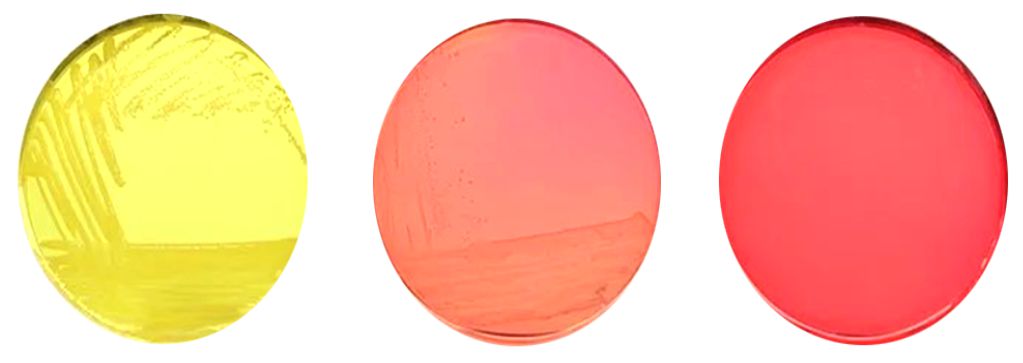
- Salt presence makes it a selective medium.
- Mannitol presence helps in determining whether bacteria's mannitol fermentation is positive or negative, making it a differential medium.
- Phenol red is the indicator.
- Mannitol fermentation in S. aureus causes color change to yellow.
4. Biochemical Tests
- Catalase positive.
- Coagulase positive.
Catalase Test
- Culture + H₂O₂ + catalase --> H₂O + O₂ --> Bubbles.
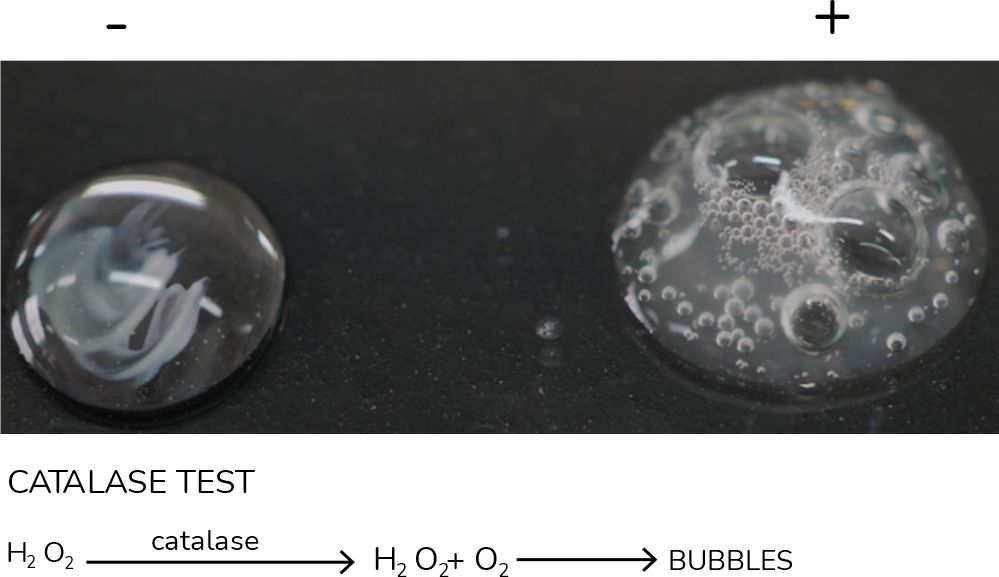
Catalase Positive Bacteria:
- Staphylococcus aureus.
- Serratia spp.
- Pseudomonas spp.
- Escherichia coli.
- Enterobacteria.
- Bacillus anthracis.
- Neisseria gonorrhoeae.
- Neisseria meningitidis.
- Mycobacterium tuberculosis.
- Micrococcus spp.
Catalase Positive Fungi:
- Aspergillus spp.
- Candida spp.
- Cryptococcus spp.
Coagulase Test
- Slide Coagulase (Bound Coagulase): Positive in:
- Staphylococcus aureus.
- Staphylococcus intermedius.
- Staphylococcus hyicus.
- Staphylococcus lugdunensis.
- Tube Coagulase (Free Coagulase): Positive in:
- Staphylococcus aureus.
- Staphylococcus intermedius.
- Staphylococcus hyicus.
- Staphylococcus schleiferi.
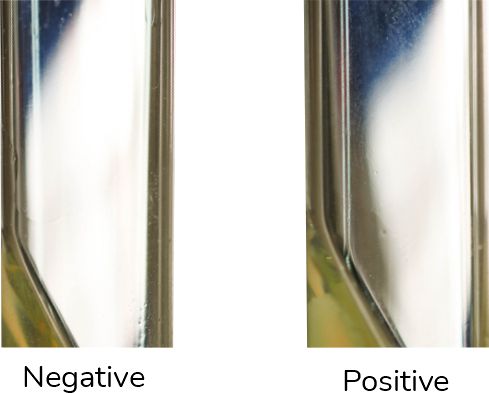
- Rabbit/human plasma + culture broth (containing coagulase).
- Plasma contains coagulase-reacting factors (CRF).
- A CRF-coagulase complex formed, activating fibrinogen and clotting plasma.
Slide Coagulase Test / Clumping Factor
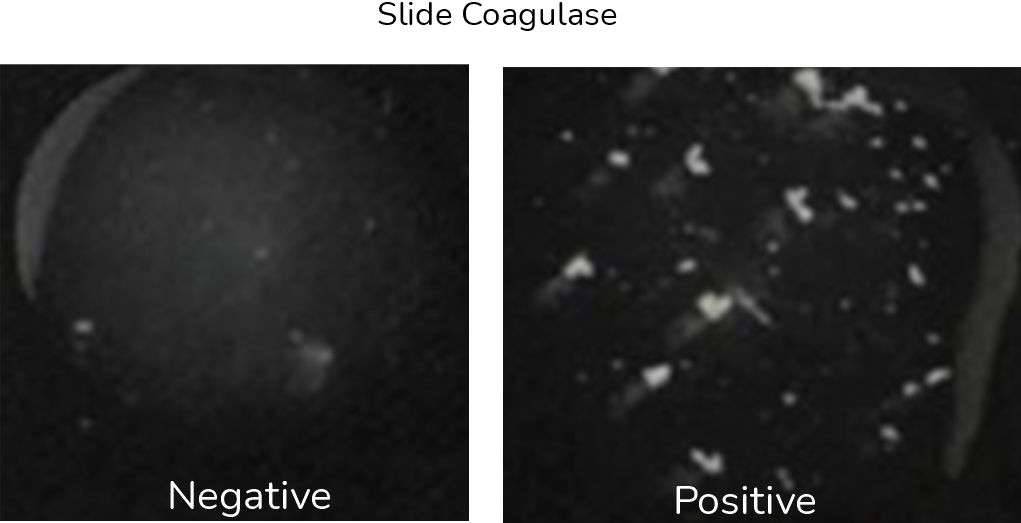
- Coagulase is bound to the cell wall.
- Reacts directly with fibrinogen in plasma, leading to precipitation on the cell wall and clumps of cocci.
5. Phage Typing
- Makes use of bacteriophages.
- Phage 80/81A is associated with Staphylococcus infections that lead to outbreaks.
- Phage III is associated with MRSA.
6. Genotypic Typing
- Pulse field gel electrophoresis (PFGE).
Also Read: NEET PG Previous Year Question Papers of Last 6 Years

Treatment
- Penicillin/β-lactams are the drug of choice.
- Mechanism of action: Bind to penicillin-binding proteins (PBPs) 1, 2, 3, and 4 that are also known as transpeptidases and break their bonds.
- Resistance: β-lactamase production regulated by BLA genes and plasmids.
- Transfer of resistances mediated by transduction > conjugation.
- Methicillin
- Given in penicillin resistance.
- Resistance by chromosomal-mediated MecA gene leading to MRSA with PBP altered to PBP2a that has a lower affinity for methicillin.
MRSA
Diagnosis of MRSA
- The best method is the dilution test.
- Minimum inhibitory concentration: minimum amount of antibiotic required to kill bacteria.
- MIC for cefoxitin ≥ 8 μg/ml indicates resistance.
- MIC for oxacillin ≥ 4 μg/ml indicates resistance.
- Cefoxitin disc diffusion agar/oxacillin.
- Cefoxitin is a better determinant than oxacillin.
- Latex agglutination test for PBP2a.
- ELISA for MecA.
- PCR for MecA.
MRSA Spread
- The most common form of spread is via the hands of healthcare workers.
- Precaution should be taken to perform rigorous hand washing.
- Elimination involves:
- Administration of ointment mupirocin for nasal carriers.
- Chlorhexidine washes for other sites of the body.
Treatment of MRSA
- Vancomycin.
- Daptomycin.
VISA
- Vancomycin-intermediate Staph. aureus.
- MIC for vancomycin is 4-8 μg/ml.
- Altered cell wall synthesis and structure.
VRSA
- Vancomycin-resistant Staph. aureus.
- MIC for vancomycin is ≥ 16 μg/ml.
- D-ala-D-ala conversion of D-ala-D-lactate/serine.
- VAN-A gene.
Also read: Rheumatoid Arthritis: Symptoms, Causes & Treatments
Most Common Questions
Q: Is an indicator used in MSA?
Answer: C. Phenol red.
Q: Mannitol salt agar is a?
Ans. A. Selective media.
B. Differential medium.
Download the PrepLadder app now and unlock a 24-hour FREE trial of premium high-yield content. Access Video Lectures, digital notes, QBank 6.0, and Mock Tests for FREE to ace your NEET PG preparation. Elevate your study experience and gear up for success. Start your journey with PrepLadder today!

PrepLadder
Access all the necessary resources you need to succeed in your competitive exam preparation. Stay informed with the latest news and updates on the upcoming exam, enhance your exam preparation, and transform your dreams into a reality!
Navigate Quickly
Classification of Gram Positive Cocci
a) Micrococcaceae Family
b) Streptococcaceae Family
Micrococcaceae Family
Staphylococcus aureus
Virulence Factors
Co-agglutination Test
Toxins
Differential Diagnosis of Food Poisoning
Enterotoxin F or TSST
Criteria for Toxic Shock Syndrome
Enzymes
Clinical Features
Staphylococcus aureus is the most common cause of:
Diagnosis
1. Microscopy
2. Culture
3. Mannitol Salt Agar
4. Biochemical Tests
5. Phage Typing
6. Genotypic Typing
Treatment
MRSA
VISA
VRSA
Most Common Questions
Top searching words
The most popular search terms used by aspirants
- NEET PG Microbiology