5 VASECTOMY MYTHS VS FACTS: SEX DRIVE, HORMONES & FERTILITY
Oct 10, 2026
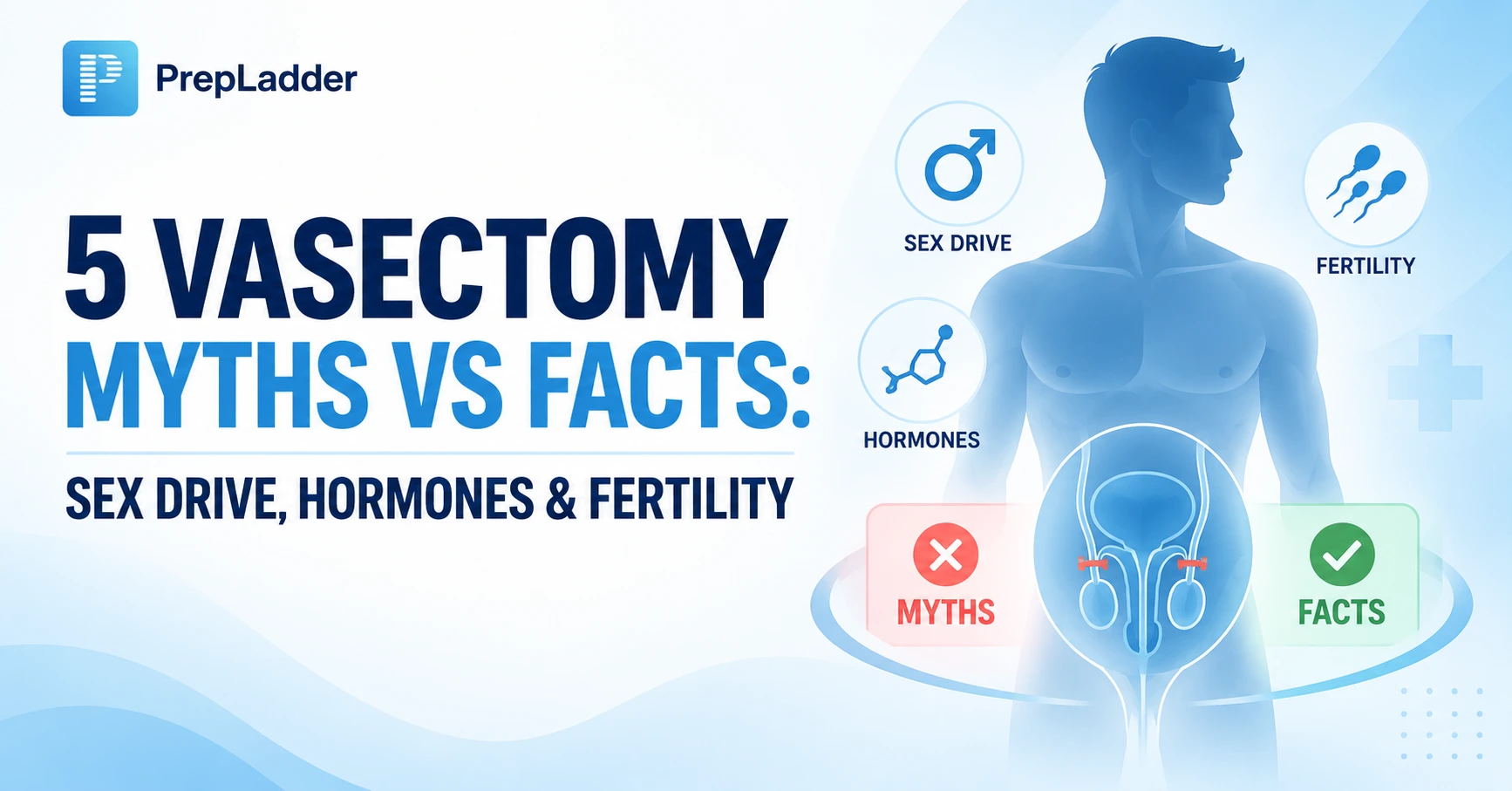
Vasectomy is one of the most effective methods for preventing pregnancy permanently. However, there still exist some concerns leading men to refuse the procedure.
The most common beliefs include that vasectomy affects testosterone levels, decreases sexual performance, or that men will no longer be able to ejaculate completely.
Although some concerns may have grounds, most result from a misunderstanding of the procedure.
Actually, vasectomy is a procedure preventing sperm from being transported to semen. This is achieved by cutting or blocking the vas deferens. Although this procedure does not allow conception, it does not impact the testes and their functions.
As such, testosterone production, the sex drive, erection, and other related functions generally remain unaffected.
In this blog, we will review 5 myths regarding vasectomy and examine the facts. Particular attention will be drawn to the impact of vasectomy on sex drive, hormone levels, and the ability to ejaculate. In addition, we will discuss the possibility of regaining fertility.

Does Vasectomy Affect Sex Drive, Testosterone or Ejaculation?
Vasectomy primarily prevents sperm from entering semen by cutting or blocking the vas deferens. It does not normally reduce testosterone production, sex drive, erections, orgasm or ejaculation.
However, it is intended as permanent contraception and does not become effective immediately. Follow-up semen testing is required before relying on it for pregnancy prevention.
What Happens During a Vasectomy?
To address the myths and misconceptions, let us briefly recall the basics of the procedure.
Vasectomy is a surgical procedure involving cutting or blocking the vas deferens, the tubes transporting sperm from the testes to the urethra.
As such, sperm can no longer be expelled with semen during ejaculation.
It is important to note that despite preventing the transportation of sperm, vasectomy does not impact the production of testosterone and other hormones.
What Changes After a Vasectomy?
- Sperm is prevented from being transported to semen.
- Fertility is decreased significantly after confirmation.
- Another contraceptive method is required until the procedure is confirmed as effective.
What Stays the Same After a Vasectomy?
- Testosterone production
- Desire for sex
- Erection capability
- Orgasm capability
- Amount of semen ejaculated
- Sperm production
Also Read: Male and Female Sterilization Procedure

Myth 1: Does Vasectomy Reduce Sex Drive?
Fact: Vasectomy Does Not Usually Affect Libido
Sex drive is a complex phenomenon, influenced by numerous factors. These range from a person’s mental state, relationship with his partner, level of stress, quality of sleep, to the impact of various medications.
A vasectomy does not interfere with testosterone production and hence should not affect sex drive for the majority of men.
Actually, sex drive may increase for some men, as they will no longer need to worry about an unintended pregnancy.
On the other hand, a decrease in sex drive should not be attributed to a vasectomy. Depression and poor mental health can easily manifest themselves in loss of sex drive.
Persistent pain or discomfort following the procedure can also impact a man’s sex life. If sex drive does not recover on its own, consult your doctor.
Does Vasectomy Lower Testosterone?
This concern is unfounded.
Testosterone levels are not impacted by vasectomy. The testes continue to produce testosterone at the same rate as before the procedure.
The only difference is that sperm can no longer be transported out of the body.
Another way of thinking about this is that the road to the testes is blocked. The functioning of the engines, or production of testosterone and sperm, is not impacted by the blockage.
Myth 2: Does Vasectomy Cause Erectile Dysfunction?
Fact: Vasectomy Does Not Normally Affect Erections
An erection is a complex process, controlled by hormones and sexual stimulation and involving the nervous system.
The vas deferens is only responsible for transporting sperm. Hence, blocking or cutting it should not impact a man’s ability to get an erection.
Can Men Still Get Erections After Vasectomy?
Most men can still:
- Get sexually aroused
- Develop an erection
- Maintain the erection during sexual intercourse
- Experience orgasm
During the first few days following the procedure, some men may postpone sexual activity.
This is explained by possible pain and discomfort following the surgery. However, this does not indicate erectile dysfunction.
Erectile dysfunction can occur independently of the procedure and is caused by other factors, including aging, diabetes, heart disease, high blood pressure, and depression. Pasted markdown

Myth 3: Can You Still Ejaculate After a Vasectomy?
Fact: Ejaculation Still Occurs After Vasectomy
The semen consists of fluids produced by the seminal vesicles and the prostate gland. Only about 2-5% of it consists of sperm.
Following a vasectomy, sperm can no longer be transported to the urethra and hence ejaculated. However, the rest of the fluid is still present.
What Happens to Ejaculation After Vasectomy?
After the procedure, men can still:
- Develop an erection
- Ejaculate semen
- Experience orgasm
The only difference is that the semen should no longer contain sperm or non-motile sperm, once the procedure is confirmed as effective.
For this reason, the amount and consistency of ejaculated semen should not have changed significantly.
Does Orgasm Feel Different After Vasectomy?
For men, the answer is no.
Orgasm feels the same as it always did. The pleasure experienced is no different following a vasectomy, as the brain and the relevant nerve endings are not impacted.
The procedure only impacts the transportation of sperm and hence does not interfere with the orgasm.
Myth 4: Does Vasectomy Make You Infertile Immediately?
Fact: Vasectomy Does Not Work Immediately
This myth actually has some truth to it.
Although sperm transportation is blocked during the procedure, it can take some time for the existing sperm to be cleared from the body.
Hence, until your doctor confirms that your semen contains no sperm, you can still get someone pregnant.
Until then, another contraceptive method should be used.
It is essential to follow your doctor’s advice and only discontinue other contraceptive methods when instructed to do so.
Why Is a Semen Test Important After Vasectomy?
The semen test is the confirmation that your vasectomy is effective.
The number of tests and how much time should elapse between them will be determined by your doctor. It is essential to follow the instructions carefully.
The general sequence is:
Vasectomy is performed → Another contraceptive method is used → The procedure is confirmed effective → Other contraceptive measures can be discontinued
If a man incorrectly assumes that he is sterile when he is not, there is a possibility of getting someone pregnant. Pasted markdown
Myth 5: Is Vasectomy Permanent or Reversible?
Fact: Vasectomy Is Intended to Be Permanent, but Reversal May Be Possible
While reversal can be done, it is not guaranteed.
The success of the procedure depends on several factors, including:
- How long ago the initial vasectomy was performed
- What type of procedure was used
- The skill of the surgeon
- The presence of antisperm antibodies
- The fertility potential of the partner
The reversal procedure reconnects the severed vas deferens, allowing sperm to be transported again.
Even if sperm are present in the semen, conception is not guaranteed. In most cases, assisted reproductive technologies are required for conception to occur.
Given the uncertainty of reversal, men are well advised to think of vasectomy as a permanent contraceptive measure.
If they are considering having children, it is best to consult their doctor.
Also Read: Family Planning/Contraception Methods
What Happens to Hormones After Vasectomy?
One of the fears is that vasectomy messes with hormones. It does not.
The testes keep producing testosterone after the procedure.
The surgery does not remove the testes or interfere with hormone production. That means there is no expected loss of masculinity or shutdown of normal testosterone production.
The testes still produce sperm.
Now the sperm cannot move out through the blocked tubes, so the body breaks down and reabsorbs unused sperm.
This is a natural process.
Also Read: Infertility Treatment, Causes, Risk factors and Prevention
What Happens to Sperm After Vasectomy?
Many men wonder what happens to sperm after a vasectomy.
The answer is simple: the body handles it naturally.
Sperm production continues in the testes. Since they cannot travel through the blocked vas deferens, they break down or are absorbed by the body.
This is why there is no major change in semen volume.
Sperm make up only a part of the total fluid. Most of the semen comes from the seminal vesicles and prostate, and those glands continue working.
Is Vasectomy Painful? Recovery and Discomfort Explained
Some discomfort is expected after the procedure.
Men may feel:
- Pain or soreness
- Swelling
- Bruising
- Heaviness in the scrotum
These symptoms usually go away within a short period. Recovery typically takes 1-2 weeks.
It is important to distinguish between discomfort and serious problems.
If pain gets worse, becomes severe, or lasts beyond a couple of weeks, medical attention is needed.
When Can You Have Sex After a Vasectomy?
Sexual activity is usually delayed until the area heals. The exact time depends on the doctor’s advice.
After resuming sex, remember that the procedure is not instantly effective.
Sperm may still be present.
What Happens Before You Can Stop Using Contraception?
The general steps are:
Vasectomy done → Wait for healing → Take follow-up semen test → Confirm success → Stop contraception only after full clearance
Only then can couples rely solely on the vasectomy.
Also Read: How to Understand and Treat Erectile Dysfunction: Causes and Solutions
Does Vasectomy Protect Against STIs?
No.
Vasectomy prevents pregnancy. It does not protect against sexually transmitted infections.
STIs such as HIV, gonorrhea, chlamydia, and syphilis can still be transmitted.
Condoms are still necessary when STI prevention matters.
Vasectomy vs Female Sterilization: Key Differences
For couples considering permanent birth control, vasectomy is one option. Female sterilization is another.
Vasectomy vs Female Sterilization Comparison
Feature Vasectomy Female Sterilization Procedure Type Minor surgery Complex surgery Recovery Time Days Longer, often weeks Risk Level Low Higher Effectiveness Very high Very high Reversibility Possible but not guaranteed Harder to reverse Cost Lower Often higher
Both methods are highly effective.
Vasectomy is less invasive, faster to recover from, and safer for most men.
Also Read: OBGYN Important Topics for NEET-PG 2026
Frequently Asked Questions About Vasectomy
Will Vasectomy Make Me Less Masculine?
No.
Testosterone production continues, and vasectomy does not normally affect sexual characteristics.
Will My Semen Disappear After Vasectomy?
No.
You can still ejaculate. The major change is that sperm are prevented from entering the semen.
Will I Still Get Erections After Vasectomy?
Yes.
Vasectomy does not normally interfere with the mechanism of erection.
Can I Stop Contraception Immediately After Vasectomy?
No.
Another contraceptive method is required until follow-up testing confirms that the vasectomy is effective.
Can I Have Children After a Vasectomy?
Vasectomy should be considered permanent.
Reversal is possible in some cases, but it cannot be guaranteed to restore fertility. Pasted markdown
When Should You Speak to a Doctor About Vasectomy?
Vasectomy is generally a procedure that should involve proper counselling beforehand.
Speak With a Healthcare Professional If You:
- Are unsure whether permanent contraception is right for you
- Think you may want children in the future
- Have questions about the procedure or recovery
- Develop persistent pain after the procedure
- Have concerns about sexual function following vasectomy
- Are unsure whether your semen test has confirmed successful contraception
A proper consultation also allows you to discuss alternatives if you are not completely certain about permanent contraception.
Final Takeaway: What Vasectomy Changes and What It Does Not
The biggest misconception about vasectomy is that it changes a man's sexuality.
It doesn't.
A vasectomy is primarily a procedure that blocks the passage of sperm.
Testosterone production continues, sexual desire generally remains, erections are not expected to be affected, and ejaculation and orgasm can still occur.
The key facts are:
- It does not weaken sex drive
- It does not stop erections
- It allows ejaculation
- It does not normally affect testosterone production
- It does not provide immediate contraception
The two points men should remember most are:
Vasectomy is intended to be permanent.
It does not provide immediate contraception. Follow-up semen testing is essential before relying on it for pregnancy prevention.

PrepLadder
Access all the necessary resources you need to succeed in your competitive exam preparation. Stay informed with the latest news and updates on the upcoming exam, enhance your exam preparation, and transform your dreams into a reality!
Navigate Quickly
Does Vasectomy Affect Sex Drive, Testosterone or Ejaculation?
What Happens During a Vasectomy?
What Changes After a Vasectomy?
What Stays the Same After a Vasectomy?
Myth 1: Does Vasectomy Reduce Sex Drive?
Fact: Vasectomy Does Not Usually Affect Libido
Does Vasectomy Lower Testosterone?
Myth 2: Does Vasectomy Cause Erectile Dysfunction?
Fact: Vasectomy Does Not Normally Affect Erections
Can Men Still Get Erections After Vasectomy?
Myth 3: Can You Still Ejaculate After a Vasectomy?
Fact: Ejaculation Still Occurs After Vasectomy
What Happens to Ejaculation After Vasectomy?
Does Orgasm Feel Different After Vasectomy?
Myth 4: Does Vasectomy Make You Infertile Immediately?
Fact: Vasectomy Does Not Work Immediately
Why Is a Semen Test Important After Vasectomy?
Myth 5: Is Vasectomy Permanent or Reversible?
Fact: Vasectomy Is Intended to Be Permanent, but Reversal May Be Possible
What Happens to Hormones After Vasectomy?
What Happens to Sperm After Vasectomy?
Is Vasectomy Painful? Recovery and Discomfort Explained
When Can You Have Sex After a Vasectomy?
What Happens Before You Can Stop Using Contraception?
Does Vasectomy Protect Against STIs?
Vasectomy vs Female Sterilization: Key Differences
Vasectomy vs Female Sterilization Comparison
Frequently Asked Questions About Vasectomy
Will Vasectomy Make Me Less Masculine?
Will My Semen Disappear After Vasectomy?
Will I Still Get Erections After Vasectomy?
Can I Stop Contraception Immediately After Vasectomy?
Can I Have Children After a Vasectomy?
When Should You Speak to a Doctor About Vasectomy?
Speak With a Healthcare Professional If You:
Final Takeaway: What Vasectomy Changes and What It Does Not
Top searching words
The most popular search terms used by aspirants
- FMGE Preparation Strategy
- INI CET preparation strategy
- NEET PG Preparation Strategy
- vasectomy