Robotic, Laparoscopy & Bariatric Surgery
Jul 9, 2024


Laparoscopy
- It is used to visualize a cavity-like abdomen without making huge incisions.
- The needle used to create pneumoperitoneum is Veres's needle.
Methods of Creating Pneumoperitoneum
Closed method | Open method |
Veres’s needle is used in the closed method. Reduces the risk of bowel injury - due to the presence of a Safety valve at the tip of this needle 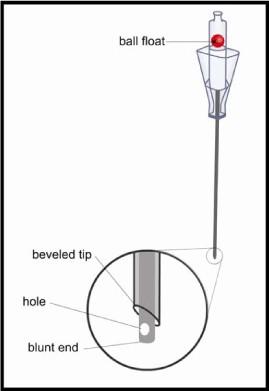 | “HASSAN’S CANNULA” is used in the open method.Decreased Risk of vessel injury - because it is performed under direct vision. 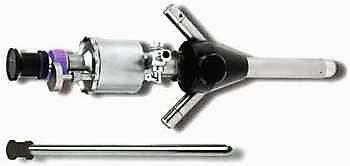 |

- Trocar is placed at or just below the umbilicus.
- Trocar penetrates the following layers:
- Skin
- Superficial fascia
- Deep fascia
- Parietal peritoneum
- F. Transversalis
- The most commonly used/preferred gas is carbon dioxide
- The flow of Co2 required in the creation of Pneumoperitoneum 1 L / Min
- Intra-abdominal pressure (IAP) should be maintained between 12 – 15mm/ Hg
Complications of Laparoscopy
- Shoulder pain
- Because of CO2 Retention, the diaphragm is irritated, and pain is referred to in the shoulder via the phrenic nerve.
- In splenic trauma, KEHR’S SIGN is seen. Blood collection below the diaphragm causes Irritation of the diaphragm, which causes pain to the shoulder via the phrenic nerve.
- Gas embolism
- During induction of pneumoperitoneum - Insufflation of gas directly into an open vein.
- The gas that enters into the vein is CO2. Hence, it is also known as CO2 embolism.
- CO2 embolism
- The pulmonary excretion of absorbed CO2 causes the initial rise of ET CO2, which suddenly decreases due to a fall in cardiac output.

Gases Used in Creating Pneumoperitoneum
- The first pneumoperitoneum was created by - Filtered Room Air, but there is a Risk of Gas Embolism with Air.
- Preferred gas - CO2 & N2O
CO2 | N2O |
Most preferred gas200 times more diffusible than airRapidly cleared from body and lungsIt does not support combustion | 68% As rapidly absorbed in Blood as Co2It has a mild analgesic effectUsed for the short operative procedureIt supports combustion. So, it should not be used in long-duration Sx. |
Minimal access surgeries
- Laparoscopy
- Thoracoscopy
- Endoluminal endoscopy
- Perivisceral endoscopy
- Arthroscopy and intra-articular joint surgeries
Advantages of minimal access surgeries
- Small wound size (hence, there is a lesser risk of complication and an early return to work).
- Reduction in:
- Wound infection
- Dehiscence
- Bleeding
- Herniation
- Nerve entrapment
- Decreased wound pain
- Improved mobility
- Less Wound trauma
- Less Heat loss
- Improved vision
- Faster recovery & shorter hospital stay - Early return to work.

Day Care Surgery
- Also known as
- Day surgery,
- Same-day surgery,
- Day only surgery,
- Ambulator surgery
- In this surgery, the patient is admitted for 12 Hours only with same-day discharge.
Overnight Stay Surgery
- The patient is admitted for 23 Hours.
- Early morning discharge.
Short Stay Surgeries
- The patient is admitted for 72 Hours.
Fast-Track Surgery
- It is also known as enhanced recovery after surgery.
- Fast-track surgery has a Coordinated perioperative approach.
- It is aimed at reducing surgical stress & facilitating post-operative recovery.
Components of Fast-Track Surgery
- Pre-operative informed consent
- Fasting: 6 hours for solids and 2 hours for liquids.
- Atraumatic surgical technique (Avoid placement of drains)
- Reduction of stress (Giving sweet drinks 2-3 hrs. before surgery)
- Elimination of pain by regional anesthesia technique (thoracic epidural anesthesia)
- Optimized fluid & temperature management (as fluid overload leads to bowel edema)
- Early enteral diet
- Prevention of GI atony & Post-Op Nausea and Vomiting
- Rapid Post-Operative mobilization
NOTES (Natural Orifical Transluminal Endoscopic Surgery)
- The peritoneal cavity is entered through a natural orifice (hence, there is no scar):
- Mouth (trans-gastric approach)
- Rectum (trans-rectal approach)
- Vagina (trans-vaginal approach)
- Successful Cholecystectomy & Appendectomy are performed via this technique.
- NOTES are also performed for:
- Staging of intra-abdominal malignancy
- Segmental colectomy
- Gastro-jejunostomy


POEM (Per-Oral Endoscopic Myotomy)

- POEM is a modification of NOTES.
- It is used for Achalasia Cardia.
- A long esophageal myotomy using a flexible endoscope is created.
- After this, fluid is injected.
- A submucosal tunnel is created after this.
- The division of circular muscle fibers follows this.
- The hemostatic clip is applied at the incision site when the procedure is complete.
Robotic Surgery
History
- In 1985 – The PUMA560 was used to place a needle in the brain under CT guidance.
- In 1987 – Robert was used for the first time to perform Laparoscopic surgery (cholecystectomy).
- In 1988 – PROBOT- used for prostatic surgery
In 1992, ROBODOC was used to mill precise fittings in the femur for hip replacement.

- Most commonly used worldwide: Da-Vinci Robot.
- It is based on the Master-Slave principle.
- The motions of the surgeon’s hands are translated into the motions of robotic hands.
- But these robots are extremely expensive.
- As a result, the surgery also becomes very expensive.
- Hence, it is not feasible to perform surgeries with robots.
- Robots, therefore, are used in surgeries where there is limited space / the visualization is limited.
- Hence, indications of robotic surgeries include:
- Prostatectomy
- Cardiac valve repair
- Gynecological operations
Bariatric Surgery
Bariatric surgery is a surgical procedure performed to treat obesity. It is also known as weight loss surgery. Obesity has become a major problem in the developed as well as the developing countries. There are so many problems that can arise due to excessive weight gain.
Pathological Consequences of Obesity
- Increased mortality.
- Endocrinological effects
- Insulin resistance
- Hence, patients are prone to develop Type 2 DM
- Cardiovascular effects:
- Increased risk of Coronary Artery Disease and Congestive Heart Failure
- Pulmonary effects
- Increased risk of obstructive Sleep Apnea (OSA)
- Pulmonary HTN
- DVT
- Pulmonary Embolism
- Hepatobiliary effects
- NAFLD (Non-alcoholic fatty liver disease)
- Increased risk of Gall stones
- Bones & joints – Osteoarthritis (due to increased weight)
- Cutaneous disease - Increased risk of venous stasis & Ulcers
- Neurological complications:
- Increased risk of Stroke
- Increased risk of pseudo-tumor cerebri
- Increased risk of Carpal-tunnel syndrome
- Reproductive effects
- Male hypogonadism
- Gynecomastia
- PCOS (in obese females)
Increased Risk of Cancers due to Obesity
|
|
|
BMI (Body Mass Index)
- It is also known as the Quetlet index.
- Weight in Kg/square of height in meters: Formula of BMI.
- Unit: Kg/m2
Category | BMI |
| Underweight | < 18.5 Kg/ M2 |
| Normal | 18.5 - 24.9 |
| Overweight | 25 - 29.9 |
| Obesity (class I) | 30 - 34.9 |
| Severe obesity (class II) | 35 - 39.9 |
| Morbid obesity (class III) | 40 - 49.9 |
| Super obesity | > 50 |
Indications of bariatric surgery
| International Population | Asian population(2.5 is subtracted from each category) |
BMI > 35 Kg/m2 + comorbidity BMI > 40 Kg/m2 with or without comorbidity | BMI > 32.5 kg/m2 + comorbidity BMI > 37.5 kg/m2 with or without comorbidity |
Various Types of Bariatric Operations
- There are various types of weight loss surgeries.
- Vertical banded gastroplasty (VBG) is a purely restrictive type of weight loss surgery.
- Laparoscopic adjustable Gastric banding (LAGB) (purely restrictive) is the Safest and reversible type of bariatric surgery.
- Roux-en-Y Gastric Bypass (RYGB) (Largely restrictive and mildly malabsorptive): Most commonly performed bariatric surgery worldwide.
- Biliopancreatic Diversion (largely malabsorptive and mildly restrictive)
- Duodenal Switch (largely malabsorptive and mildly restrictive)
Vertical Banded Gastroplasty (VBG)
- The staples are applied vertically in this surgery.
- A band is used to create a small pouch of the stomach.
- This pouch's capacity is small, so the patient might feel heaviness whenever they eat something.
- It's a purely restrictive operation.
Laparoscopic Adjustable Gastric Banding (LAGP)
- Safest, least invasive, reversible
- The placement of a silicon band around the proximal part of the stomach – Creates a Small proximal pouch.
- This is, again, a purely restrictive operation.


Roux-en-Y Gastric Bypass
- It is the most commonly performed bariatric surgery procedure.
- Largely restrictive & mildly malabsorptive.
- Proximal & Distal parts of the stomach are divided.
- The jejunum is sutured with the proximal gastric pouch.
- Content of Proximal gastric pouch - 30-50ml.
- Roux -limb length is 70-100 cm.
- Peterson Hernia – Herniation of bowel loop behind ROUX-Limb.
Biliopancreatic diversion
- It is the most effective Bariatric surgery.
- Because it is associated with maximum weight loss.
- The main side effect is 2- 4 bowel movements/day with Malodourous (due to fat malabsorption).
- Components of this procedure:
- Distal gastrectomy
- Cholecystectomy
- Appendectomy
- Gastro – ileostomy
- Jejuno – ileostomy
- This procedure allows food to mix with bile and pancreatic enzymes only in the distal 50 cm of the ileum, causing decreased Digestion and fat absorption.
- This procedure is Largely malabsorptive & mildly restrictive.
- Disadvantage – High risk of ulcer at the site of anastomosis of Gastro – ileostomy.

Duodenal Switch
- A duodenal switch is placed between the stomach and the ileum.
- Prevents stromal ulcers.
- Components:
- Sleeve Gastrectomy: 70 to 80% of the stomach is removed, and only the sleeve is left behind.
- Cholecystectomy
- Appendectomy
- Duodeno – Ileostomy
- Jejuno – Ileostomy
- The length of the common channel created by this procedure is 100 cm.
- Advantage:
- Low risk of malabsorption
- Prevents the risk of stromal ulcers
Also Read: Tubes, Catheters And Drains
Download the PrepLadder app now and unlock a 24-hour FREE trial of premium high-yield content. Access Video Lectures, digital notes, QBank, and Mock Tests for FREE to ace your NEET PG preparation. Elevate your study experience and gear up for success. Start your journey with PrepLadder today!

Dr. Jaschandrika Rana
Dr. Jaschandrika Rana is a dedicated Medical Academic Content Writer with over 5 years of experience. She creates insightful and motivating content for medical aspirants preparing for the FMG Exam, Medical PG Exam, Residency courses, and the NEET SS Exam. Dr. Rana’s work inspires future medical professionals to achieve top ranks and excel in their careers.
Navigate Quickly
Laparoscopy
Complications of Laparoscopy
Gases Used in Creating Pneumoperitoneum
Advantages of minimal access surgeries
Day Care Surgery
Overnight Stay Surgery
Short Stay Surgeries
Fast-Track Surgery
Components of Fast-Track Surgery
NOTES (Natural Orifical Transluminal Endoscopic Surgery)
Robotic Surgery
History
Bariatric Surgery
Pathological Consequences of Obesity
Increased Risk of Cancers due to Obesity
BMI (Body Mass Index)
Various Types of Bariatric Operations
Vertical Banded Gastroplasty (VBG)
Laparoscopic Adjustable Gastric Banding (LAGP)
Roux-en-Y Gastric Bypass
Biliopancreatic diversion
Duodenal Switch
Top searching words
The most popular search terms used by aspirants
- NEET PG Surgery
- NEET PG Surgery Preparation