Community Pediatrics Indices
Oct 3, 2024

Mortality Indicator in Pediatrics
Neonatal Mortality Rate
- The neonatal mortality rate is sometimes written as NNMR or NMR.
- It refers to the death of children between 0 to 28 days after the birth per 1000 live births per year.
- It is calculated by -

- According to 2019 estimates, the NNMR in India was 21.7/1000 live births, which decreased from 23/1000 live births in 2017.
- Male neonates tend to have higher NNMR than female neonates due to the higher chances of infection in male neonates.
Causes of Neonatal Mortality Rate (NMR)
- The most common causes of NMR in decreasing order worldwide, according to the WHO 2019 report, are-
- Prematurity (1st most common cause)
- Intrapartum complications, including birth asphyxia
- Neonatal infection or sepsis
- Various congenital malformations
- The most common causes of NMR in decreasing order in India, according to 2017 data, are-
- Prematurity and low birth rate
- Neonatal infection or sepsis
- Birth asphyxia
- Congenital malformations
Perinatal Mortality Rate
- It is also written as PNMR.
- According to WHO and ICMR, the perinatal period ranges from the 22nd week of gestation to the 7th day of postnatal life. Any mortality occurring at this time will be considered perinatal mortality.
- Perinatal mortality includes late fetal deaths (stillbirths) and early neonatal deaths.
- The following formula calculates PNMR -

- According to 2017 data, the PNMR in India is 23/1000 live births, which is an improvement from 26/1000 live births in 2013.
- PNMR is a major marker in assessing the quality of healthcare delivery.
- It checks the quality of care provided to the baby in the first week of life.
Infant Mortality Rate
- The following formula calculates IMR-

- IMR is considered the second best indicator of the socioeconomic development of a country among the mortality indices after the under-5 mortality rate (U5MR).
- According to 2019 data, the IMR in India is 28.3/1000 live births, which decreased from 33/1000 live births in 2017.
- IMR is higher in female infants as compared to male infants.
- Most common causes of IMR in India -
- Prematurity and low birth rate
- Respiratory infections/ pneumonia
Child Death Rate /1-4 Year Mortality Rate
- The child death rate and child mortality rate are not the same. The child death rate is the 1-4 year mortality rate.
- It is calculated by -

- The child birth rate is a more refined indicator of the social situation in a country than the infant mortality rate.
Under 5 Mortality Rate (U5mr)
- It is also called the child mortality rate.
- According to UNICEF, CMR is the single best indicator of socioeconomic development and well-being.
- CMR is calculated by -

- CMR also includes the deaths of children in the neonatal phase.
- U5MR in India was 37/1000 live births, according to 2017 data.
- Common causes of U5MR -
- Pneumonia
- Diarrhoea
- Injury
- Malaria
Latest Data - Who 2019 (Globally)
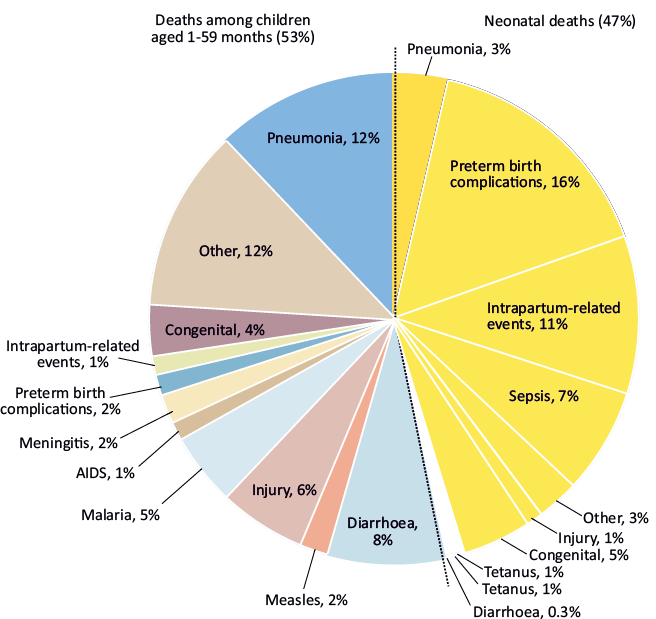
In neonatal death, preterm and related birth complications are the most common cause, followed by 2nd common cause, intrapartum-related events. A third common cause is a sepsis, and the 4th common cause is a congenital malfunction. In 1-59 months, pneumonia is the most common cause, followed by diarrhea. The third most common cause is injuries, and malaria is the 4th most common cause.
Other Common Indices to Know
Global Hunger Index (GHI)
Global hunger index (GHI) combines three equally weighted indicators-
- The proportion of the undernourished as a percentage of the population.
- The prevalence of underweight children under the age of five.
- The child mortality rate/ under 5 mortality rate.
Physical Quality of Life Index (PQLI)
The physical Quality of Life Index is a subjective measure of the quality of life. It ranges from 0 to 100.
Human Development Index (HDI)
The Human Development Index ranges from 0 to 1. India's HDI index is 0.647 as of 2018, ranking it 129th out of 189 countries. The top five countries, according to HDI, are Norway, Switzerland, Ireland, Germany, and Hong Kong.
Child Survival Index (CSI)
The child survival index is also called the child survival rate (CSR). It is calculated by -
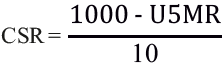
CSR in India is 96.3, according to 2017 data.
Also Read: Short Stature in Children
Frequently Asked Questions:
Q: It is seen that IMR is high in the first birth order (first child) of a family. IMR dips down in the second birth order, and IMR increases after the third birth order, and increases more in the fourth birth order. When plotting the graph, it looks like the image. In which order is the lowest mortality rate seen?
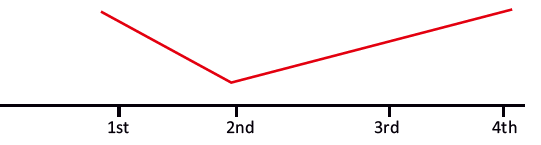
Answer: IMR starts to decline in the first birth of children due to a lack of child care from the parents' side. The child's care is high in the second birth order, and the mother's age issue leads to the third and fourth birth orders.
Q: What is the range of the Human Development Index?
Answer: The Human Development Index ranges from 0 to 1.
Q: What is the most important cause of Under 5 Mortality Rate (U5mr)?
Answer: Pneumonia
Q: What is the most common causes of IMR in India?
Answer: Prematurity and low birth rate is the most common cause of Infant Mortality rate.
Also Read: NEET SS Pediatrics Growth and Development Questions
Hope you found this blog helpful for your Growth and Development NEET SS pediatrics preparation. For more informative and interesting posts like these, keep reading PrepLadder’s blogs.

PrepLadder
Access all the necessary resources you need to succeed in your competitive exam preparation. Stay informed with the latest news and updates on the upcoming exam, enhance your exam preparation, and transform your dreams into a reality!
Navigate Quickly
Mortality Indicator in Pediatrics
Neonatal Mortality Rate
Perinatal Mortality Rate
Infant Mortality Rate
Child Death Rate /1-4 Year Mortality Rate
Under 5 Mortality Rate (U5mr)
Latest Data - Who 2019 (Globally)
Other Common Indices to Know
Global Hunger Index (GHI)
Physical Quality of Life Index (PQLI)
Human Development Index (HDI)
Child Survival Index (CSI)
Frequently Asked Questions:
Top searching words
The most popular search terms used by aspirants
- NEET SS Pediatrics Growth and Development