Rapid Revision Reignite Anesthesia: Question-Answer Format
Sep 19, 2025

Supraglottic and Infraglottic Airway Devices
Big Question 1: What are supraglottic and infraglottic airway devices, and how are they used in airway management?
Broad Answer:
- Supraglottic devices like Laryngeal Mask Airways (LMA) are inserted above the vocal cords and are useful for minor surgeries or difficult intubation.
- They do not require laryngoscopy and allow ventilation, but don’t prevent aspiration. Infraglottic devices, such as endotracheal tubes, are inserted into the trachea and provide a definitive airway by sealing off the esophagus, allowing direct lung ventilation, and preventing aspiration.
- LMA is easier and quicker, while ETT is preferred in emergencies or surgeries.
Detailed Questions
Q1.1 How is IV cannula size selected, and what is the significance of each color in clinical practice?
Answer:
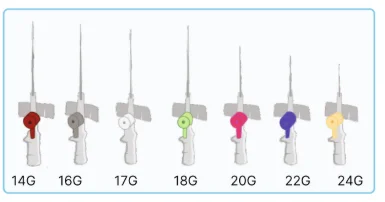
| Colors of IV cannula | Gauze | Uses |
| Orange | 14 | Shock |
| Grey | 16 | |
| Green | 18 | General Anaesthesia |
| Pink | 20 | General Anaesthesia |
| Blue | 22 | Pediatric cases |
| Yellow | 24 | Pediatric cases |
| Purple | 26 |
(Mnemonic: Oh Great God, Please Bless Your People)
Q1.2 Describe the Supraglottic airway device and the Infraglottic airway device.
Answer:
| Supraglottic airway device | ● Laryngeal mask airway o Gases enter the trachea, esophagus |
| Infraglottic airway device | ● Inserted directly into the trachea ● Ventilation of lungs o Gas will not move into the esophagus ● Definitive airway: Endotracheal tube |
Q1.3 What is another name for Laryngeal Mask Airway (LMA)?
Answer:
- Supraglottic airway device
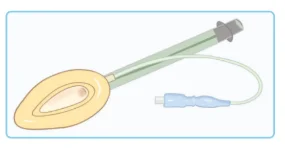
Q1.4 How is a Laryngeal Mask Airway (LMA) inserted, and where is it positioned?
Answer:
- Inserted through the mouth, and the mask is fitted onto the supraglottic area.
Q1.5 What are the indications of LMA?
Answer:
- Indications
- Failed intubation/ Difficult intubation
- Minor surgeries: Squint surgery
Q1.6 What is the basis for selecting the size of a Laryngeal Mask Airway (LMA)?
Answer:
- Sizes of LMA: Depend on the weight
- Adults
- Size 4: 50 to 70 kgs
- Size 5: 70 to 100 kgs
Q1.7: Describe the mechanism of the Combitube airway device.
Answer:
Inserted either into the esophagus or trachea
↓
Inflate the cuff
↓
Inflate the other cuff if the tube is inserted into the esophagus
↓
Prevention by blocking the esophageal aspiration
↓
Ventilation is done through the pores
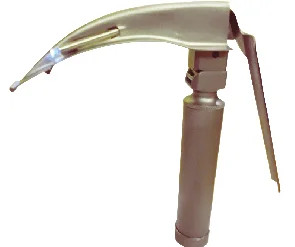
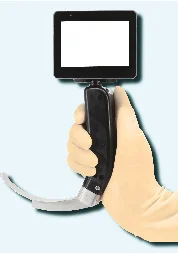
Q1.8: How does the MacCoy laryngoscope aid in visualizing the laryngeal aperture?
Answer:
A laryngoscope is inserted into the mouth
↓
An extra handle will help to lift the tongue
↓
Observe the laryngeal aperture
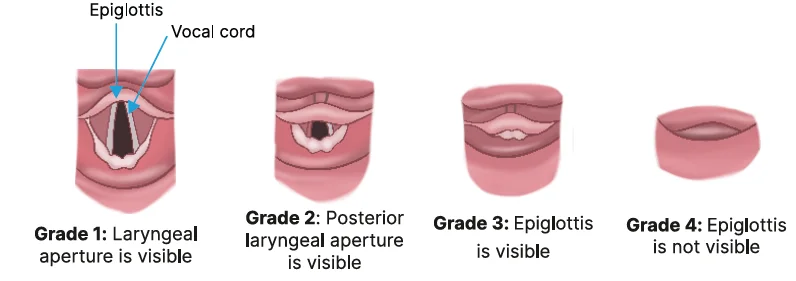
Q1.9: Describe Cormack-Lehane Grading or Classification.
Answer:
- Done after laryngoscopy
- Based on the visualization of the vocal cord
| Grade 1 | The laryngeal aperture is visible |
| Grade 2 | The posterior laryngeal aperture is visible |
| Grade 3 | Epiglottis is visible |
| Grade 4 | Epiglottis is not visible (Video laryngoscope is preferred) |

Oxygen Delivery Devices
Big Question 2: Classify oxygen delivery devices and compare low-flow and high-flow systems with examples.
Broad Answer:
- Oxygen delivery devices are classified as:
- Low-flow, variable performance devices: Provide oxygen mixed with room air. FiO₂ varies.
- Examples: Nasal cannula, simple face mask, non-rebreather mask
- High-flow, fixed performance devices: Deliver constant FiO₂ irrespective of patient effort.
- Examples: Venturi mask, High-flow nasal cannula (HFNC)
- The Venturi mask works on the Bernoulli principle and is color-coded to indicate FiO₂.
- Low-flow, variable performance devices: Provide oxygen mixed with room air. FiO₂ varies.
Detailed Questions
Q2.1: What are the two types of oxygen delivery devices?
Answer:
- Low-flow variable performance oxygen delivery devices
- Nasal cannula
- Face mask
- Non-rebreather mask
- High-flow fixed-performance oxygen delivery devices
- High-flow nasal cannula
- Venturi mask
Q2.2: Specify the flow rates and FiO2 of various Oxygen Delivery Devices.
Answer:
| Device | Flow Rate | FiO2 |
| Nasal cannula | 1-6 lit | 25-45% |
| Simple face mask | 6-10 lit | 35-60% |
| Non-rebreather mask | 10-15 lit | 65-95% |
| Venturi mask | 2-15 lit | 24-60% |
| HFNC | 40-60 lit | 100% |
Q2.3: Explain the salient features of the Venturi Mask.
Answer:
- Works on the Bernoulli principle
- Color coding: Mnemonic-Boy Was Often Yelling Run Girl
| Color | Oxygen (Lit) | FiO2 |
| Blue | 2 lit | 24% |
| White | 4 lit | 28% |
| Orange | 6 lit | 31% |
| Yellow | 8 lit | 35% |
| Red | 10 lit | 40% |
| Green | 15 lit | 60% |

Regional Anesthesia
Big Question 3: What are the types, procedures, and complications of regional anesthesia?
Broad Answer: Regional anaesthesia includes central neuraxial blocks (spinal, epidural, caudal, saddle anaesthesia) and peripheral nerve blocks (brachial plexus, stellate ganglion, femoral/ankle). It provides localized pain control and is widely used in surgeries below the umbilicus, upper limb procedures, and pediatric cases.
Detailed Questions
Q3.1: What are the two types of regional anesthesia?
Answer:
- Central neuraxial block
- Peripheral nerve block
Q3.2: What are the types of central neuraxial blocks and peripheral nerve blocks?
Answer:
- Central neuraxial blocks
- Spinal anaesthesia
- Epidural anaesthesia
- Caudal anaesthesia
- Saddle anaesthesia
- Peripheral nerve blocks
- Brachial plexus block
- Stellate ganglion block
- Femoral/Ankle plexus block
Q3.3: What are the Key features and indications for spinal anesthesia?
Answer:
- Indications : Below umbilicus short-duration surgeries:
- Appendectomy
- LSCS
- Hernia
- Hydrocele
- Duration: 2-3 hours
Q3.4: What is the site and position for spinal anaesthesia?
Answer:
- Site: L3-L5 (Tuffier's line at L4)
- Position: Sitting or lateral
- Needle pierces dura into subarachnoid space (Use Thin bore Dura separating needle)
Q3.5: What are common additives in spinal anaesthesia?
Answer:
- Opioids: Fentanyl, Morphine, Sufentanil, Alfentanil
- Avoid: Remifentanil (neurotoxic preservatives)
- Additives used in local anaesthesia is Adrenaline
Q3.6: What are the contraindications of spinal anaesthesia?
Answer:
- Shock
- Hypotension (80/50 mmHg)
- Reduces to 40/20 mmHg
- Absolute contraindications
- Raised ICP
- o CSF jet out or Herniation of meninges
- Local site infection
- Refusal by patient
- Fixed cardiac output lesion
- Low platelets/coagulopathy
Q3.7: What is epidural anaesthesia and when is it used?
Answer:
- Indication: Long-duration below-umbilical surgeries (e.g., hip/knee replacement)
- Catheter placed in epidural space
- Top-up doses allowed
- Drugs: Bupivacaine, Lignocaine
- Used for painless labor: Causes sensory block but Motor activity is intact
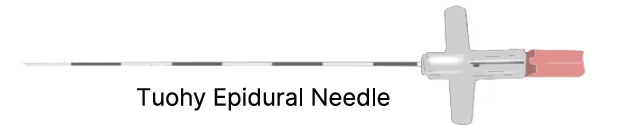
Q3.8: What are the key features and types of brachial plexus blocks?
Answer:
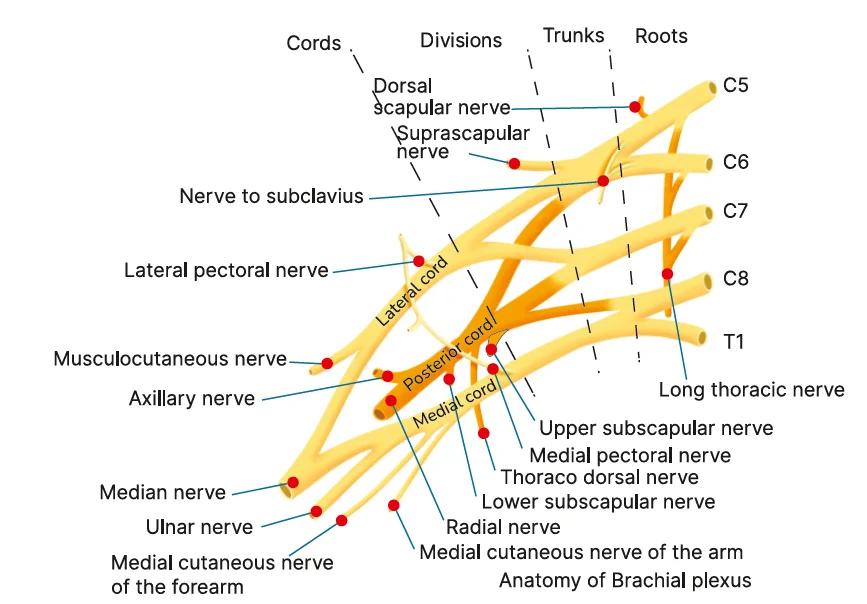
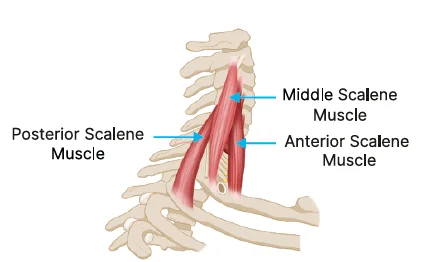
Q3.9: What are the key features of the Interscalene route?
Answer:
Interscalene route
- A needle is introduced between the anterior and middle scalene muscles
- Only proximal routes are blocked - C5-C7
- Commonly used for proximal arm surgeries
- C8, T1 are not blocked - The ulnar nerve is spared
- The phrenic nerve may be damaged in this route - Diaphragmatic palsy
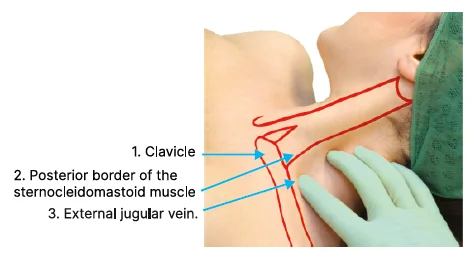
Q3.10: What are the key features of the Supraclavicular route?
Answer:
- All the routes are blocked
- Used for all surgeries of upper limbs and is the Best approach
- Complications
- The needle might hit pleura ® Pneumothorax (Most severe)
Airway Management Devices
Big Question 4: Describe the various airway management devices and methods used during anesthesia, including their indications, parts, and confirmation techniques.
Broad Answer:
- Airway management includes devices like Laryngeal Mask Airway (LMA), laryngoscopes, and endotracheal tubes (ETT).
- LMA is a supraglottic device inserted blindly and used when intubation is not feasible; it doesn't require laryngoscopy.
- ETT provides the most secure airway, placed with a laryngoscope (Macintosh for adults, Miller for children).
- Confirmation of ETT placement is best done using capnography (ETCO₂ 35–45 mmHg). Anesthesia machines (Boyle's machine) deliver gases through high, intermediate, and low-pressure systems.
- Specialized tubes include RAE, Double lumen, and Armored (flexometallic) tubes, each with specific indications like head-neck surgery, one-lung ventilation, or prone position surgeries.
Detailed Questions
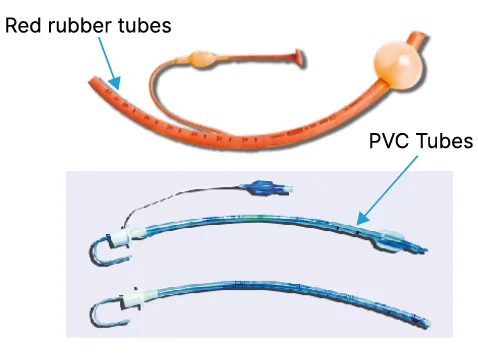
Q4.1: What are the types of Endotracheal Tube?
Answer:
- It is of two types
- Red rubber tubes: Have a high-pressure, low-volume cuff
- Causes: Tracheal mucosal injury
- PVC tubes: Low-pressure, high-volume cuff
- It is of two types
- Red rubber tubes: Have a high-pressure, low-volume cuff
- Cuff PVC tubes
- Uncuff PVC tubes
- Microcuffed tubes: Used in children
Q4.2: What are the functions of various parts of the endotracheal tube?
Answer:
| PARTS | FUNCTIONS |
| Proximal Bevelled end | Ventilation |
| Murphy's eye: Opening | Provides an alternative pore for ventilation |
| Cuff | Prevents aspiration and displacement of the tube ● Pressure: 25-30 cms of H2O o 15-22 mmHg o Should not be >30 |
| Marking of the tube | Tells about the placement of the tube |
| Position | 3-4 cms above the carina |
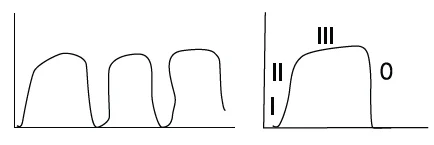
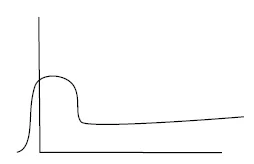
Q4.3: What are the phases of a normal capnograph?
Answer:
| Phase 1 | Dead space ventilation |
| Phase 2 | Expiratory upstroke ● Angle: Alpha |
| Phase 3 | Alveolar plateau |
| Phase 0 | Inspiratory downstream ● Angle: Beta o Measures exhaled CO2 |
Q4.4 : What is the normal range of end-tidal CO₂ (ETCO₂)?
Answer: 35–45 mmHg
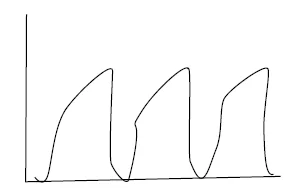
Q4.5: What does a flat ETCO₂ line (0 mmHg) indicate?
Answer:
- Seen in
- Esophagus intubation
- Cardiac arrest
- The tube is blocked or disconnected from the breathing circuit
Also Read : Important Topics in Anesthesia for NEET-PG 2026
Gear up for your final prep with Rapid Revision Reignite by PrepLadder. Designed for Medical PG aspirants, it offers concise Q&A notes, high-yield MCQs, and expert-led revision videos—your perfect companion for last-minute success.
Download the PrepLadder app now to access high-yield content with 24-hr Free Trial. Explore premium study resources like Video Lectures also in हिंglish, digital notes, Audio QBank, and Mock Tests for a seamless exam preparation. Embark on your NEET PG online coaching experience with PrepLadder.

PrepLadder Medical
Get access to all the essential resources required to ace your medical exam Preparation. Stay updated with the latest news and developments in the medical exam, improve your Medical Exam preparation, and turn your dreams into a reality!
Navigate Quickly
Supraglottic and Infraglottic Airway Devices
Detailed Questions
Oxygen Delivery Devices
Detailed Questions
Regional Anesthesia
Detailed Questions
Airway Management Devices
Detailed Questions
Top searching words
The most popular search terms used by aspirants
- NEET PG Anesthesia
- NEET PG Preparation
- Rapid Revision