Malaria Overview: Causes, Symptoms, and Treatment
Oct 23, 2024

Malaria is an acute disease caused by the Plasmodium group of parasites and transmitted by anopheles mosquito. It is a disease that is seen all over the world, especially in developing countries. Common side effects of malaria are high fever, chills, headaches, and other flu-like symptoms. Severe illness and death can normally be avoided if the disease is properly treated. Pregnant women are extremely vulnerable to malaria. If the disease is contracted during pregnancy, it can be passed to the infant or result in low birth weight, which decreases the baby's chance of survival.

Epidemiological factors
Agent: Plasmodium species
Plasmodium vivax
- Plasmodium falciparum
- More common
- More dangerous
- Plasmodium malariae
- Plasmodium ovale
- Case reported in 2019 in Kerala.
- Plasmodium Knowlesi
- Cases reported in Andaman and Nicobar
Vector: Anopheles mosquito
- Anopheles culicifacies: common in rural and peri-urban areas
- Anopheles stephensi: common in urban and industrial areas
- Anopheles fluviatilis: hilly areas, forests, forest fringes.
- Anopheles minimus-Foothills (northeastern states)
- Anophelesepiroticus—Andamann and Nicobar Islands

Also read: Diabetes Insipidus: Types, Causes, and Treatment Options
Anopheles Mosquito

Identification
- Sits at an angle of 45°.
- Head is downward—resting in an inclined position.
- Has spotted wings
Breeding
- Anopheles breed in clean, stagnant water (also called sophisticated mosquitoes).
Eggs
- Eggs are laid singly.
- Eggs are boat-shaped with lateral floats.
Larvae
- Larva doesn't have a siphon tube—no breathing. Rests parallel to the surface of the water.
Flight range
- 2 to 3 km.
Mode of Transmission
Vector-borne
- Most common
- Bite of female
- Anopheles mosquito
Accidental injections of blood or plasma
- Parasite remains infectious for at least 14 days in blood bottles stored at -4°C
Congenital transmission
- Rare
Newborn infants
- Resistance to infection with P. falciparum.
Pregnancy
- Increases the risk of malaria in women
Febrile Herpes
- Common in all malaria patients.
Host Factors
- Malaria follows a holoendemic pattern of disease distribution.
- Seen among children of 2 to 10 years—more common.
- Fewer cases in childhood.
- Age < 6 months: chances of falciparum infections are low.
- Because fetal hemoglobin is resistant to falciparum.
- Sickle cell is a mild form of infection.
- resistant to falciparum.
- Duffy negative RBCs—resistant to P. vivax.
Also read: What is renal/kidney cancer, types, and diagnosis?
Epidemiological Indicators
Pre Eradication Era Eradication Era
- To achieve an API of 1% in 1000 population
- Spleen rate
- Average enlarged spleen
- Infant parasite rate
- Parasite rate
- Proportional case rate
- Eradication Era
- Annual parasite incidence
- Annual blood examination rate
- Annual falciparum incidence
- Slide positivity rate
- Slide falciparum rate
- Spleen Rate
- No. of children from 2 to 10 years showing enlargement of the spleen.
- Measure of endemicity of malaria.
- Spleen rate:
- Below 10%: non-endemic
- 10 to 25% - Hypoendemic
- 25 to 40%: Endemic
- o > 40% - Hyperendemic
- Infant Parasite Rate
- No. of infants showing malarial parasites in their blood films.
- An indicator of recent malaria transmission in a community.
- Blood slides are examined.
- Parasite Rate
- No. of children 2-10 years old of age showing malarial parasites in their blood film.
- Annual Parasite Incidence (API)
- The population positive for malaria in a year out of the total population under surveillance multiplied by 1000.
- Best measure of the burden of malaria.
- NVBDCP aims to achieve an API of less than 1/1000 population.
- Annual blood examination rate (ABER)
- Total blood slides examined out of the total population under surveillance multiplied by 100.
- Indicator of operational efficiency of a program.
- Slide Positivity Rate
- No. of slides positive for malarial parasite out of total slides examined multiplied by 100.
- Calculated during an outbreak.

Environmental Factors
- Season: July to November.
- Malaria month: June
- Awareness about malaria can be spread in this month.
- Higher altitudes—less mosquitoes.
- Relative humidity: 60 to 75%.
- Temperature: 16 to 30 °C.
Also read: Muscular Dystrophy: Overview of Types, Symptoms, and Management
Agents & Incubation period
There are 4 species of malaria parasites:
- Plasmodium Falciparum
- Plasmodium Vivax
- Plasmodium Ovale
- Plasmodium Malariae
| Malaria Parasite Name | Incubation Period | |
| P. falciparum | 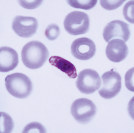 | 9 - 14 Days |
| P. vivax | 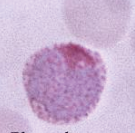 | 8 - 17 Days |
| P. ovale |  | 16 - 18 Days |
| P. malariae |  | 18 - 40 Days |
Symptoms of Malaria
Headache, fever, chills, fatigue, nausea, vomiting.

Malaria index
- Annual parasite incidence (API) is the number of confirmed cases per 1000 population in one year.
Investigations
- All clinically suspected malaria cases require laboratory examination and confirmation.
- History Collection
- Physical Examination
- M.P (Malaria Parasite) Test
- The Peripheral Smear
- Bone Marrow Smear
- CBC, TC, DC
Also read: Cardiopulmonary Resuscitation (CPR): Procedure, Steps and Types

Differential diagnosis for uncomplicated malaria
- Upper respiratory tract infection (pharyngitis, tonsillitis, ear infection), pneumonia, measles, dengue, influenza, typhoid fever.
- Remember that the patient may be suffering from more than one illness.
- Meningitis, otitis media (ear infection), tuberculosis, hypoglycemia.
Malaria Management
- Management of malaria includes the following measures:
- Early Detection & Early Treatment
- Mosquito Control Measures
- Community
- Early Detection
- Early Detection of Fever Cases in the Community by House-to-House Visit by the
- Health Workers in Every 15 Days
- Early Administration of Chloroquine (CHQ) to All Fevers
- Collection of Blood Films (Thick & Thin) from Fever
- Cases & Laboratory Examinations for Malaria Parasite
- Administration of Medical Treatment to All Positive Cases of Malaria
Treatment of Malaria:
- Chemoprophylaxis (suppressive treatment): used to target sporozoites before they infect hepatocytes. Used in case of Travelers traveling to countries prone to endemic malaria
Drugs used:
- Primaquine
- Chloroquine
- Mefloquine
- Doxycycline
- Therapeutic treatment: used to target merozoites in the erythrocytic phase. Used in cases of active infection.
Drugs used:
- Doxycycline
- Chloroquine
- Mefloquine
- Gametocidal treatment: used to target gametocytes. Used to prevent the creation of resistant forms.
Drugs used:
- Primaquine for P. falciparum
- Chloroquine for all other
- Radical treatment (to prevent relapse): used to target hypnozoites in the liver. Used in cases of P. vivax and P. ovale infections.
Drug used: Primaquine
Also read: Normocytic Normochromic Anemia: Symptoms, Causes and Treatment
Prevention and control
Primary prevention
- Environmental improvement: Prevent mosquito breeding by removing water collections
- Anti-mosquito measures: spray DDT on walls where mosquitoes rest
- Anti-larval measures: spray larvicide in the water where mosquito breeds
- Prevent mosquito bites by using mosquito nets
- Chemoprophylaxis - Chloroquine
Secondary prevention
- Early diagnosis and treatment
- To prevent complications, especially cerebral malaria
- To prevent morbidity due to malaria
Sign up to our PrepLadder app today to learn more about this. Access Video Lectures, digital notes, QBank, and Mock Tests for FREE to ace your NEET PG preparation. Elevate your study experience and gear up for success. Start your journey with PrepLadder today!

PrepLadder
Access all the necessary resources you need to succeed in your competitive exam preparation. Stay informed with the latest news and updates on the upcoming exam, enhance your exam preparation, and transform your dreams into a reality!
Navigate Quickly
Epidemiological factors
Agent: Plasmodium species
Anopheles Mosquito
Epidemiological Indicators
Pre Eradication Era Eradication Era
Environmental Factors
Agents & Incubation period
Symptoms of Malaria
Investigations
Differential diagnosis for uncomplicated malaria
Malaria Management
Treatment of Malaria:
Prevention and control
Top searching words
The most popular search terms used by aspirants
- NEET PG Medicine
- NEET PG Medicine Preparation