Rapid Revision Reignite Pediatrics: Question-Answer Format
Sep 11, 2025

Growth/ Development/ Puberty
Big Question 1: Define short stature.
Broad Answer: Short stature is defined as “the height of a child is <3rd percentile or <-2 Z score of expected according to the age and sex of the child.”
Detailed Questions
Q1.1: What are the etiologies of proportionate short stature?
Answer:
| Normal variants | Familial short stature Constitutional delay in growth and puberty |
| Intra-uterine causes | IUGR Infection by TORCH Genetic syndromes: Turner's syndrome, Down's syndrome, Seckel syndrome |
| Postnatal/ acquired causes | Chronic malnutrition Any chronic systemic illness Celiac disease Maternal deprivation Psychosocial Endocrine: Growth hormone deficiency |
Q1.2: What is the difference between acute and chronic malnutrition in terms of their effect on a child's growth?
Answer: Acute malnutrition affects the weight of the child, while Chronic malnutrition affects the height of the child.
Q1.3: A 7-year-old otherwise well child presents with short stature. His weight is appropriate as per his age. His age is less than his chronological age. The height of his parents is normal. What is the diagnosis?
Answer: Height of parents normal - rules out familial short stature. Bone age < chronological age- delay in bone maturation- points towards constitutional delay in growth and puberty (CDGP).
Q1.4: Which X-ray sites are used to assess bone age in infants, children, and older children?
Answer:
- Infants: X-ray of knees
- Children: X-ray left hand and wrist
- Older children: X-ray of shoulders
Q1.5: What are the differences between Constitutional Delay of Growth and Puberty (CDGP) and Familial Short Stature?
Answer:
| Familial Short Stature | CDGP(Constitutional Delay in Growth & Puberty) | |
| Final height | Child is short, but height is normal as per his expected height based on mid parental height. | Child's height is less than expected during childhood, but final adult height attained is normal. |
| Parent’s height | Family H/O short stature in parents | Height of the parents is normal |
| Age at puberty | Child has normal puberty | Child has delayed puberty and family h/o of delayed puberty |
| Bone age | Bone age = Chronological age | Bone Age < Chronological age |
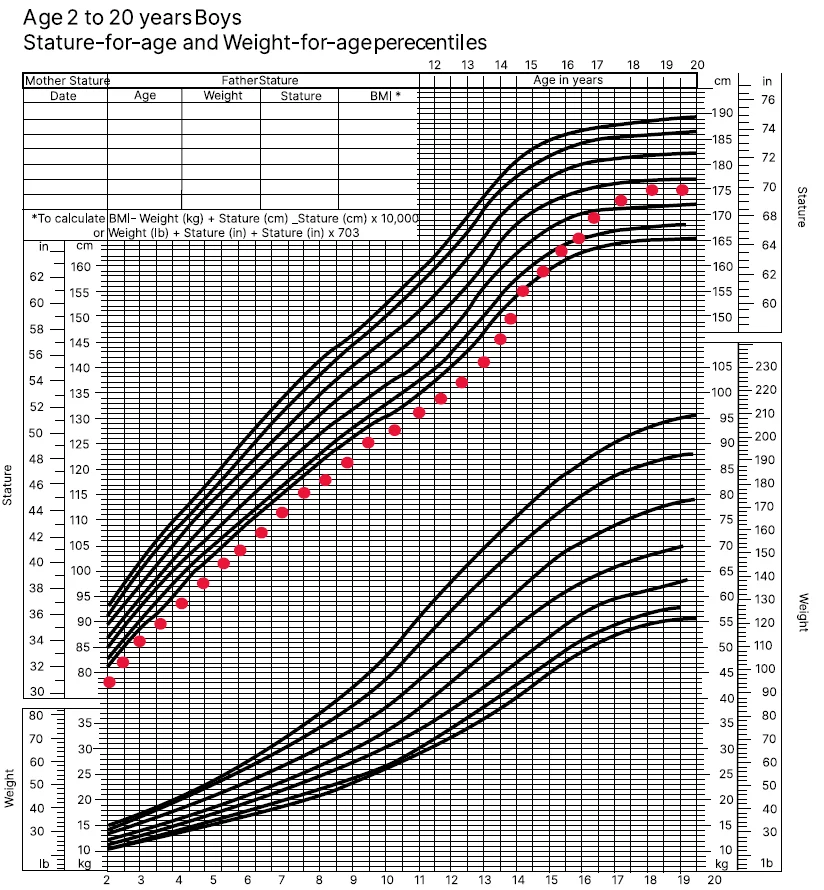
Q1.6: What does the growth pattern shown in the height chart indicate, and in which condition is such a pattern typically seen?
Answer:
- In the above image, stature/height is plotted
- During childhood, the child's height runs almost parallel to the 3rd percentile line, but ultimately, a catch-up growth happens, and the final height achieved is normal
- Seen in CDGP
Neonatology
Big Question 2: What are common neonatal conditions that do not require treatment, and how can they be differentiated from pathological conditions?
Broad Answer: Certain neonatal conditions like erythema toxicum, milia, Mongolian spots, stork bites, subconjunctival haemorrhage, mastitis neonatorum, hymenal tags, vaginal bleeding, and physiological phimosis or weight loss are self-limiting and benign. They are often due to maternal hormone withdrawal, minor vascular or skin changes, or immature skin structures. These conditions resolve spontaneously, requiring no specific treatment except reassurance.
Detailed Questions
Q2.1: Describe the benign skin conditions of the skin and mucosa seen in neonates that do not require treatment.
Answer:
- Erythema toxicum:
- Reddish maculopapular lesions present mainly on the trunk
- Usually present in 1st week of life
- Sterile eosinophil-filled lesions
- Reddish maculopapular lesions present mainly on the trunk
- Milia: Colourless papules due to the plugging of sweat ducts
- Mongolian spots: Bluish black areas of discolouration mainly on the lower back, buttocks, and back of the thigh
- Stork bites: Capillary hemangiomas- seen in between the brows, nape of the neck
- Subconjunctival hemorrhage
Q2.2: Explain mastitis neonatorum and its clinical significance.
Answer:
- B/l breast engorgement in both males and females due to the effect of maternal hormones
- Milk output can also sometimes be seen
- Vaginal bleeding in females: Due to the withdrawal of maternal hormones
- Hymenal tags in females
- Physiological phimosis in males
- Physiological weight loss
Q2.3 What is physiological weight loss in neonates, and when is it regained?
Answer:
| Weight loss | Regained by | |
| Term neonates | 10% of their birth weight in 3-5 days | Day 10 of life |
| Preterm neonates | 15% of their birth weight in 7-10 days | Day 15 of life |
Q2.4 Differentiate between Cephalhematoma and Caput Succedaneum
Answer:
|
Cephalhematoma |
Caput succedaneum |
|
|
Q2.5 What are the various neonatal primitive reflexes, and when you they appear and disappear?
Answer:
| Appears | Disappears | |
| Rooting reflex | 32 weeks of gestation | 1 month post natally |
| Moro’s reflex | - | - |
| Palmar grasp reflex | 28 weeks of gestation | 3 months post natally |
| ATNR | 35 weeks of gestation | 3-5 months post natally |

Nutrition and Malnutrition
Big Question 3: Write briefly about malnutrition and its causes.
Broad Answer:
- Malnutrition is an imbalance in energy or nutrient intake, leading to undernutrition or overnutrition
- Causes:
- Inadequate dietary intake
- Poor absorption or increased loss
- Increased requirements
- Chronic illnesses
- Overeating or an unhealthy diet
Detailed Questions
Q3.1: What are the best indicators for acute and chronic malnutrition?
Answer:
- The best indicator of Acute Malnutrition: Decrease in weight for height (Wasting)
- The best indicator of Chronic Malnutrition: Decrease in Height for age (Stunting)
Q3.2: According to the WHO classification, how are wasting and stunting defined in children?
Answer:
- WHO classification is based on weight for height, height for age & oedema
- If oedema is present, add 'edematous' to the category
| Weight for Height | Height for Age |
| Between -2 to -3 Z score or 70-79% of expected calledas Wasting | Between -2 to -3 Z score or 85-89% of expected calledas Stunting |
| < -3 Z score or <70% of expected called as SevereWasting | < -3 Z score or < 85% of expected Severe Stunting |
Q3.3: Elaborate on the differences between Kwashiorkor & Marasmus.
Answer:
| Kwashiorkor | Marasmus | |
| Edema | Present | Absent |
| Appetite | Poor | Voracious |
| CNS involvement | Apathy lethargy | Active & alert |
| Hepatomegaly | Usually present | Usually absent |
| Skin & hair changes | More common | Less common |
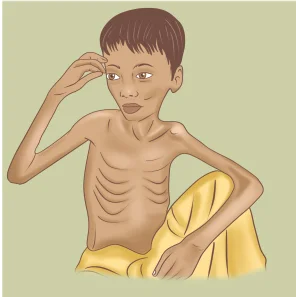
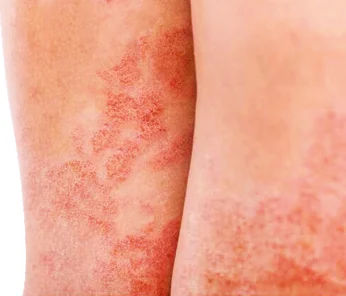
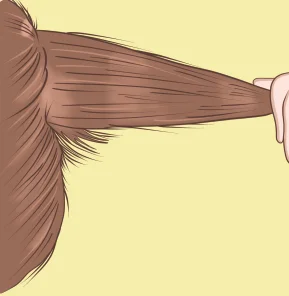
Q3.4: What are the findings noted in the images below?
Answer: Severely malnourished without oedema - Marasmus
Flaky paint dermatosis
Flag sign: Alternate band of pigmented and hypopigmented hairs
Q3.5: What is the WHO definition of Severe Acute Malnutrition (SAM), and what are the findings in it?
Answer:
- Definition: In a child between 6 months to 5 years of age, the presence of any 1 or more of the following Findings:
- Weight for height <-3 Z score or < 70% of expected or
- Mid arm circumference <11.5 cm or
- Symmetrical bipedal oedema of nutritional origin
Vasculitis Disorders In Children/Immunization
Big Question 5: What is the National Immunization Schedule (NIS) of India, and what does it aim to provide?
Broad Answer: The National Immunization Schedule (NIS) of India provides free vaccination to all children and pregnant women. It includes vaccines against major diseases such as tuberculosis, polio, diphtheria, pertussis, tetanus, measles, hepatitis B, and rotavirus, given at specific ages to ensure maximum protection and reduce childhood morbidity and mortality.
Detailed Questions
Q5.1: What is the latest National Immunization Schedule (NIS) of India?
Answer:
| At birth | OPV-0, BCG, Hepatitis B birth dose |
| 6 weeks | Pentavalent-1, OPV-1, Rota-1, f-IPV, PCV-1 |
| 10 weeks | Pentavalent-2, OPV-2, Rota-2 |
| 14 weeks | Pentavalent-3, OPV-3, Rota -3, f-IPV-2, PCV- 2 |
| 9 months | MR-1, PCV booster, JE-1, f - IPV -3, Vitamin A- 1st megadose |
| 16-24 months | MR-2, DPT-booster-1, OPV-booster, JE-2, Vitamin A- 2nd megadose |
| 2 years | Typhoid vaccine (not given in all states) |
| 5-6 years | DPT booster - 2 |
| 10-16 years | Td |
Q5.2: What is the latest recommendation for administering the Hepatitis B vaccine?
Answer:
Hepatitis B is now recommended to be given along with Vitamin K in the delivery room immediately after birth.
Q5.3: What does the pentavalent vaccine contain?
Answer:
- Pentavalent vaccine - A Combination of 5 vaccines
- DPT + Hep-B + Hib
Q5.4: What are the recommended injection sites and routes of administration for different vaccines in the National Immunization Schedule?
Answer:
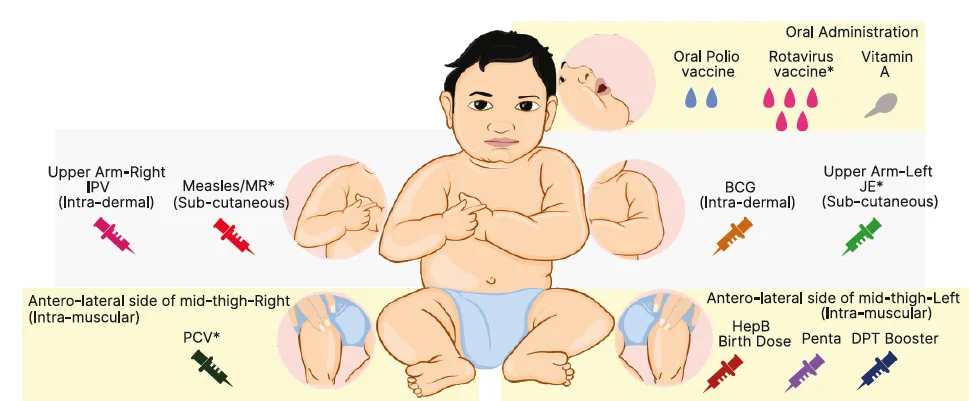
- Oral
- Polio vaccine
- Rotavirus vaccine
- Vitamin A
- Left upper arm
- BCG (intradermal)
- Japanese encephalitis (Subcutaneous)
- Anterolateral side of thigh - Left
- Hepatitis B (At birth)
- Penta
- DPT booster
- Right upper arm
- IPV (Intradermal)
- Measles or MR (Subcutaneous)
- Anterolateral side of thigh - Right
- PCV vaccine
- Given at
- 6 weeks
- 14 weeks
- 9 months
If you’re looking to strengthen your final prep, don’t miss out on Rapid Revision Reignite by PrepLadder. It’s designed to help Medical PG aspirants cover the entire syllabus quickly with concise notes in a Question-Answer format, high-yield MCQs, and expert-led revision videos—perfect for last-minute reinforcement before the exam.
Download the PrepLadder app now and unlock a 24-hour FREE trial of premium high-yield content. Access Video Lectures also in हिंglish, digital notes, Audio QBank, and Mock Tests for FREE to ace your NEET PG preparation. Elevate your study experience and gear up for success. Start your journey with PrepLadder today!

PrepLadder Medical
Get access to all the essential resources required to ace your medical exam Preparation. Stay updated with the latest news and developments in the medical exam, improve your Medical Exam preparation, and turn your dreams into a reality!
Navigate Quickly
Growth/ Development/ Puberty
Detailed Questions
Neonatology
Detailed Questions
Nutrition and Malnutrition
Detailed Questions
Vasculitis Disorders In Children/Immunization
Detailed Questions
Top searching words
The most popular search terms used by aspirants
- neet pg pediatrics
- NEET PG Pediatrics Preparation