7 Appendicitis Myths vs Facts: Pain, Food, Surgery & Treatment
Sep 14, 2026
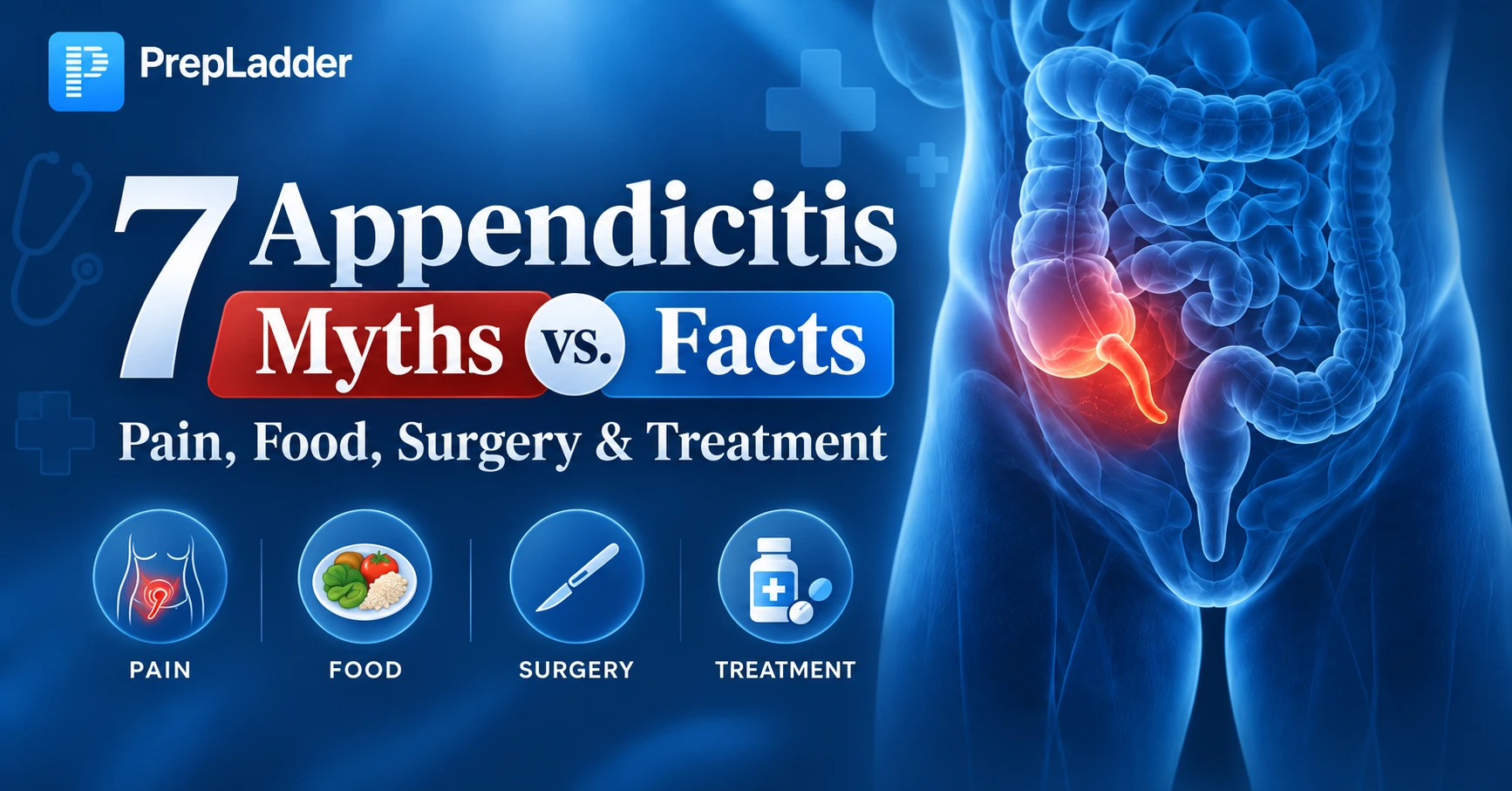
Appendicitis is one of the most common causes of sudden abdominal pain, yet it continues to be surrounded by myths. Some people believe that eating seeds causes appendicitis, while others assume that the pain must always be severe and located in the lower-right abdomen.
There are also misconceptions about whether appendicitis can settle on its own or whether surgery is always necessary.
These assumptions can be misleading, particularly when they cause someone to ignore or delay evaluation of worsening abdominal pain. The condition can progress from inflammation to complications such as rupture and infection when treatment is delayed.
Understanding what appendicitis actually is, how it can present, and how treatment decisions are made can help separate common beliefs from medical facts.

Understanding the Appendix and Appendicitis
The appendix is a small, narrow structure attached to the large intestine, usually located in the lower-right part of the abdomen. Appendicitis refers to inflammation of this structure.
One mechanism described in the references is blockage of the appendix. This may occur because of hardened stool or swelling of lymphoid or intestinal tissue. Once inflammation develops, symptoms can include abdominal pain, loss of appetite, nausea or vomiting, fever, bloating, and changes in bowel habits.
However, appendicitis does not always present in exactly the same way. Pain can begin around the navel and later move toward the lower-right abdomen, but the location and intensity may vary. This is particularly relevant in children, older adults, and pregnant women, where symptoms can be less typical.
With that background, let us look at some of the most common myths surrounding appendicitis.
Myth 1: Eating Chilli Seeds or Spicy Food Causes Appendicitis
Fact: There is no established link between spicy food or small food seeds and appendicitis
The belief that chilli seeds, watermelon seeds, grape seeds or similar small food particles get trapped in the appendix and cause inflammation is common.
The reference material identifies this as a longstanding misconception and explains that appendicitis is associated with obstruction of the appendix, rather than simply eating seeds or spicy foods. Hardened stool and swelling of tissue are among the mechanisms described.
This does not mean that spicy foods can never cause abdominal discomfort. They may cause digestive symptoms in some people, but that is different from appendicitis.
The important distinction is between temporary digestive discomfort and inflammation of the appendix.
So, finding seeds in food should not automatically make someone think they are at risk of developing appendicitis.

Surgery Most Important 100 one-liners - Download Free PDF!
Myth 2: Appendicitis Happens Only in Children and Young Adults
Fact: Appendicitis can occur at any age
Appendicitis is commonly seen in younger people, but it is not restricted to a particular age group.
The condition can occur in children, adults, and older adults.
Age can, however, influence the way symptoms appear. Younger children may have difficulty describing exactly where the pain is or how it started. Older adults may develop less typical symptoms, which can make early recognition more challenging.
This is one reason why a person's age should not be used to dismiss persistent abdominal pain.
A teenager with worsening abdominal pain and an older adult with new abdominal discomfort may both require evaluation, even though their presentations may not look identical.

Myth 3: Appendicitis Always Causes Severe Pain in the Lower-Right Abdomen
Fact: The classic pain pattern is common, but it is not universal
The lower-right abdomen is strongly associated with appendicitis, but the pain may not start there.
A commonly described pattern is pain that begins around the belly button and later shifts toward the lower-right abdomen as inflammation progresses.
However, the actual pattern can vary depending on factors such as the person's age, anatomy, and the position of the appendix.
Children, older adults, and pregnant women may develop less typical symptoms. In some cases, the discomfort may remain around the center of the abdomen or be felt in another area.
There is another important misconception to avoid: lower-right abdominal pain does not automatically mean appendicitis.
Other abdominal, urinary, or gynecological conditions can produce similar pain. The reference specifically mentions conditions such as kidney problems, urinary tract infections, gastroenteritis, and endometriosis among possible alternatives.
This is why diagnosis may involve a combination of medical history, physical examination, blood tests, and imaging such as ultrasound or CT, depending on the clinical situation.
Atypical pain should therefore not be used as a reason to rule out appendicitis.
Also Read: INI-CET Image-Based Questions: High-Yield Images & Topics to Revise
Myth 4: Appendicitis Can Be Ignored if the Pain Comes and Goes
Fact: Intermittent pain does not necessarily mean the problem has resolved
Another common misconception is that appendicitis becomes less concerning when abdominal pain temporarily improves.
Pain from an abdominal condition can change in intensity over time, but a temporary reduction in pain should not be interpreted as proof that appendicitis has gone away. The reference material specifically warns against assuming that intermittent or fluctuating pain is harmless, because untreated inflammation can progress and may eventually lead to complications.
As inflammation progresses, the appendix can become severely damaged and may rupture. Infection can then spread into the surrounding abdominal cavity, increasing the risk of serious complications.
This is why “wait and see” can be a poor strategy when abdominal pain is persistent, recurrent, or progressively worsening.
The situation becomes even more important when pain occurs along with symptoms such as nausea, vomiting, fever, loss of appetite, or abdominal bloating.
Also Read: Cancer Myths vs Facts: 15 Common Cancer Myths Explained Medically
Myth 5: Painkillers or Home Remedies Can Cure Appendicitis
Fact: Temporary symptom relief does not treat the underlying inflammation
When abdominal pain develops, it is natural to look for a quick solution at home. Some people may take an over-the-counter painkiller, use a home remedy, or simply wait for the discomfort to settle.
The problem is that relieving pain is not the same as treating appendicitis.
The reference article specifically points out that painkillers may temporarily reduce the discomfort but do not address the underlying cause. It also warns that relying on home remedies can delay appropriate medical treatment.
That delay matters because untreated appendicitis can worsen and may progress to rupture and infection.
This does not mean every episode of abdominal pain is appendicitis. In fact, several other conditions can produce similar symptoms. The important point is that suspected appendicitis needs proper medical assessment rather than self-treatment alone.
Also Read: 7 Hair Loss Myths vs Facts: Oil, Shampoo, Genetics & Vitamins
Myth 6: Every Case of Appendicitis Requires Surgery
Fact: Treatment depends on the severity and clinical situation
Appendectomy, or surgical removal of the appendix, remains an important treatment for appendicitis. It may be performed through open surgery or laparoscopic surgery, with laparoscopic techniques widely used because they involve smaller incisions.
However, saying that every case must automatically undergo surgery oversimplifies the way appendicitis is managed.
The reference material notes that when inflammation is mild, treatment with antibiotics may be considered in selected situations, whereas more serious disease may require surgery to prevent complications.
This means treatment decisions depend on the clinical assessment rather than on a single rule that applies to every patient.
Doctors may consider factors such as the severity of inflammation, the patient's symptoms, imaging findings, and whether complications have developed before deciding on the most appropriate treatment.
When surgery is necessary, laparoscopic appendectomy can offer the advantage of smaller incisions and recovery that is often quicker than traditional open surgery.
The important message is not that surgery should be avoided. It is that treatment should be decided after proper evaluation rather than assuming that every case follows exactly the same course.
Also Read: 7 PCOS Myths vs Facts: Weight, Fertility, Periods & Treatment
Myth 7: Appendicitis Is Dangerous Only After the Appendix Bursts
Fact: Early appendicitis also requires timely medical attention
Some people think the condition becomes serious only once the appendix has ruptured.
In reality, the risk of rupture is one reason appendicitis needs timely evaluation and treatment in the first place. Untreated inflammation can progress and result in rupture, abscess formation, or infection spreading within the abdomen.
A ruptured appendix can make treatment more complicated because infection may extend beyond the appendix.
This is also why waiting for pain to become unbearable is not a safe way to judge whether medical attention is needed. Symptoms can vary considerably, and appendicitis may not always follow the classic pattern of severe right-sided abdominal pain.
Early evaluation allows doctors to determine whether the symptoms are actually due to appendicitis and, if so, how advanced the condition is.
Recognising Appendicitis Symptoms
Although no single symptom confirms appendicitis, several symptoms commonly occur together.
These may include:
- abdominal pain, often beginning around the navel and sometimes shifting toward the lower-right abdomen
- nausea or vomiting
- loss of appetite
- fever
- abdominal bloating
- constipation or diarrhea
The pattern is not identical for everyone. Atypical symptoms are particularly possible in children, older adults, and pregnant women, which is why abdominal pain should be assessed in context rather than judged solely by its location.
Why Appendicitis Can Be Difficult to Identify
Appendicitis can resemble several other conditions that cause abdominal pain.
The reference specifically mentions kidney stones, urinary tract infections, gastroenteritis, pancreatitis and endometriosis among conditions that may be confused with appendicitis.
Doctors may therefore use a combination of clinical examination, blood tests, and imaging such as ultrasound or CT when appropriate to help establish the diagnosis.
This is particularly important when the symptoms are atypical or when the pain does not match the classic description of appendicitis.
Also Read: AP vs PA vs Lateral X-Ray: Differences, Positioning & When Each View Is Used
When to Seek Medical Attention for Possible Appendicitis
Abdominal pain does not always mean appendicitis, but persistent or worsening pain should not be ignored, particularly when other symptoms appear alongside it.
Medical evaluation becomes important when abdominal pain is accompanied by nausea or vomiting, fever, loss of appetite, abdominal bloating, or changes in bowel habits. Pain that begins around the navel and later moves toward the lower-right abdomen is another pattern commonly associated with appendicitis.
Because several other conditions can produce similar symptoms, the diagnosis cannot be confirmed from pain location alone. A doctor may use the history and physical examination along with blood tests and imaging such as ultrasound or CT, depending on the presentation.
The main concern with delaying evaluation is progression of inflammation. Untreated appendicitis can lead to appendiceal rupture, abscess formation, and spread of infection, which can make treatment more complicated.
Appendicitis Myths vs Facts: Quick Summary
Myth Fact Eating chilli seeds or spicy food causes appendicitis There is no established link between these foods and appendiceal inflammation. Appendicitis affects only children and young adults Appendicitis can occur at any age. Appendicitis always causes severe pain in the lower-right abdomen Pain may begin around the navel, remain elsewhere, or present atypically. Pain that comes and goes means appendicitis is not serious Changes in pain intensity do not reliably rule out appendicitis. Painkillers and home remedies can cure appendicitis Symptom relief does not treat the underlying inflammation. Every case of appendicitis requires surgery Treatment depends on the individual clinical situation; selected cases may be managed non-operatively. Appendicitis becomes dangerous only after rupture Untreated inflammation can progress to serious complications, so timely evaluation matters.
Also Read: Marfan vs Noonan vs Turner Syndrome: Signs, Genetics & Key Differences
Frequently Asked Questions About Appendicitis
Does eating chilli seeds cause appendicitis?
No. The references identify this as a common misconception and do not support a direct link between eating chilli seeds or similar food particles and appendicitis.
Can appendicitis occur in adults?
Yes. Although it is commonly seen in younger people, appendicitis can occur in children, adults and older people.
Does appendicitis always cause right lower abdominal pain?
No. Pain may initially occur around the navel and later shift to the lower-right abdomen, but the location can vary between patients.
Can appendicitis pain come and go?
Pain may change in intensity, but temporary improvement does not establish that appendicitis has resolved. Persistent or worsening abdominal symptoms should be medically assessed.
Can appendicitis be treated with home remedies?
Home remedies do not treat the underlying appendiceal inflammation. Delaying appropriate medical care can increase the risk of complications.
Does every patient with appendicitis need surgery?
Not necessarily. The references note that selected mild cases may be treated with antibiotics, while more serious or high-risk cases may require appendectomy.
Is laparoscopic appendectomy used for appendicitis?
Yes. Appendectomy can be performed through open surgery or laparoscopic surgery.
What happens if appendicitis is left untreated?
Inflammation can progress to appendix rupture and infection, with complications such as abscess formation and wider abdominal infection.
Final Takeaway
Appendicitis is surrounded by simple-sounding explanations: perhaps it was caused by something you ate, perhaps the pain is not serious because it comes and goes, or perhaps surgery can always be avoided.
The reality is more nuanced.
Food seeds do not explain every case of appendicitis. The condition can affect people of different ages. Pain does not always begin in the lower-right abdomen, and its intensity alone cannot determine how serious the problem is. Treatment also depends on the individual clinical situation.
The most important point is to recognise persistent or worsening abdominal symptoms and seek appropriate medical evaluation rather than relying on myths, home remedies or assumptions about where appendicitis pain “should” occur.
Timely diagnosis and treatment can help reduce the risk of complications such as rupture and infection.

PrepLadder
Access all the necessary resources you need to succeed in your competitive exam preparation. Stay informed with the latest news and updates on the upcoming exam, enhance your exam preparation, and transform your dreams into a reality!
Navigate Quickly
Understanding the Appendix and Appendicitis
Myth 1: Eating Chilli Seeds or Spicy Food Causes Appendicitis
Fact: There is no established link between spicy food or small food seeds and appendicitis
Surgery Most Important 100 one-liners - Download Free PDF!
Myth 2: Appendicitis Happens Only in Children and Young Adults
Fact: Appendicitis can occur at any age
Myth 3: Appendicitis Always Causes Severe Pain in the Lower-Right Abdomen
Fact: The classic pain pattern is common, but it is not universal
Myth 4: Appendicitis Can Be Ignored if the Pain Comes and Goes
Fact: Intermittent pain does not necessarily mean the problem has resolved
Myth 5: Painkillers or Home Remedies Can Cure Appendicitis
Fact: Temporary symptom relief does not treat the underlying inflammation
Myth 6: Every Case of Appendicitis Requires Surgery
Fact: Treatment depends on the severity and clinical situation
Myth 7: Appendicitis Is Dangerous Only After the Appendix Bursts
Fact: Early appendicitis also requires timely medical attention
Recognising Appendicitis Symptoms
Why Appendicitis Can Be Difficult to Identify
When to Seek Medical Attention for Possible Appendicitis
Appendicitis Myths vs Facts: Quick Summary
Frequently Asked Questions About Appendicitis
Does eating chilli seeds cause appendicitis?
Can appendicitis occur in adults?
Does appendicitis always cause right lower abdominal pain?
Can appendicitis pain come and go?
Can appendicitis be treated with home remedies?
Does every patient with appendicitis need surgery?
Is laparoscopic appendectomy used for appendicitis?
What happens if appendicitis is left untreated?